
Last updated November 15, 2026
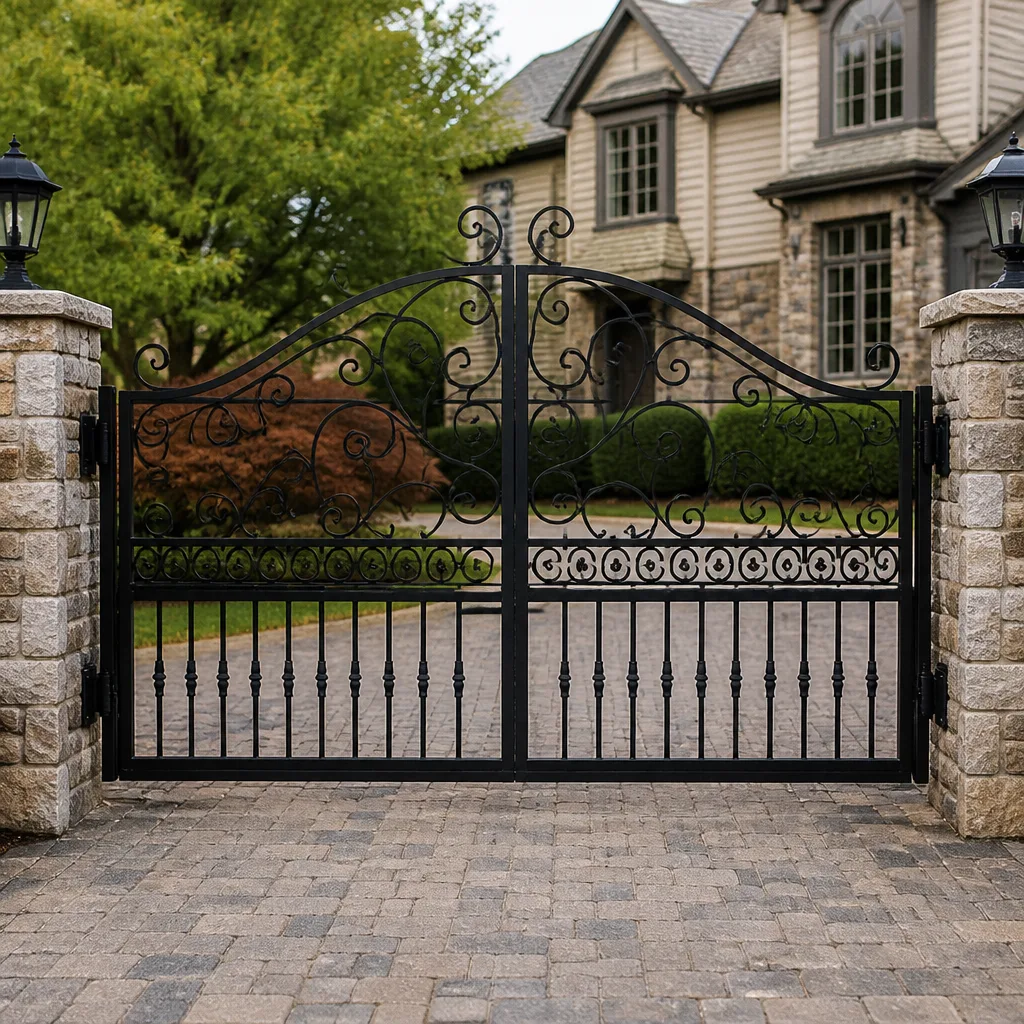 Wrought iron
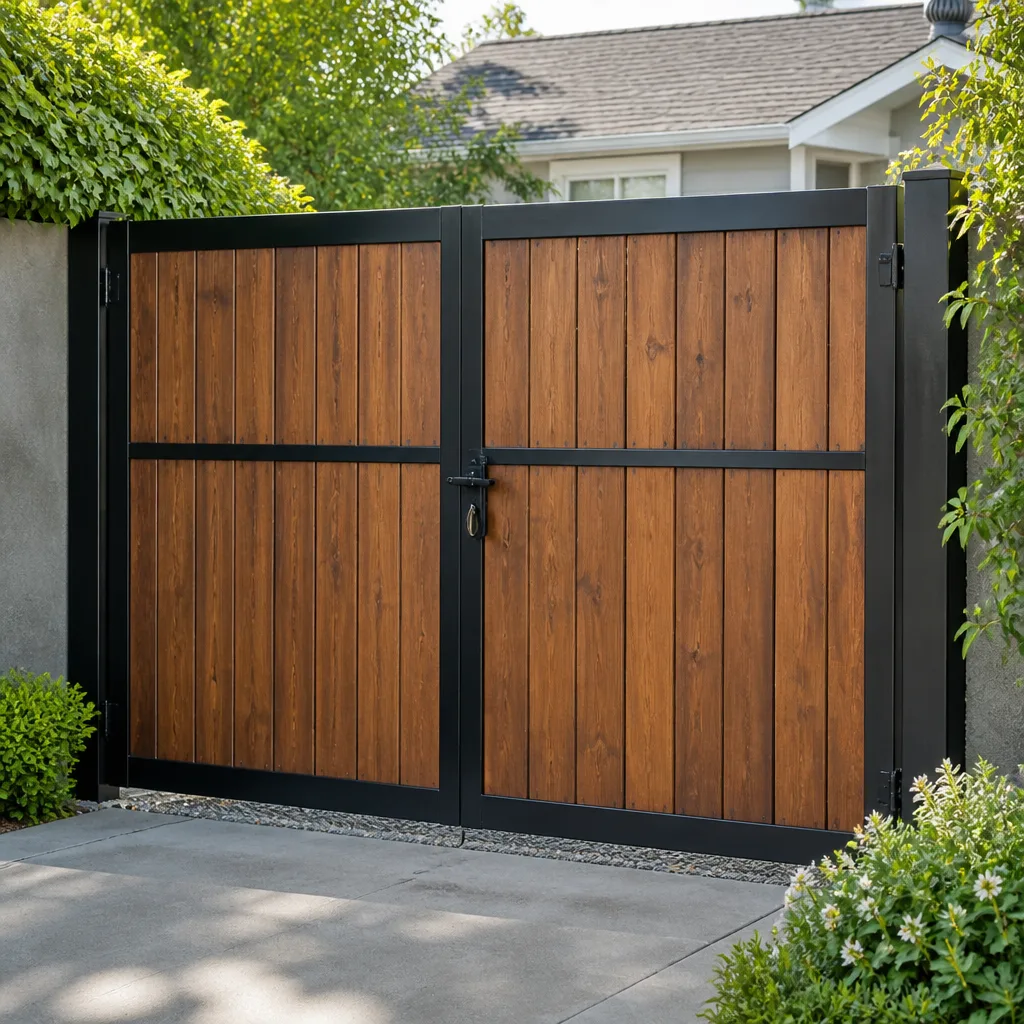 Wood & steel frame
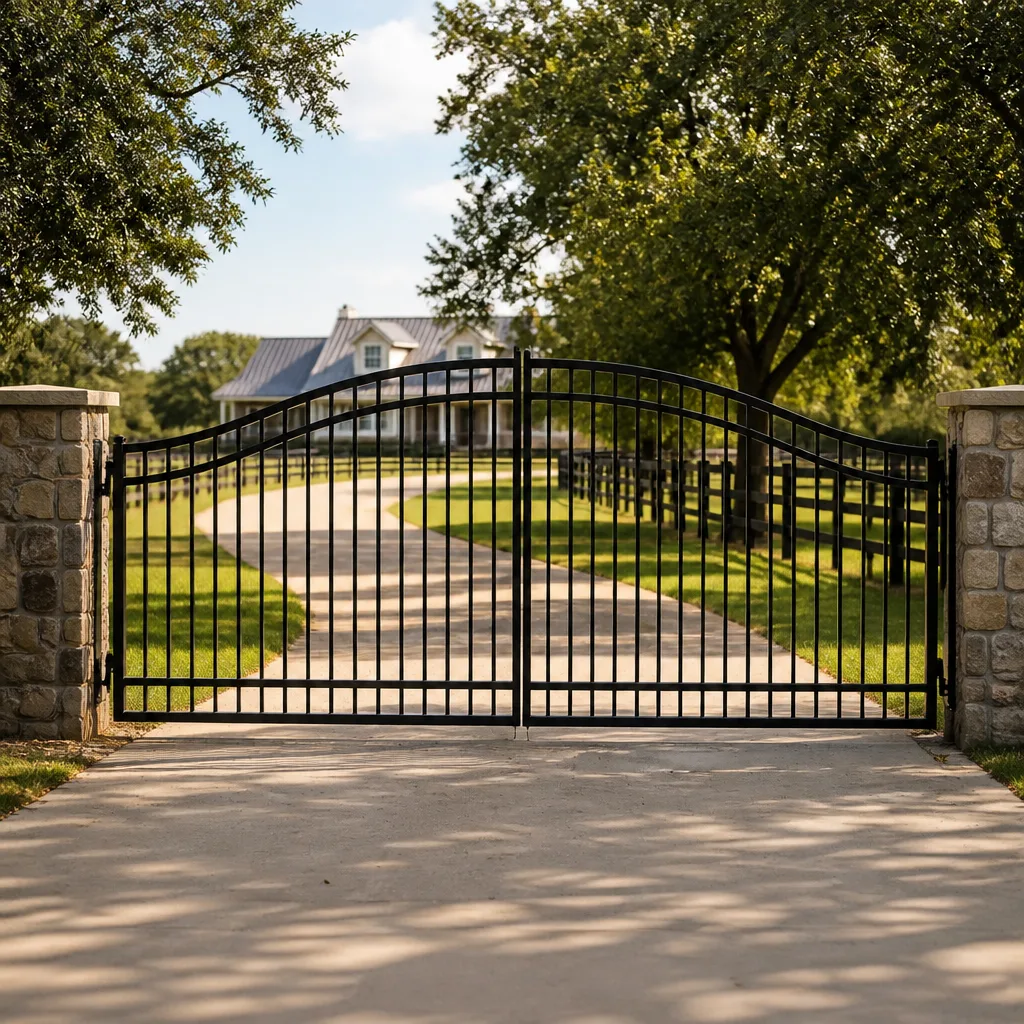 Farm & ranch
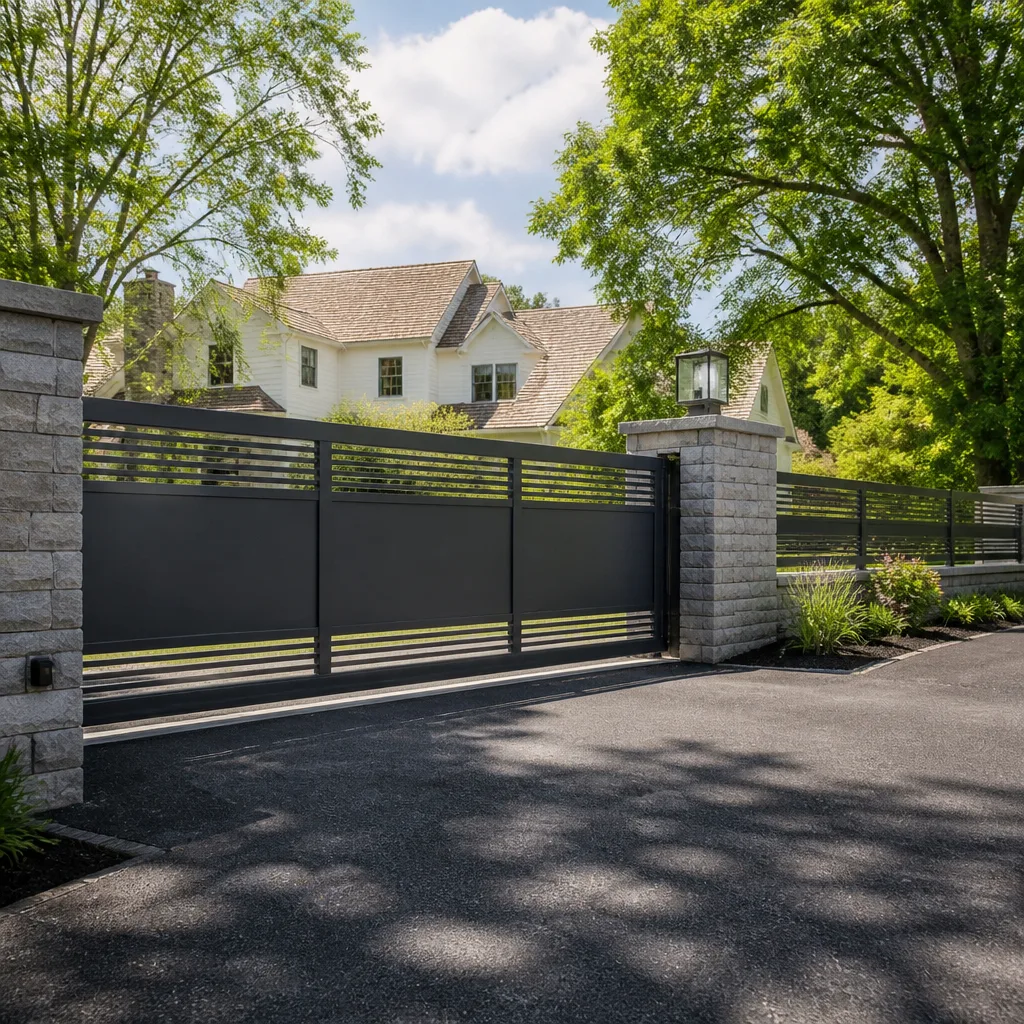 Sliding driveway gates
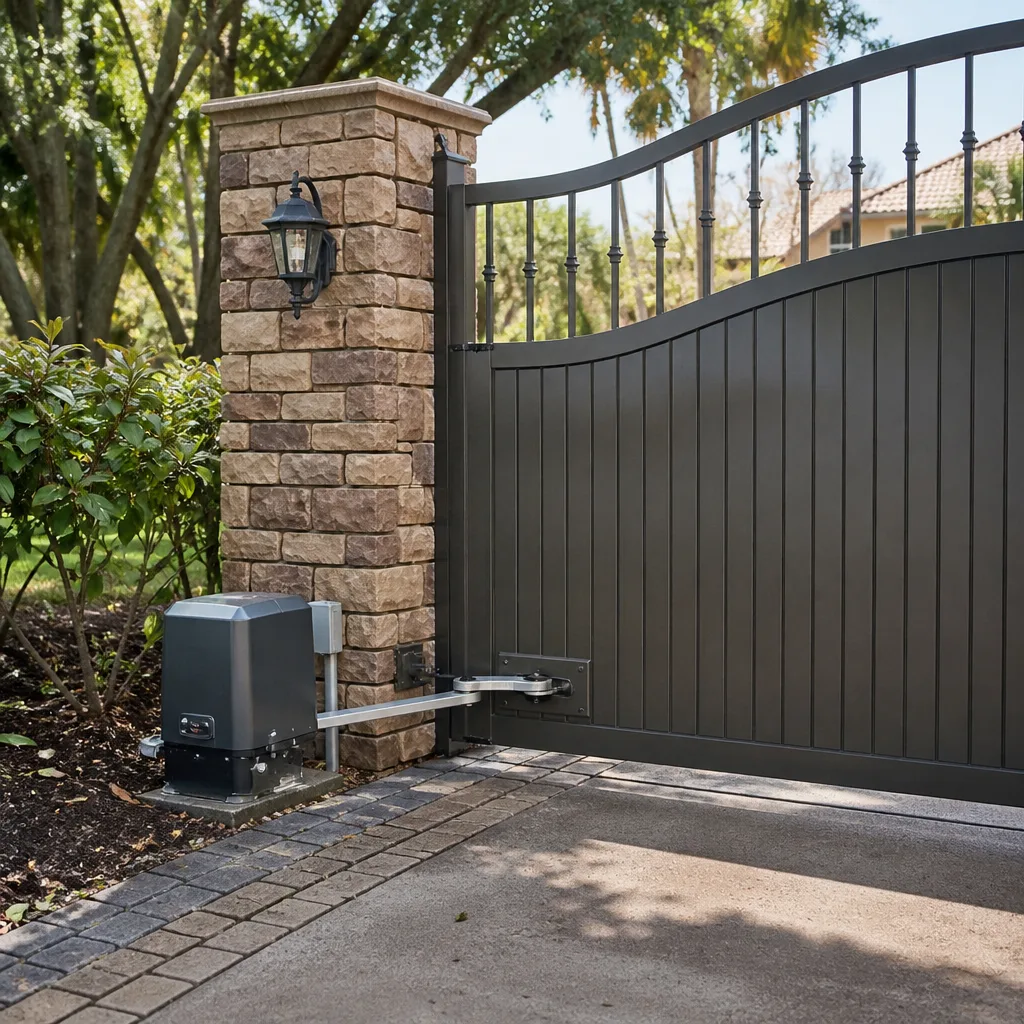 LiftMaster operators
Free on-site gate assessment - hinges, posts, and your LiftMaster or Nice gate operator checked before anything is quoted
The assessment is free and the quote is the invoice.
Get your free estimateChoosing the Right Gate Repair Brand: A Buyer’s Guide for Chesapeake
Most buyers compare gate operators by the spec sheet: opening speed, weight capacity, cycle rating, warranty length. That’s backwards. The most reliable brand is the one a trained technician can actually reach when the gate stops working, and in Chesapeake that calculation depends less on horsepower ratings and more on who has parts in stock and who knows the control boards. A brand with a beautiful spec sheet and no local support network will sit out of service for days waiting on a component. This guide covers how to judge brands for the Chesapeake market specifically: humidity tolerance, duty cycle math, failure patterns and repair costs over the life of the system.
Quick Answer
The right gate operator brand in Chesapeake is the one with proven service depth in the Hampton Roads market: technicians who know the control board, and parts accessible without a week-long wait. For residential driveways, brands like Ghost Controls and Mighty Mule offer accessible open-platform systems; for heavier commercial or HOA use, BFT, FAAC and DoorKing hold up better to daily cycling. If your gate is already failing, we can help with gate repair regardless of which brand you own.
Styles & brands we work with
- Wrought iron
- Wood & steel frame
- Farm & ranch
- Sliding driveway gates
- LiftMaster operators
Table of Contents
- Why a Brand Choice Is a 10-to-15-Year Commitment
- Judging Brands for Chesapeake’s Humidity and Heat
- Parts Availability in the Hampton Roads Market
- Residential vs. Commercial Duty Cycles Explained
- Brand-Specific Failure Patterns We See in Chesapeake
- How Brand Choice Affects Long-Term Repair Costs
- Open-Platform vs. Proprietary Control Systems
- How to Evaluate a Brand in Five Steps
Why a Brand Choice Is a 10-to-15-Year Commitment
A gate operator is not a standalone purchase. It’s the start of a relationship with a control platform, a parts chain, a service network and a warranty process. That relationship typically lasts 10 to 15 years, and the first owner often isn’t the last. Homes in Great Bridge, Western Branch and Hickory change hands. HOAs switch management companies. The operator stays.
When you buy a brand, you’re really buying four things:
- Parts continuity. How long does the manufacturer keep making boards, limit switches and arms for your model?
- Service knowledge. Are technicians near Chesapeake familiar with that control board, or will they be reading the manual for the first time?
- Documentation and support. Does the manufacturer publish diagnostics, or is every fault a call to a dealer?
- Upgrade path. Can the operator be updated with a new control board, or does it need full replacement when one board fails?
Three brands with equal-looking spec sheets can score wildly differently on those four criteria, and that’s why the brand conversation belongs before the install, not after the first breakdown. In our experience, the homeowners and property managers who are happiest with their systems bought on service depth, not on the fastest opening speed on the brochure.
Judging Brands for Chesapeake’s Humidity and Heat
Southeast Virginia is hard on outdoor equipment. Summers are long, humid and hot, and the temperature swings between seasons take a toll on housings, seals, control enclosures and wiring. That environment rewards certain design choices and punishes others, and the spec sheet rarely tells you which is which.
Here’s what matters for a Chesapeake install:
- Corrosion-resistant housings. Look for galvanized steel, heavy powder coating or UV-stable poly housing. Bare automotive paint on a steel enclosure does not last in this climate.
- Sealed control enclosures. Humidity finds its way into anything with an open board. Gasketed enclosures and conformal coating on the PCB cut down on intermittent electrical faults through the summer.
- Thermal cycling tolerance. Components expand and contract over the year. Connectors, terminal blocks and solder joints that aren’t well finished show up as no-start faults on the hottest days and on the coldest mornings.
- Battery and capacitor life in the heat. Backup batteries live inside or near the enclosure, and heat shortens their working life. Brands that separate the battery from the motor compartment tend to have fewer surprises.
In our experience around Chesapeake, the failure patterns show up first in the control box, not the motor. A brand that treats the control enclosure as an afterthought will keep your technician busy for years, however strong the gate arm is rated.
Parts Availability in the Hampton Roads Market
Parts availability is the difference between a one-day fix and a week with your gate propped open. The Hampton Roads market is a real logistics consideration, because not every brand has local distributor stock, and some components ship from out of state.
Here’s how to think about it:
- Check whether the brand has regional distribution. Ask the installer or a local service company whether common parts (limit switches, receiver boards, replacement remotes, control boards) are stocked in the region or ordered from a factory.
- Identify the failure-prone parts on your specific model. Control boards, loop detectors and safety sensors fail more often than gate arms. If those come from far away, your downtime will be longer.
- Ask about commercial-grade distribution. Brands like BFT, FAAC and DoorKing tend to be carried by gate and access-control distributors serving commercial properties, so a commercial system has better odds of a fast parts turnaround.
- Consider generic accessories. Standard safety loops, keypads, photo eyes and remotes are often interchangeable. Proprietary boards are where the wait is.
During a hot, wet Chesapeake summer, a gate stuck open or stuck closed creates real exposure for an HOA or a commercial property. If parts are a week away, that exposure sits there for a week. Brand choice made years earlier determines how long that gap is.
Residential vs. Commercial Duty Cycles Explained
Duty cycle is the single most misunderstood rating on a gate operator. A residential-rated unit might cycle a few times a day at a single-family home. Put that same operator on a gate shared by a 200-home HOA, a church driveway or a self-storage property, and it will fail early. Not because the brand is bad, but because the wrong unit went onto the wrong job.
Duty cycle is best understood in three tiers:
- Residential/light-duty. Designed for a single household. A handful of cycles a day with recovery time in between. Good for a private driveway on a quiet street in Deep Creek or Greenbrier.
- Medium/commercial-duty. Built for frequent use with a duty cycle rating that supports dozens of openings per hour. Suited to HOAs, apartment communities, schools and office parks.
- Heavy/continuous-duty. Designed for near-constant use, high-traffic commercial locations and heavy gate panels. More expensive and often built around larger motors and industrial control boards.
Here’s a rough rule that holds up on most jobs we see: any gate that opens 40 or more times a day should be on a commercial-duty operator, not a residential one. Homeowners often don’t know the cycle count on their own gate, and they get caught out when a new household, a home business or an HOA starts sharing the entrance. When we look at a failing operator, the first question is how many cycles it has actually been doing, not how old it is.
Brand-Specific Failure Patterns We See in Chesapeake
The spec sheet tells you what a manufacturer claims a brand can do. Field experience tells you what fails first. In our area, a handful of patterns repeat across brands, and knowing them helps when you’re making a purchase decision or deciding whether a repair is worth it.
What tends to show up:
- Entry-level residential operators. Brands like Ghost Controls and Mighty Mule are popular, accessible and well-suited to a simple driveway gate. Their common failure points are battery health, control-board moisture and chain-arm wear at the push points. Service and parts for these are generally straightforward.
- Mid-market residential/commercial crossover. Brands like Linear and Viking often turn up on HOA and light commercial gates. The recurring issues are receiver and remote pairing, sensor alignment and limited switch components wearing out on older models.
- Commercial-grade systems. BFT, FAAC and DoorKing systems are built for cycle volume. Their failures tend to cluster in the control board, loop detector and safety edge rather than the motor or arm. When serviced on schedule, these systems settle into long reliable service lives.
The pattern isn’t a judgment against any one brand. It’s a reminder that the failure point moves depending on the duty tier. A brand that fails early on a residential gate is not necessarily the same brand that fails early on a commercial gate. If you want specific guidance about your system, see our electric gate repair service or give us a call with the model in hand.
How Brand Choice Affects Long-Term Repair Costs
Two operators can cost the same to buy and thousands apart to own. That difference shows up in parts pricing, whether components are individually replaceable, and how easily a technician can diagnose a fault without a factory call.
The main cost drivers over the life of a gate system:
- Board-level vs. component-level repairs. Some brands let a technician replace a single relay or receiver module. Others require a full control-board swap for any fault.
- Proprietary parts pricing. If a single manufacturer controls the supply of a board, the price is what they say it is. Generic parts (photo eyes, loops, keypads, remotes) don’t carry that premium.
- Diagnostic time. A familiar control board takes far less time to fault-find than an unfamiliar one. Technicians across the trade are faster on the platforms they see regularly, and that time shows up on the invoice.
- Obsolete-model risk. When a manufacturer discontinues a line, the remaining stock holds value for a while and then gets scarce. Owners of discontinued systems sometimes pay close to replacement cost for a single board.
The practical takeaway: an open-platform or well-supported system frequently costs less to repair over the years than a locked-in proprietary one, even when the purchase price is higher. When we advise a customer on repair or replacement, we give them the honest math on both options instead of steering them to whatever we might prefer to sell.
Open-Platform vs. Proprietary Control Systems
Gate controllers run on one of two philosophies. Open-platform systems use broadly available control components and standard accessories, so any trained technician can source parts and program them. Proprietary systems are closed: the manufacturer controls the parts supply, the diagnostics and often the installer chain. There are genuine arguments for both.
Open-platform systems are easier to service long-term, and emergency parts are usually easier to find. They also tend to be easier to integrate with third-party access control, keypads and intercoms. Proprietary systems sometimes offer tighter integration and support from the manufacturer, but you pay for that with parts prices and a narrower service pool.
The real risk sits with discontinued product lines. When a manufacturer stops making a controller, owners of proprietary systems have no alternative but to accept the scarcity, while owners of open systems often find a compatible replacement. Before buying, ask the installer directly: what happens if this model gets discontinued in five years? A brand that can answer that question clearly is worth more than a slightly better spec sheet.
How to Evaluate a Brand in Five Steps
When you’re deciding on a gate operator brand for a Chesapeake property, the evaluation is more practical than theoretical. Work through these five steps before you commit to a unit or a service company.
- Match the duty tier to the real cycle count. Count how many times the gate opens on a typical day on the busiest week of the year, not an average. Choose residential, medium-commercial or heavy-duty accordingly.
- Check local service coverage. Ask how many technicians in the area are familiar with the brand and what the typical parts lead time is. If either answer is unclear, that’s a warning sign.
- Ask about the failure-prone parts. Ask specifically about control boards, safety sensors and receiver modules. If those are proprietary and far away, budget for downtime.
- Review the climate for the housing and control enclosure. A galvanized or heavy powder-coated enclosure and a sealed control box will last longer in Chesapeake than bare painted steel with an open board.
- Confirm the service relationship. A technician who works on the brand you’re buying is a long-term asset. A dealer who only sells one brand may not be the right partner if you need a repair on a different system later.
The brand you choose matters, but the service relationship matters just as much. A good brand with a strong local technician beats a great brand with a service gap every time.
Common Mistakes to Avoid
- Buying on the spec sheet alone. Fast opening speeds and high horsepower don’t compensate for missing local service coverage. Check the service network before the brochure.
- Putting a residential operator on a shared gate. A 200-home HOA entrance will chew through a residential-duty unit in a fraction of its rated life. If the gate opens 40 or more times a day, buy commercial duty.
- Assuming all brands fail the same way. Residential, mid-range and commercial systems have different failure patterns. A component known to be reliable on a commercial BFT may be under-spec for a residential Ghost Controls system, and vice versa.
- Ignoring the control enclosure in a Chesapeake install. The humid summer hits the board before it hits the motor. A bare painted steel box with an unsealed board will cost more in electrical repairs than a properly sealed one.
- Overlooking discontinued lines. A discontinued model can leave you sourcing scarce parts. Before you buy, ask what the upgrade path looks like if the manufacturer retires the line.
- Renting a technician who doesn’t know the brand. An unfamiliar control board adds diagnostic time and stalled repairs. Match the brand to the technician as carefully as you match it to the gate.
- Assuming repair always beats replacement. Sometimes it does and sometimes it doesn’t. A trusted service company should be willing to give you the honest math in both directions.
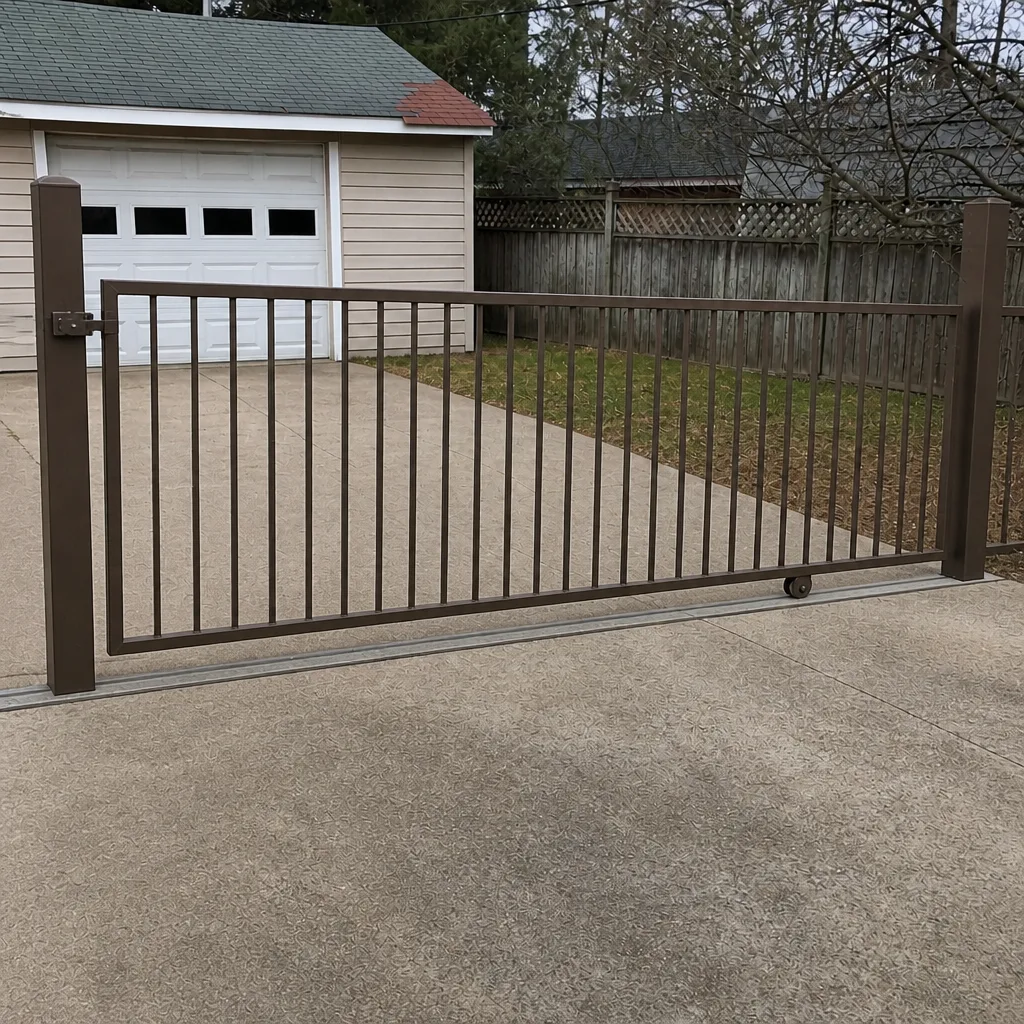
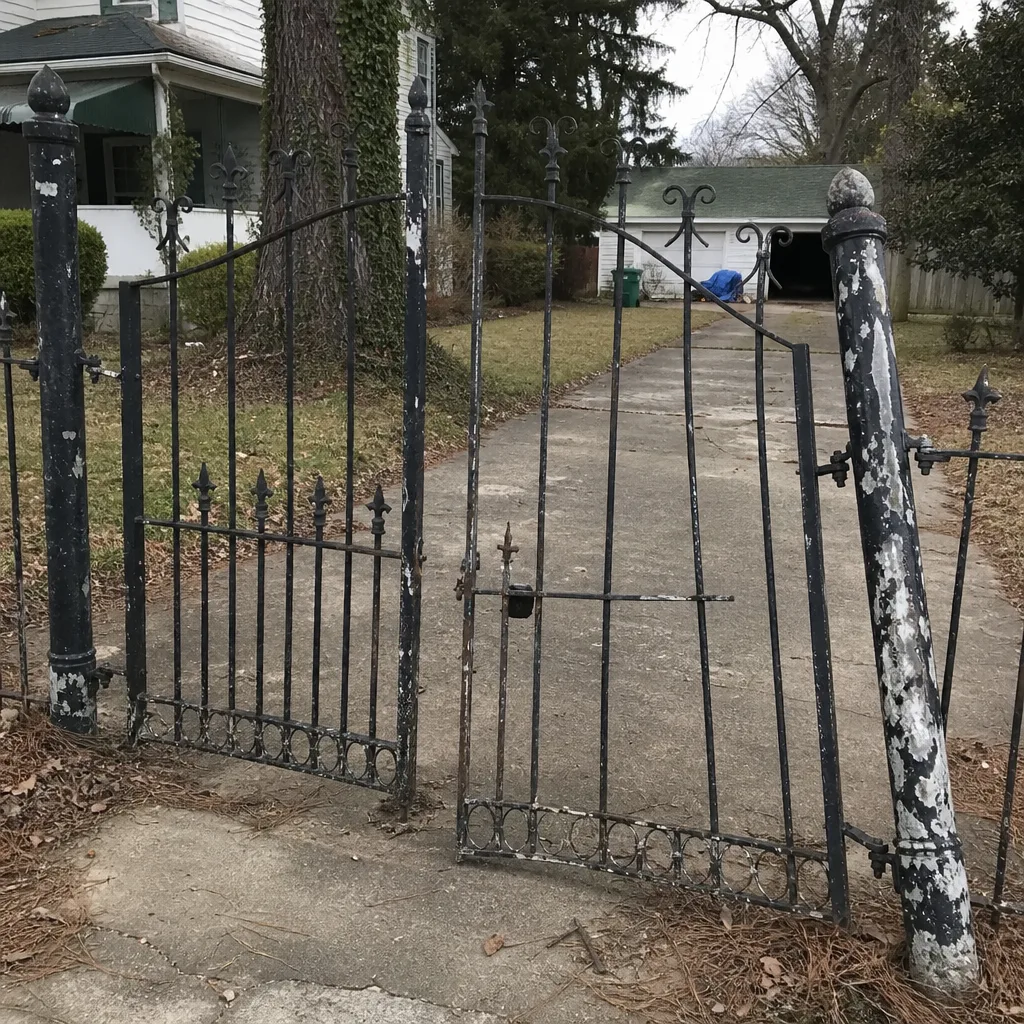
See the difference
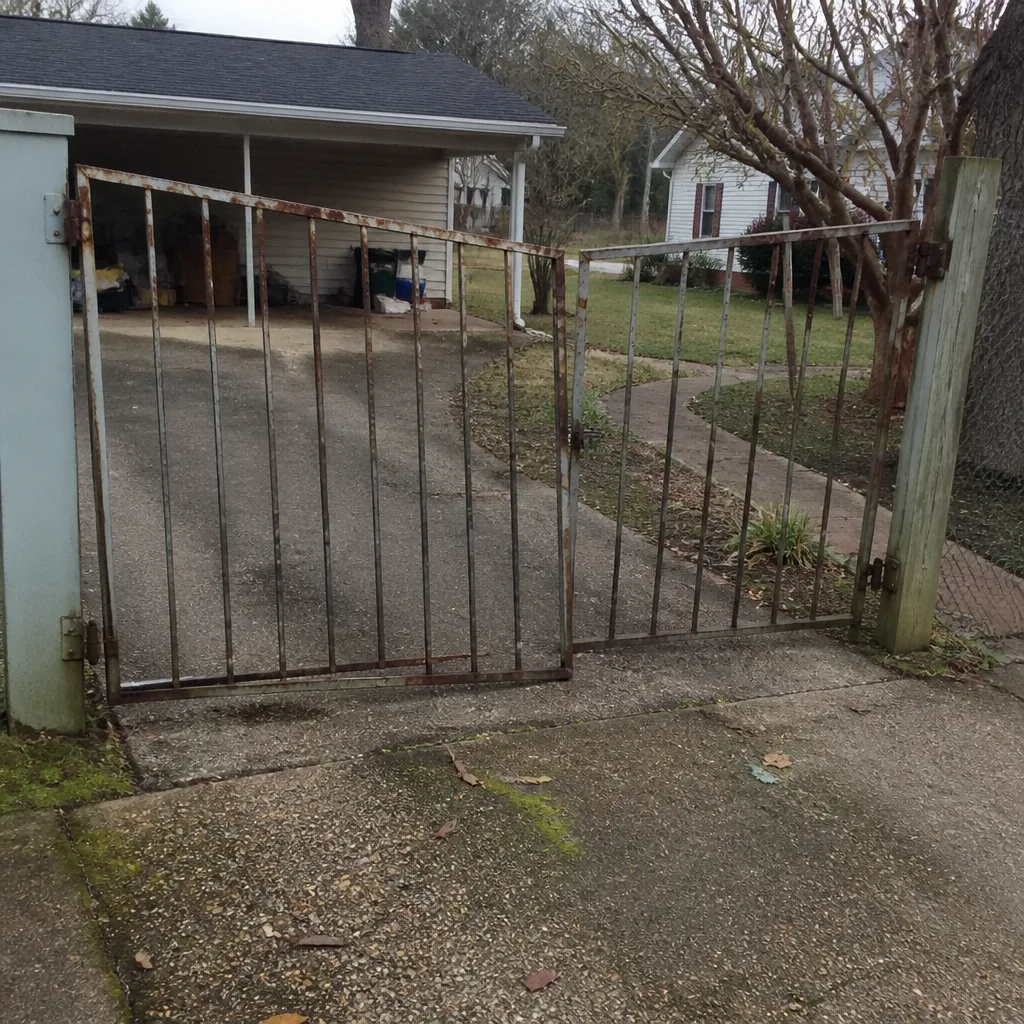 Before
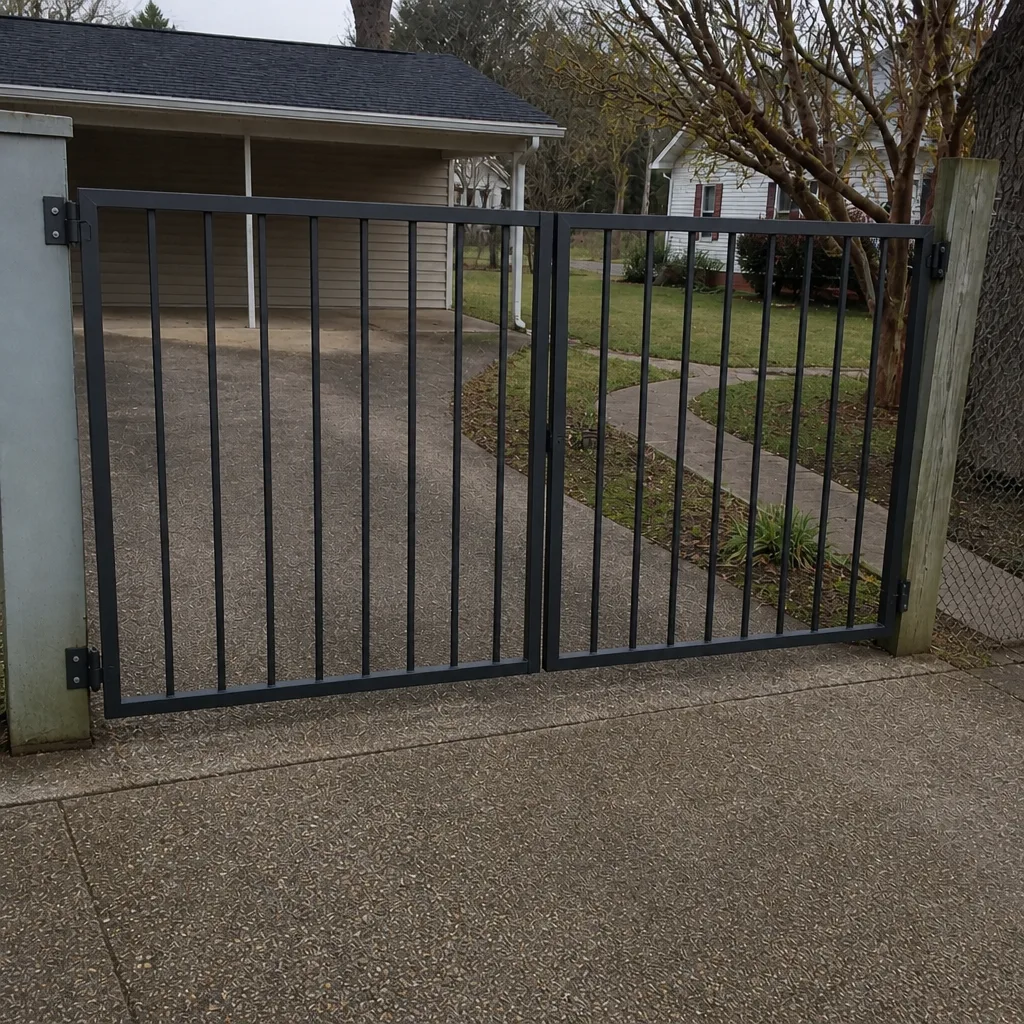 After
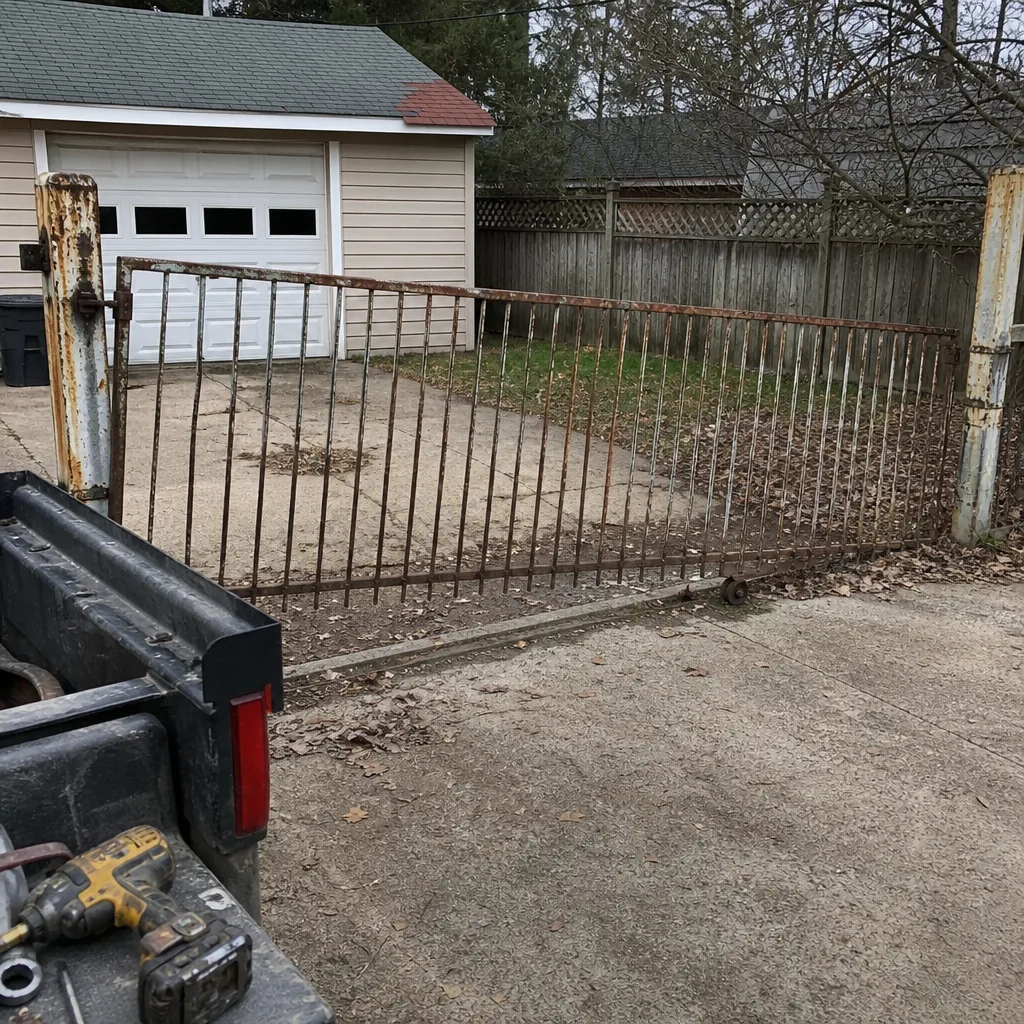 Before
 After
 Before
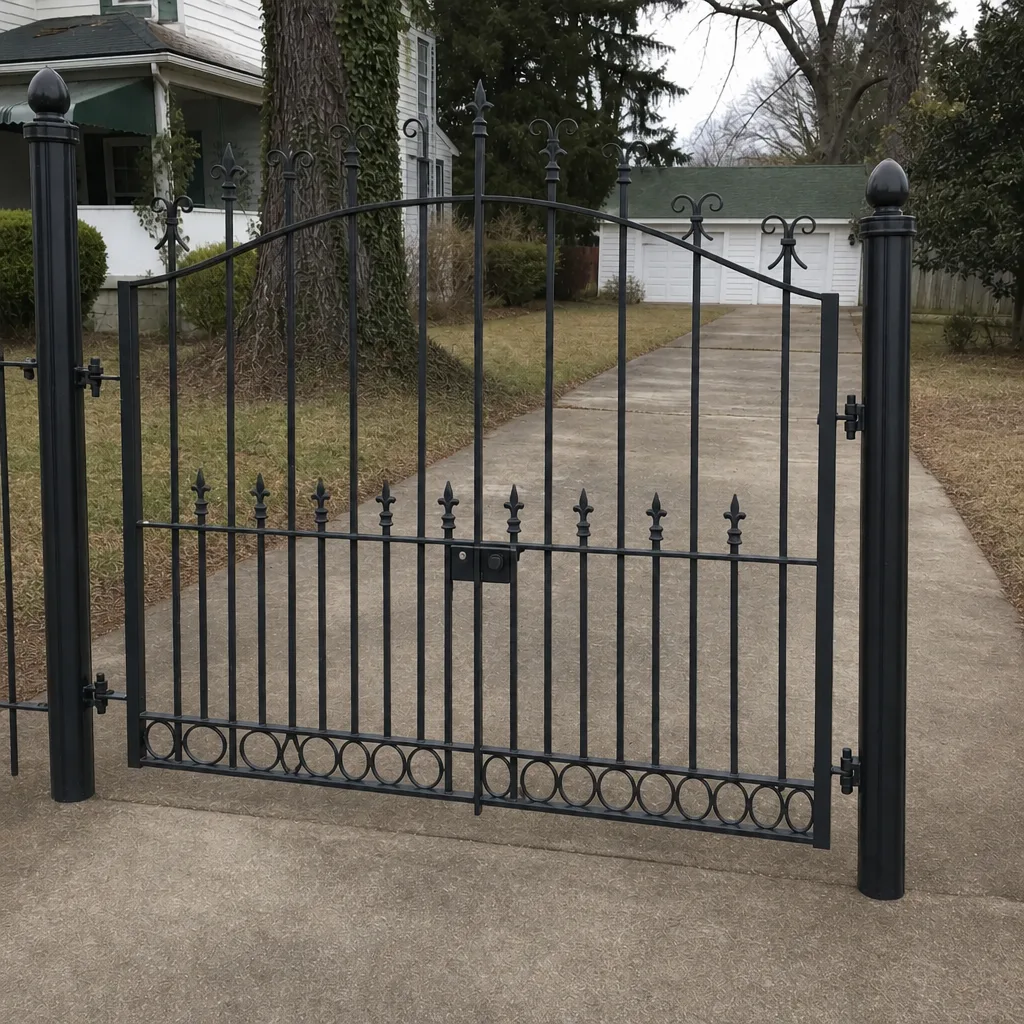 After
When to Call a Professional
Some gate issues are simple: a dead remote battery, a misaligned photo eye, a fuse. Most aren’t. Once a gate starts opening inconsistently, stopping halfway, or refusing to respond at all, the fault usually sits in the control board, the motor, the safety loop or the wiring. Those systems carry mains voltage, and they involve moving panels that can crush or trap. That’s not a job for a homeowner with a multimeter and an afternoon.
Call a professional when you see any of the following:
- The gate stops mid-travel or reverses without an obstruction.
- The operator hums but the gate doesn’t move.
- The motor or control box burns, buzzes or smells hot.
- The gate is stuck open or stuck closed and needs to be secured.
- The safety sensors or loops no longer stop the gate.
- The gate hits the ground or drags on its track.
- The operator is a brand you’ve never had service on and the original installer is gone.
Gate Repair Chesapeake offers free estimates in Chesapeake. Call (833) 323-1302. We answer 24/7. Fast dispatch from 7am to 7pm, Sunday through Friday.
Frequently Asked Questions
For a single-family driveway gate, the most reliable brand is the one with local service coverage and accessible parts. Ghost Controls and Mighty Mule are common in residential installations here because they’re widely supported and easy to service. For HOA or commercial gates, BFT, FAAC and DoorKing hold up better to daily cycling. Call (833) 323-1302 for a free estimate and we’ll tell you which brand fits your gate and duty tier.
Check the model plate on the operator housing and look at the duty-cycle rating on the spec sheet, then compare it with how often the gate actually opens. A gate that cycles 40 or more times a day needs a commercial-duty unit; a single household driveway usually sits well under that. If you can’t find the spec or the plate is worn, we can identify it on site.
It depends almost entirely on the brand. Open-platform systems and brands with regional distributor stock take days at most for common components. Proprietary boards and discontinued models can take longer, sometimes much longer. Ask the service company about parts lead times before committing to a brand or a repair.
Sometimes. Many failures are in components that don’t depend on the original model, like safety loops, photo eyes, receivers and remotes. When the proprietary control board is the failed part and the line is discontinued, replacement becomes the honest recommendation. We’ll give you the cost comparison before you decide.
We work with at least nine brands, including LiftMaster, FAAC, BFT, Linear, Viking, Ghost Controls, DoorKing, Elite and Mighty Mule, spanning both residential and commercial systems. Our technicians have up to 13 years of experience and offer free estimates in Chesapeake. Call (833) 323-1302 to book one.
Ask three things: who services the brand locally, what the lead time is on the control board and safety sensors, and what the upgrade path is if the line is discontinued. Ask about the enclosure, too; the Chesapeake summer humidity is harder on the control box than the motor. Our team can walk through the comparison with you and help with Gate Repair Chesapeake on the service side as well.
The Bottom Line
The best gate operator brand in Chesapeake isn’t the one with the fastest spec sheet or the biggest warranty. It’s the one with a local service network, accessible parts and a control platform a technician can actually diagnose. Match the duty tier to the real cycle count on the property, buy for humidity tolerance and parts availability, and treat the service relationship as part of the purchase. That thinking carries over the entire 10- to 15-year life of the system. Repair or replace, we’ll tell you which one actually makes sense for your gate.
Call (833) 323-1302 for a free estimate on your gate repair or installation. We answer 24/7. Fast dispatch from 7am to 7pm, Sunday through Friday.
Written by the team at Gate Repair Chesapeake.