
Last updated November 15, 2026
 Wrought iron
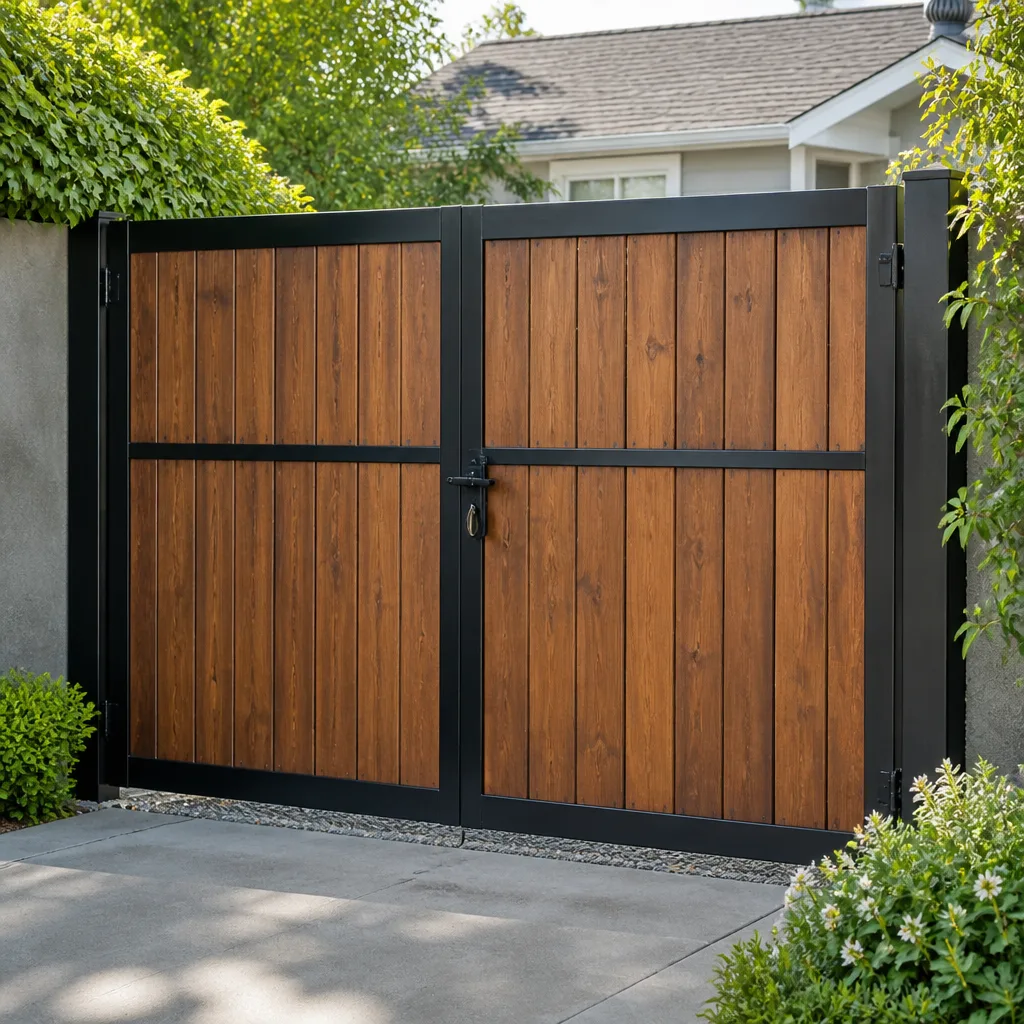 Wood & steel frame
 Farm & ranch
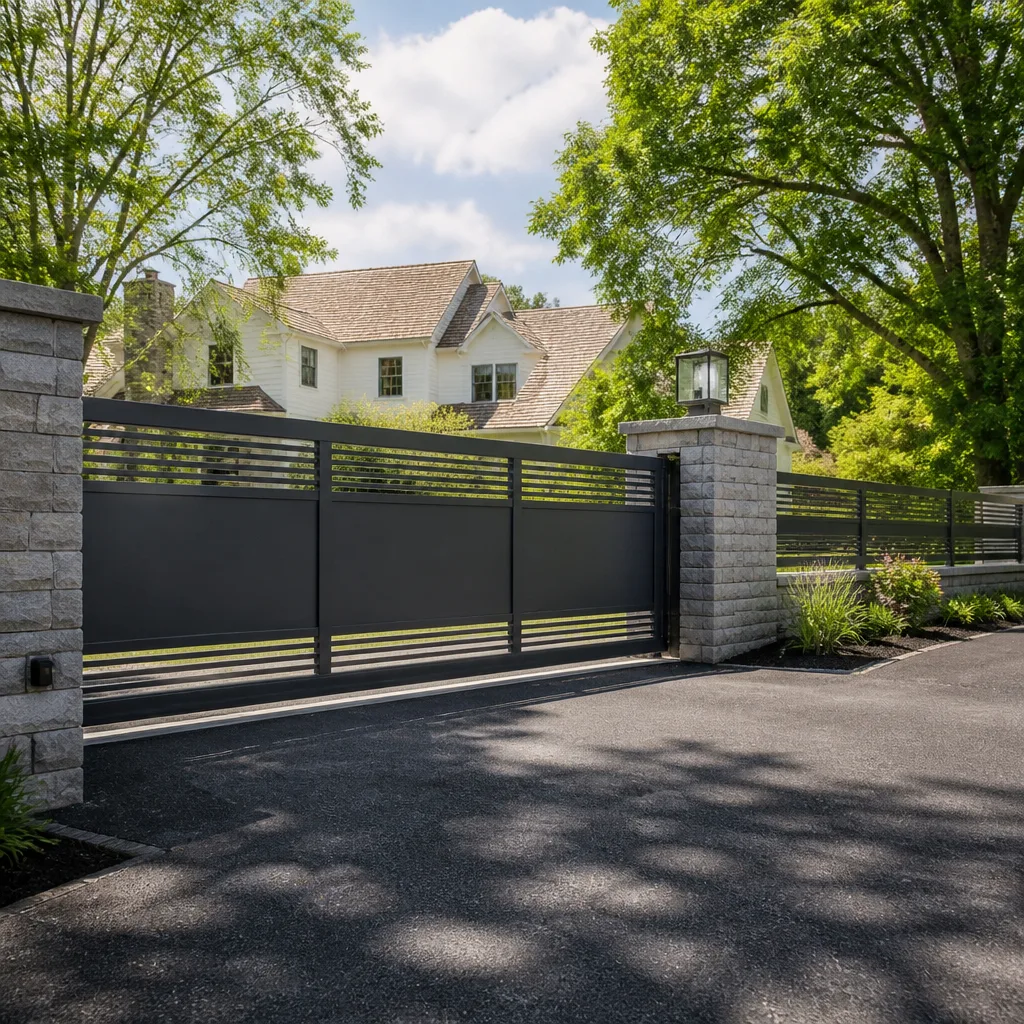 Sliding driveway gates
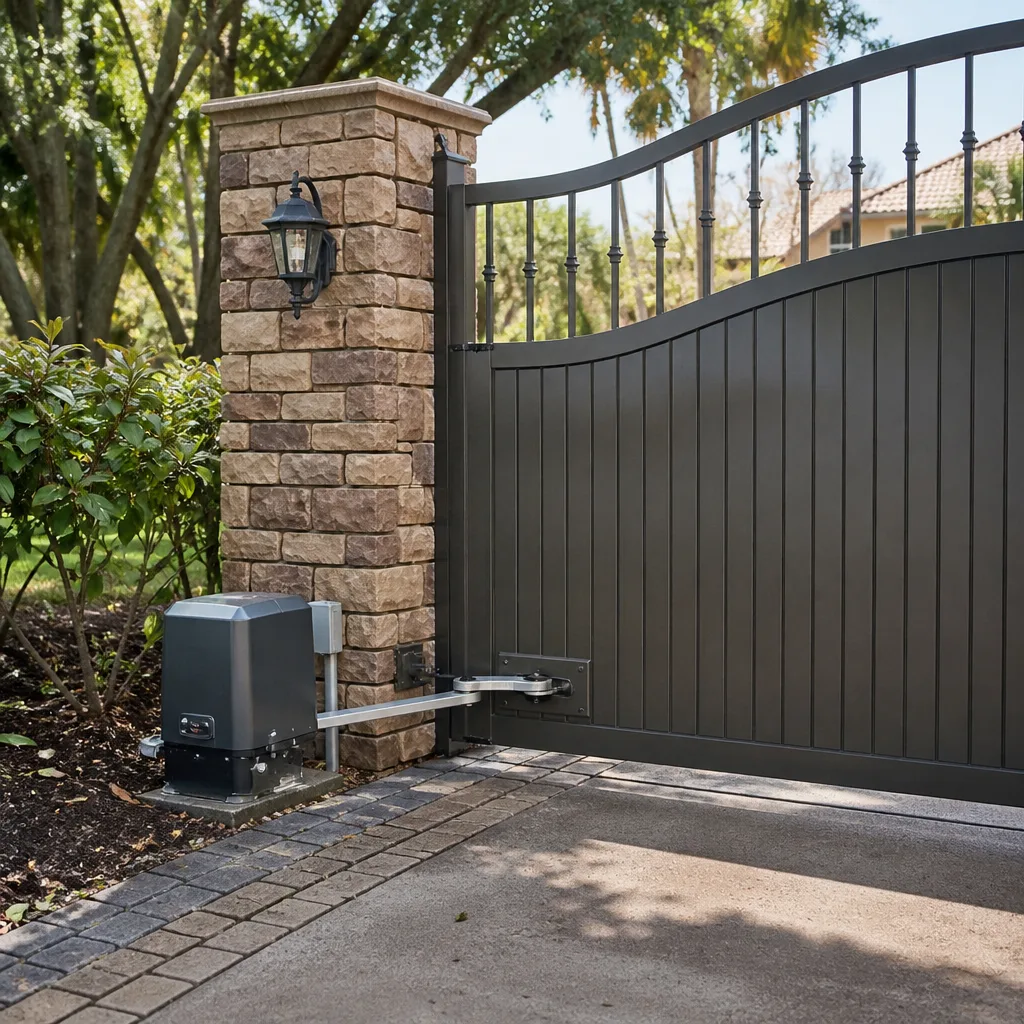 LiftMaster operators
Free on-site gate assessment - hinges, posts, and your LiftMaster or Nice gate operator checked before anything is quoted
The assessment is free and the quote is the invoice.
Get your free estimateDIY vs Professional Gate Repair: The Chesapeake Homeowner’s Decision Guide
Replacing a gate hinge looks like a simple afternoon project until you realize the existing post is set in compromised concrete and the new hinge load will accelerate the failure. A professional catches that in the first five minutes of looking at the gate. A homeowner usually discovers it later, when the post starts to lean and the gate no longer latches the way it used to. The decision between tackling a gate repair yourself and hiring a professional isn’t really about how handy you are. It comes down to three things: what kind of system you have, what category of failure you’re dealing with, and how much liability you’re willing to take on. This guide draws hard lines between the repairs that are genuinely safe to do yourself and the ones that look simple but carry real risk. We’ll walk through the specific tasks, the wiring dangers on automated systems, how Virginia liability law treats self-performed work, and a practical cost framework for Chesapeake homeowners.
Quick Answer
Most gate repairs fall into two clean categories: mechanical issues you can safely handle yourself (tightening hardware, clearing debris, adjusting a latch) and everything involving the operator, wiring, or structural integrity, which should go to a professional. The dividing line isn’t difficulty. It’s whether a mistake could hurt someone, damage the system further, or create liability you didn’t plan for. If your automated gate involves low-voltage control wiring, safety sensors, or a post that may be compromised, call a professional. Call (833) 323-1302. We answer 24/7. Fast dispatch from 7am to 7pm, Sunday through Friday.
Styles & brands we work with
- Wrought iron
- Wood & steel frame
- Farm & ranch
- Sliding driveway gates
- LiftMaster operators
Table of Contents
- Task-by-Task: What’s DIY-Safe and What Isn’t
- The Hidden Failure Modes That Trip Up DIY Repairs
- Why Low-Voltage Gate Wiring Isn’t Simple Electrical Work
- How Virginia Liability Law Treats Self-Performed Gate Work
- The Diagnostic Problem: Finding the Real Root Cause
- The Cost-Benefit Framework for Chesapeake Homeowners
- How Your System Type Changes the Calculation
- When to Call a Professional
Task-by-Task: What’s DIY-Safe and What Isn’t
The single most useful thing a homeowner can do is separate gate repairs into clear bins before picking up a tool. Some tasks genuinely don’t require a technician. Others look like five-minute fixes but hide failure modes that cost far more to correct later.
Genuinely DIY-appropriate:
- Clearing debris, dirt, and vegetation from the gate’s travel path
- Tightening visible bolts on hinges and brackets (not adjusting their position)
- Lubricating hinges, rollers, and latches with a manufacturer-appropriate lubricant
- Adjusting a manual latch alignment by a small amount
- Replacing batteries in a remote or keypad (not the control board)
- Trimming vegetation away from safety sensor sight lines
Looks simple, carries hidden risk:
- Replacing hinge hardware when the post or gate frame is compromised
- Adjusting safety sensor angles or repositioning photo-eyes
- Resetting the operator’s travel limits without knowing the system’s reference points
- Swapping a keypad or receiver without matching the radio frequency and protocol
- Replacing a control board or motor on an automated system
- Anything involving wires, terminals, or the low-voltage run to the operator
In our experience, the repairs that go wrong most often are the ones homeowners start with confidence because the symptom looks minor. A sagging gate gets a new hinge, but the real problem is a post footing. A gate that won’t fully close gets a sensor adjustment, but the operator has lost its reference position. In Chesapeake, where many properties have both manual and automated gates serving driveways and yard perimeters, those misdiagnoses are the most common reason a small repair turns into a larger one.
The Hidden Failure Modes That Trip Up DIY Repairs
The repairs that punish DIY most are the ones with a hidden second layer. Fixing the visible symptom without addressing the underlying cause just defers the failure.
- The compromised post footing. A hinge that fails repeatedly usually points to a post footing that has settled, cracked, or absorbed moisture. Bolting a new hinge onto a failing post accelerates the failure. A technician checks the post before replacing hardware.
- The operator out of sync. When an automated gate stops at odd positions or reverses unexpectedly, homeowners often assume the motor is going bad. In our experience it’s usually a limit switch, an encoder, or a control board logic issue. Replacing the motor first is an expensive guess.
- The sensor that isn’t the problem. Safety sensors get blamed for every “gate reverses on its own” complaint. Sometimes they’re misaligned. Sometimes a wire is loose. Sometimes the control board isn’t reading them correctly. Adjusting the sensor without confirming the circuit wastes time and can leave the gate in a less safe state.
- The battery assumption. Remotes and keypads failing gets blamed on batteries more often than warranted. On systems like Linear and Ghost Controls, signal interference and receiver pairing issues are just as common. Swap in a fresh battery to check, then look elsewhere.
- The hinge assumption on a misaligned gate. A gate dragging on the ground is often a hinge problem, but it can also be a post out of plumb, a bent frame, or a roller that’s worn. Replacing hinges on a skewed gate makes it worse.
The pattern is consistent: the hardest part of gate repair isn’t the fix. It’s identifying which fix actually addresses the root cause. That’s the diagnostic work a technician brings to the job.
Why Low-Voltage Gate Wiring Isn’t Simple Electrical Work
A common misconception is that low-voltage wiring on a gate operator is “just like a doorbell” and therefore safe to handle yourself. The voltage is low, but the failure modes are not. Automated gate wiring involves the operator’s control board, the safety sensor loops, the battery backup system, and often the keypad or access control run. A single wiring mistake can disable the operator, defeat the safety sensors, or create a ghost fault the homeowner spends hours chasing.
The specific risks worth understanding:
- Safety sensor circuits. Gate operators rely on photo-eye sensors and sometimes safety edges to reverse when they detect an obstruction. Wired incorrectly or bypassed, those circuits stop providing the protection they were designed for. That’s a serious issue on any automated driveway gate.
- Operator control boards. Boards on systems from BFT and Viking and similar brands are sensitive to reversed polarity, incorrect accessory voltage, and backfeeding from peripheral devices. A wrong connection can take out the board, and control boards are one of the more expensive parts to replace.
- Battery backup and charging circuits. Incorrect wiring here can leave the gate without backup power and, worse, damage the charging system.
- Accessory wiring. Keypads, receivers, loop detectors, and intercoms all need correct wiring to the operator. Running the wrong wire or the wrong terminal assignment produces intermittent failures that look like motor problems.
When we handle electric gate repair, the wiring check is one of the first things we do, because so many intermittent faults trace back to a connection that was made incorrectly during a prior DIY repair. If your gate involves any of these circuits and you don’t know the specific brand’s wiring diagram, that’s the point where the repair belongs in professional hands.
How Virginia Liability Law Treats Self-Performed Gate Work
Homeowners rarely think about liability until something goes wrong, and gate work is one of the trades where that calculation matters. An automated gate is a heavy moving object. If it fails to reverse on an obstruction, the results can be serious, especially on a driveway gate where children, pets, and vehicles are involved.
Under Virginia law, a homeowner who performs work on their own property generally bears responsibility for the consequences of that work if it causes injury or property damage. That general principle has practical consequences worth spelling out.
- Injury to a visitor or family member. If an automated gate was modified or repaired in a way that defeated its safety features, and someone is injured, the homeowner’s exposure is real. Insurance carriers may also review whether the work was performed to code and manufacturer spec when assessing a claim.
- Injury to a service worker or contractor. Anyone legitimately on your property has a right to expect the gate mechanism is safe. A repair that left a sensor bypassed or a control board misconfigured is difficult to defend.
- Injury to a trespasser or child. Virginia treats children and uninvited parties differently than adult visitors, but a gate that fails to reverse is a hazard regardless of how someone ended up in its path.
- Damage caused by the gate to a vehicle or structure. A gate that misreads its limits and contacts a car is a repair bill and often a claim.
None of this means a homeowner shouldn’t touch their gate. It means the liability calculation should influence which repairs you take on. Cosmetic and adjustment work? Low exposure. Anything involving the operator, safety sensors, or structural anchoring? That’s where a licensed, insured professional is worth the cost of the call.
The Diagnostic Problem: Finding the Real Root Cause
Ask any experienced gate technician and they’ll tell you that most of their time on a job goes to diagnosis, not the actual fix. A gate that “just stopped working” can have a dozen different causes, and the wrong guess wastes money twice: once on the wrong part, and once on the right part when the homeowner finally calls someone.
The diagnostic framework a technician follows looks something like this:
- Confirm the symptom precisely. Does the gate not move at all, move in one direction only, reverse unexpectedly, or fail to fully open or close? Each points to a different subsystem.
- Check power and the operator’s fault indicators. Most modern operators from brands like BFT, Linear, and Ghost Controls produce a fault code or LED pattern. Reading that is the fastest path to the real problem.
- Test safety inputs separately from motor function. Photo-eyes, safety edges, and loop detectors need to be confirmed functional before any conclusion is drawn about the motor or board.
- Inspect the mechanical system. Hinges, rollers, tracks, and gate alignment affect how the operator performs. A perfectly healthy motor on a misaligned gate will still behave badly.
- Check the anchor and the post. A post that has shifted since install can put the operator out of geometry. This is a step homeowners almost never check first.
- Confirm any recent changes. New landscaping, a new vehicle in the driveway, or a recent power outage can all produce symptoms that look like equipment failure.
If you can’t get through steps one through three with confidence, the diagnosis itself is the reason to call. We handle brand-agnostic diagnostics across the full range of systems, from a Mighty Mule residential operator to a commercial FAAC or DoorKing setup, which means we can identify the actual failure rather than guess based on what’s most common.
The Cost-Benefit Framework for Chesapeake Homeowners
DIY saves money in some scenarios and costs more in others. The distinction is cleaner than most homeowners assume, and it’s worth writing down the specific cases.
Where DIY genuinely saves money:
- Battery and remote pairing issues where you know the correct procedure
- Clearing debris, vegetation, and dirt from the travel path
- Tightening visible hardware (not adjustment of position)
- Resetting a tripped breaker or fuse on the operator’s dedicated circuit
- Applying appropriate lubricant to hinges, rollers, and latches
Where DIY usually costs more:
- Replacing electrical or electronic components and discovering the original part wasn’t the problem
- Adjusting sensor positions and inadvertently leaving the safety circuit in a non-functional state
- Replacing a hinge on a compromised post, then paying for both the hinge and the post repair
- Buying a replacement control board that doesn’t match the operator’s specific revision
- Any repair that voids a manufacturer warranty or a service contract on the equipment
A written estimate is the easiest way to compare. Free estimates let you put a real number next to the professional option instead of guessing what it “probably” costs. The dollar comparison then sits against the value of a correct diagnosis, a warranty on the work, and the liability protection that comes with experienced, insured work. For most homeowners in Chesapeake the professional option makes sense the moment the failure involves the operator, control board, sensors, or structural anchoring. For the simple cases, DIY makes sense and we’ll tell you so.
How Your System Type Changes the Calculation
The DIY-vs-professional question looks different depending on what kind of gate you have. The category, not the brand, usually dictates the right answer.
Manual gates: More of the work is genuinely DIY-appropriate because there’s no operator, no control board, and no safety sensor circuit. Hinge tightening, latch adjustment, and lubrication are reasonable homeowner tasks. Repairs involving post integrity, structural welding, or bent frames belong with a professional because a failed post or gate frame can cause injury and often requires re-anchoring that a homeowner can’t do safely.
Residential automated gates: Every repair involves either the operator, the wiring, or the safety circuit. Even “just the motor” jobs require the operator’s limits and safety sensors to be re-confirmed, and the process is part of what an experienced technician knows how to do reliably. Systems like Ghost Controls and Linear are common on Chesapeake residential driveways, and while the operators are user-friendly, the failure points tend to be diagnostic rather than mechanical.
Commercial and HOA gates: Doors and gates serving multiple users carry higher liability exposure. Work on a commercial operator or an access control system (a DoorKing setup, for example, or a BFT commercial operator) should go to a professional for both reliability and liability reasons. Property managers we work with tend to want a single point of contact from diagnosis through completion for exactly that reason.
If you’re not sure what category your gate falls into, that itself is a data point. A quick conversation with a technician will tell you whether the job is a wrench-and-lubricant fix or a proper diagnostic visit.
Common Mistakes to Avoid
- Replacing hardware before confirming the anchor. If the post is set in compromised concrete, new hinges make the failure faster, not slower. Always inspect the post and footing before swapping hinge hardware.
- Adjusting safety sensors without confirming the circuit. Re-aiming photo-eyes when the real issue is a loose wire or a control board fault leaves the gate behaving intermittently in a way that looks like a motor problem.
- Replacing the motor to fix a sensor issue. On any operator, “doesn’t move” has multiple causes. Confirm power, then safety inputs, then limits, then motor, in that order. Skipping steps costs more than calling.
- Buying a control board by brand only. Boards vary by model and revision. A mismatched board is a return and a delay. Confirm the exact part against the label on the existing board before ordering.
- Bypassing safety sensors to stop a repeated reversal. On a Chesapeake home gate this looks like a quick fix but eliminates the feature that prevents injury. If the sensors are the problem, fix the sensors.
- Ignoring the operator’s fault indicators. Modern operators from BFT, Linear, Viking, and Ghost Controls all produce diagnostic codes. Reading them is often the fastest path to the fix, and homeowners skip this step more than any other.
- Performing repairs without checking warranty coverage or insurance exposure. Work that voids a manufacturer warranty or exposes you to liability after an injury is not a saving, regardless of the part cost.
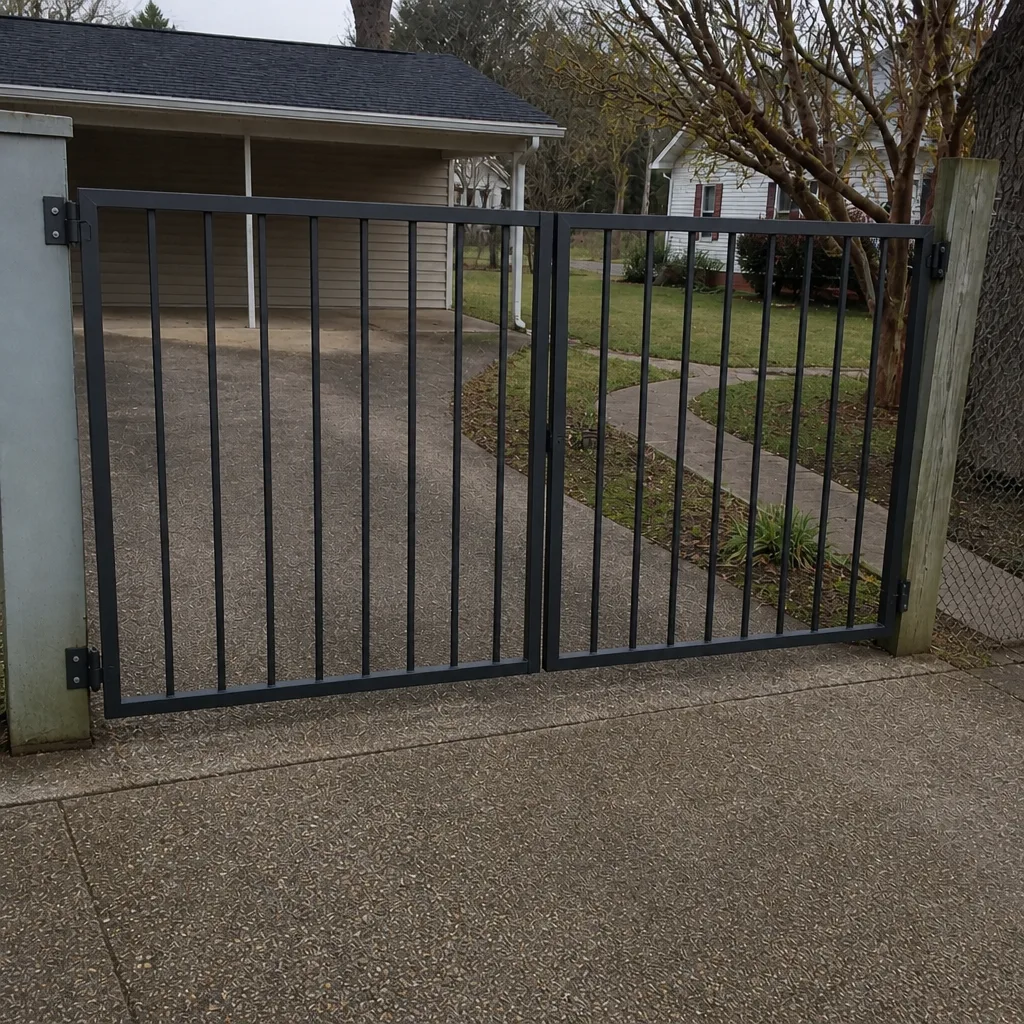
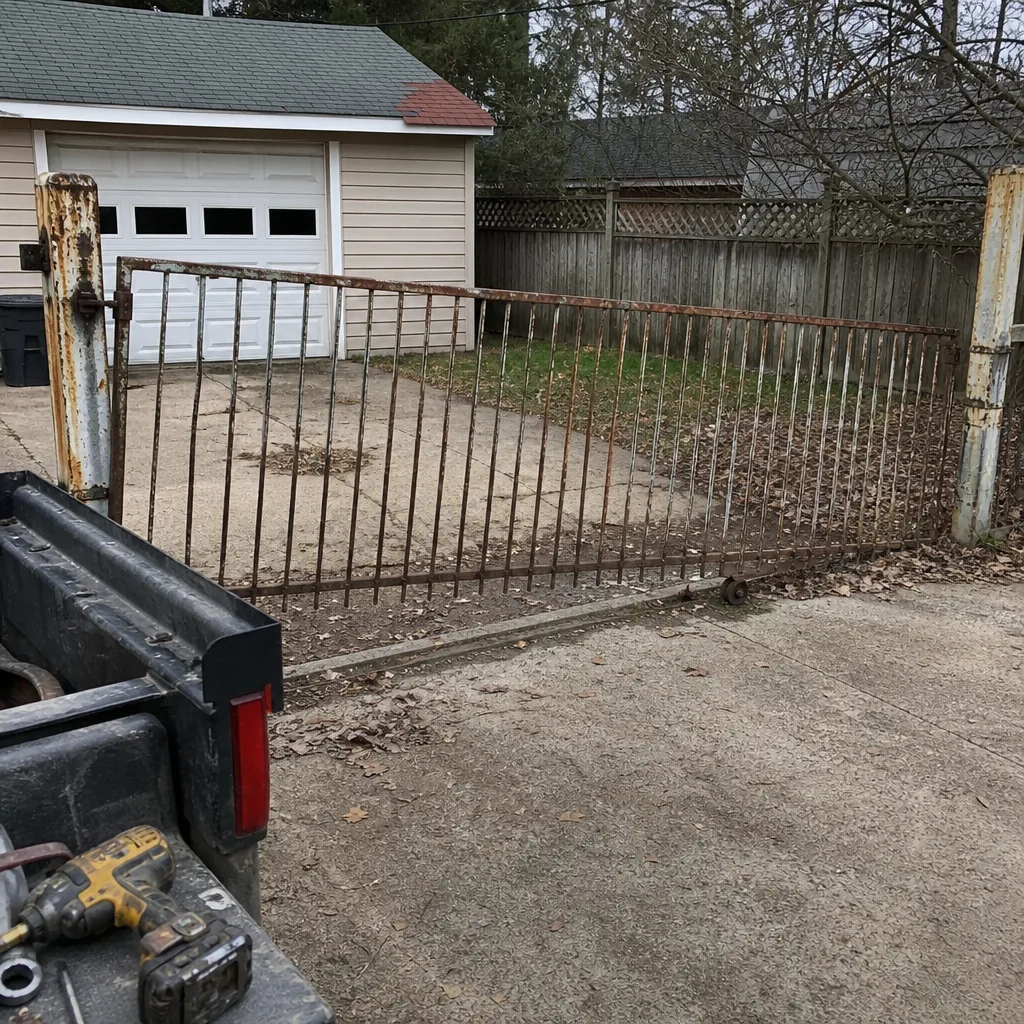
See the difference
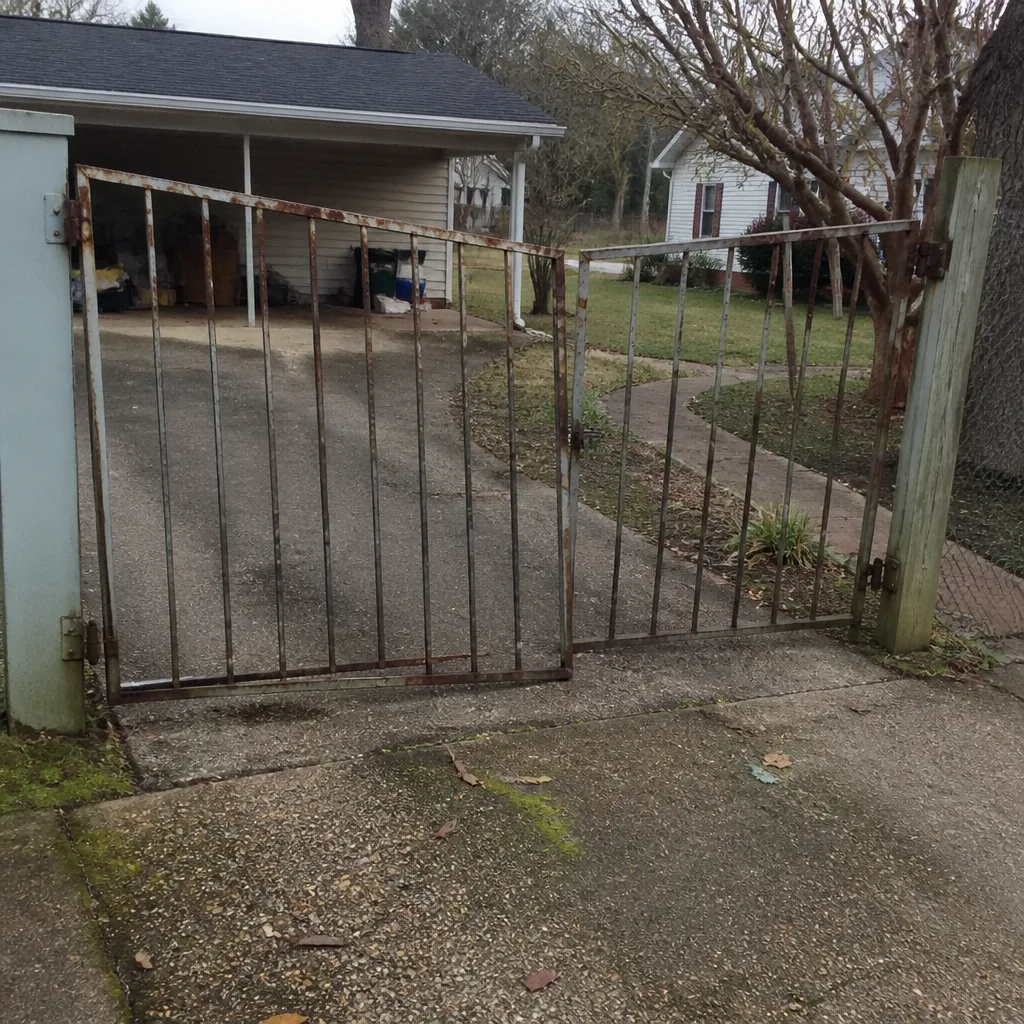 Before
 After
 Before
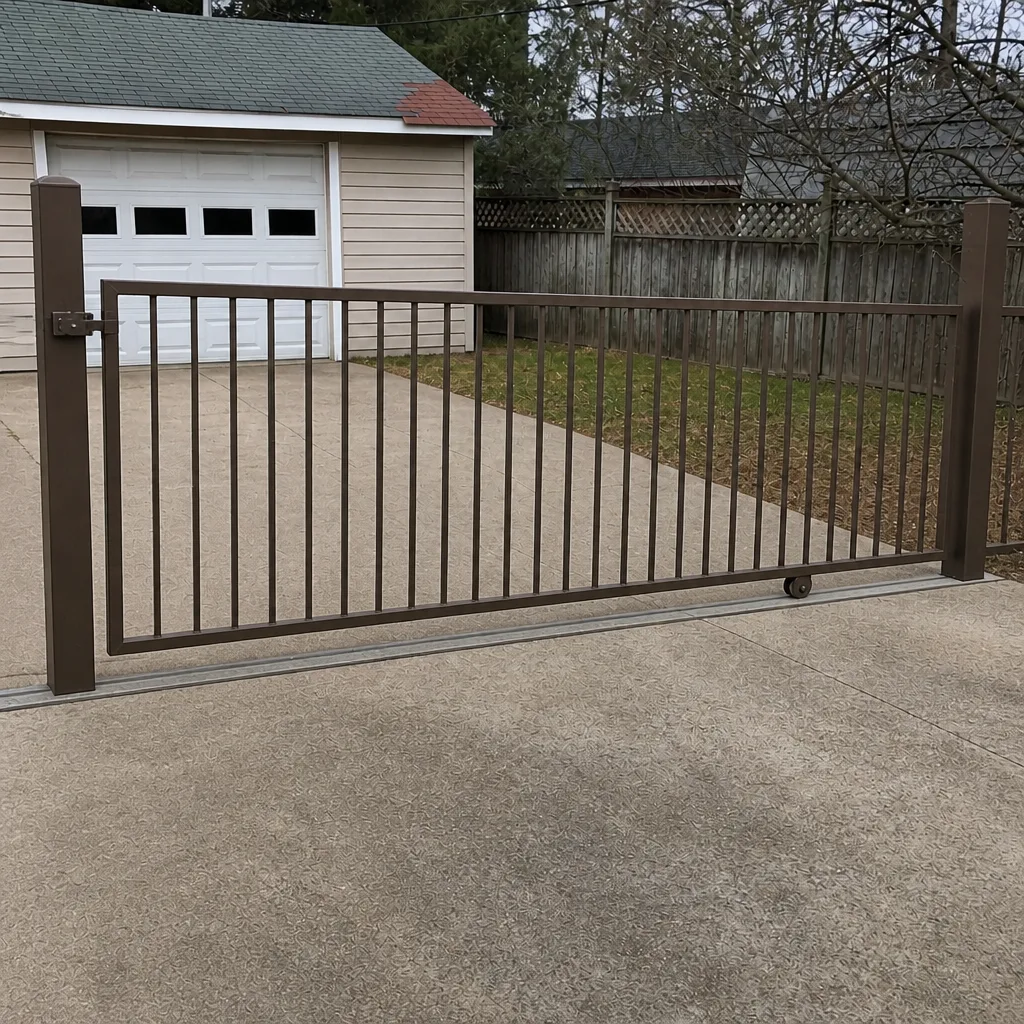 After
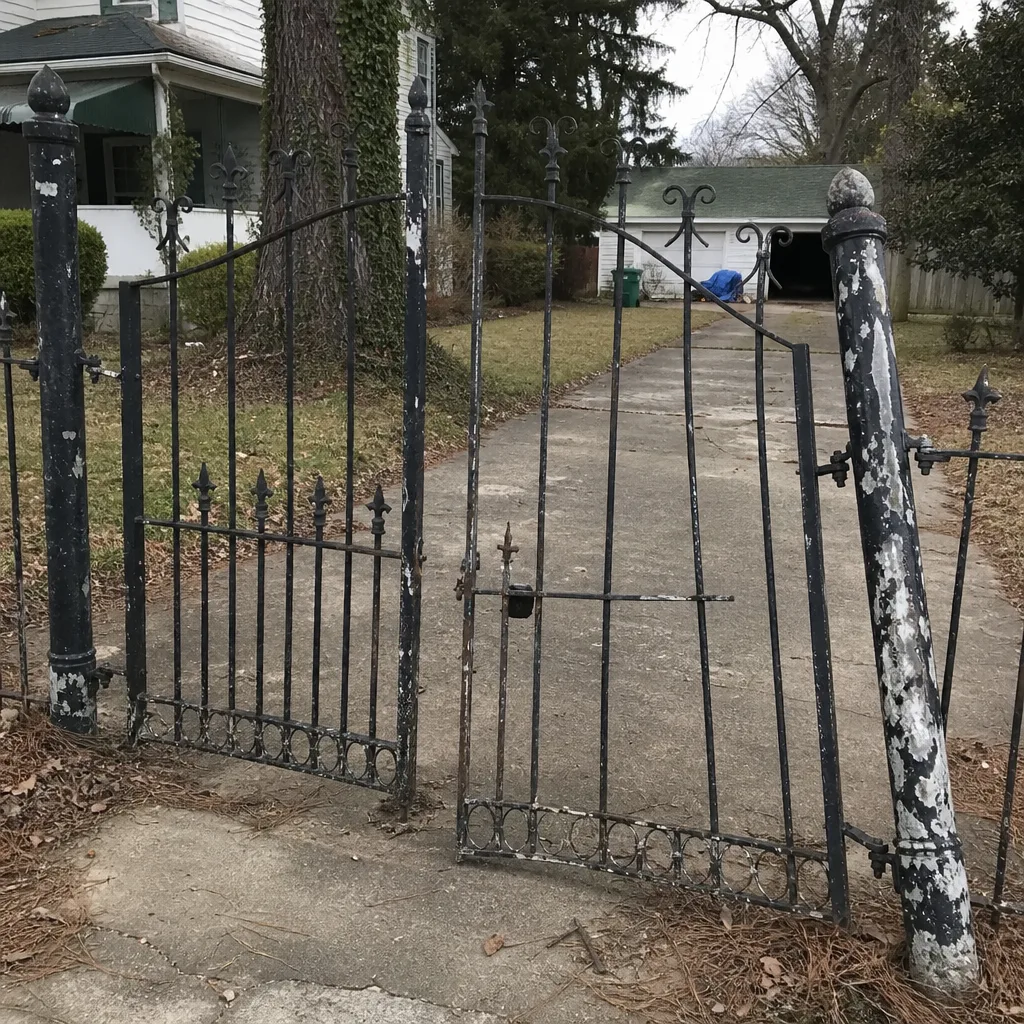 Before
 After
When to Call a Professional
Call a professional whenever the repair involves the operator, control board, safety sensors, or a post that may be structurally compromised. Call if the gate has reversed unexpectedly more than once, if the operator fault indicators are flashing, if the gate is dragging but the hinges look fine, or if any wiring to the operator or accessories has been disturbed. Call if the gate is a commercial or multi-user system. And call if you’re not sure what category the repair falls into, because the diagnostic is the value.
We’ve handled enough gate work in Chesapeake to know that most of the DIY attempts we’re called to fix started from a reasonable place. The homeowner saw a simple symptom and tried the simple fix. What they missed was the diagnostic step. Our gate repair service exists for exactly that scenario, and Gate Repair Chesapeake offers free estimates across our Chesapeake service area. Whether it’s an electrical fault, a mechanical issue, or a repair that just needs a proper diagnosis, we can work on the brand you already have, from Mighty Mule to FAAC, on both residential and commercial gates. Call (833) 323-1302 for a free estimate. We answer 24/7. Fast dispatch from 7am to 7pm, Sunday through Friday.
Frequently Asked Questions
Yes, if the post and gate frame are solid and the repair is only tightening bolt hardware. If the hinge is loose or failing and the post looks compromised, that’s a professional job because the new hinge load will accelerate further post failure. Call (833) 323-1302 for a free estimate if you’re not sure.
No, not on an automated gate system. The voltage is low, but incorrect wiring can defeat the safety sensors, damage the operator’s control board, and create a real injury risk if the gate fails to reverse. Wiring on an automated system should go to a technician who knows the specific brand’s diagram.
The exact cost depends on the system, the failure, and the parts required, and it’s set per job by the written estimate after a technician inspects the gate. The estimate is free and the price is agreed before any work starts. Call (833) 323-1302 for an exact quote on your gate repair.
You usually can’t from the driveway alone, and that’s the diagnostic step most homeowners skip. Symptoms like “gate reverses on its own” can be a sensor circuit, a control board, a limit switch, or a wiring issue. A technician identifies the real cause by checking safety inputs, limits, and operator fault codes in sequence. Call (833) 323-1302.
We’re closed Saturday. We’re open Sunday through Friday, 7am to 7pm. Call (833) 323-1302 and we’ll book the repair into the next opening.
Yes. If a repair you performed causes injury or property damage, the exposure sits with you as the homeowner. Incorrectly wired sensors or a structurally weakened post are the highest-risk scenarios. When in doubt, have a licensed professional handle the repair and confirm the safety circuit is functional before the gate is back in service.
The Bottom Line
The DIY-versus-professional gate repair decision isn’t about whether you’re handy. It’s about the specific system, the specific failure, and the liability exposure. Some tasks (lubrication, hardware tightening, debris clearing, battery swaps) are genuinely DIY-appropriate. Anything involving the operator, control board, safety sensors, wiring, or a potentially compromised post should go to a professional, because a wrong diagnosis is more expensive than a correct repair. In Chesapeake, with the mix of residential and commercial gate systems and the liability considerations that come with automated gates, a free estimate is the fastest way to know which side of the line your repair falls on. Call (833) 323-1302. We answer 24/7. Fast dispatch from 7am to 7pm, Sunday through Friday.
Written by the team at Gate Repair Chesapeake.