
Last updated November 15, 2026
 Wrought iron
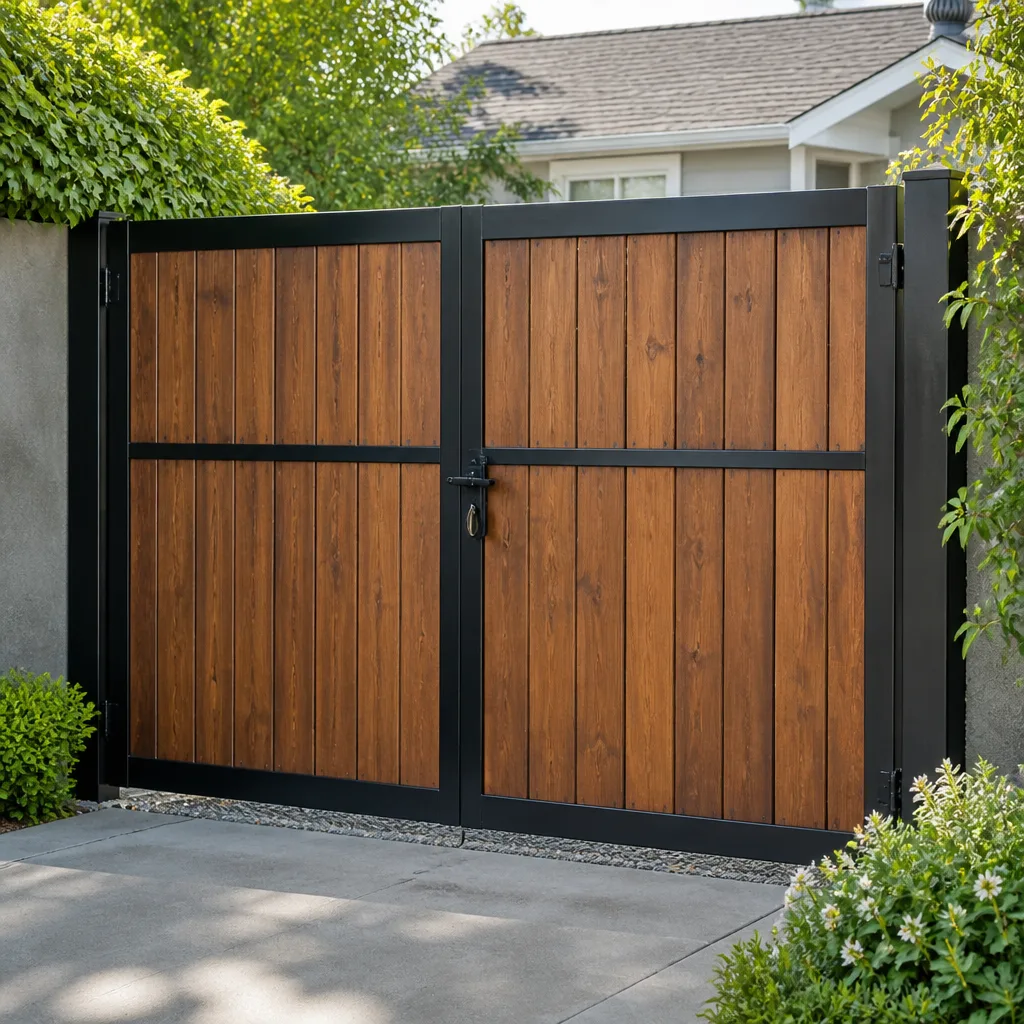 Wood & steel frame
 Farm & ranch
 Sliding driveway gates
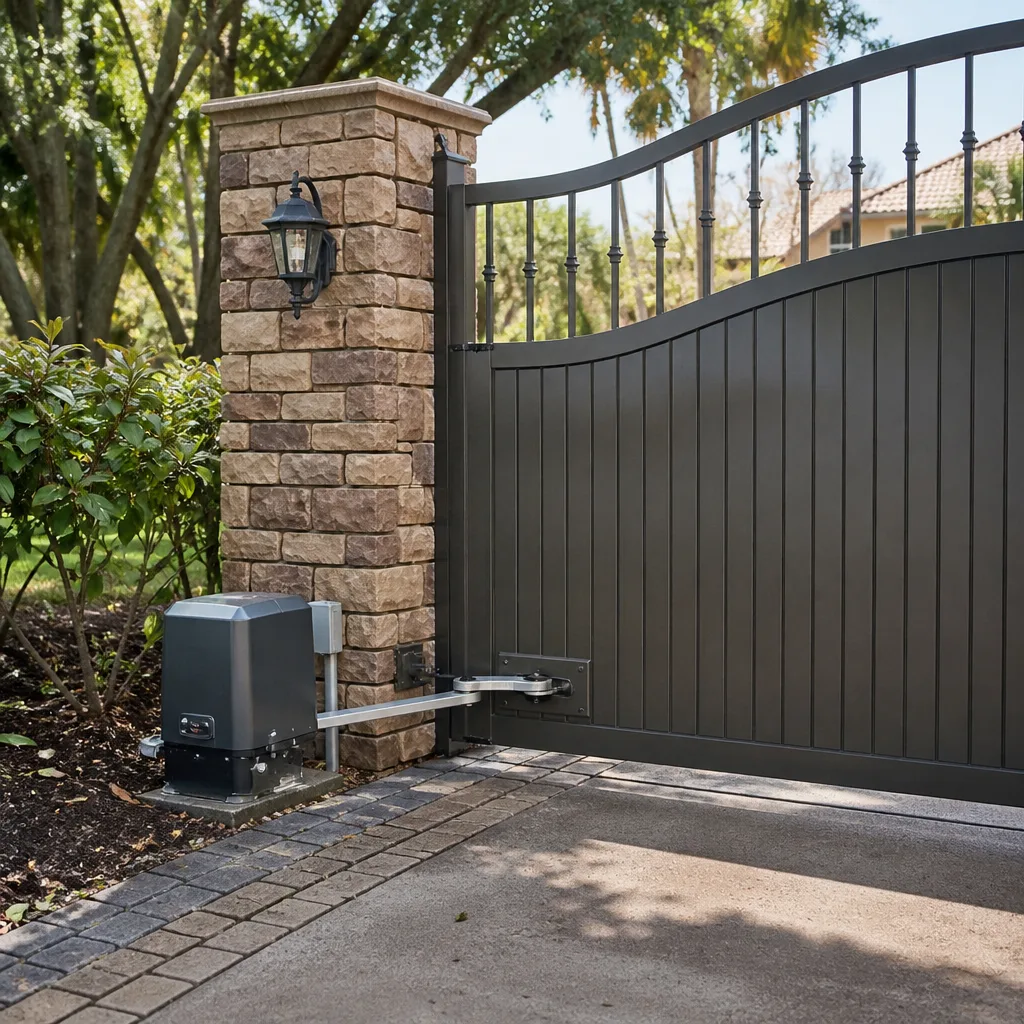 LiftMaster operators
Free on-site gate assessment - hinges, posts, and your LiftMaster or Nice gate operator checked before anything is quoted
The assessment is free and the quote is the invoice.
Get your free estimateGate Repair Emergency Preparedness Guide for Chesapeake Homes
Most gate failures don’t announce themselves politely. They happen during a downpour, at the end of a workday, or in the hours before a named storm pushes into Hampton Roads. The part almost every homeowner gets wrong isn’t the repair itself. It’s the assumption that the gate will keep working until someone can come look at it. We’ve seen plenty of properties in Chesapeake where a dead operator during a tropical weather event turned into a stuck vehicle, a blocked driveway, or a very long morning. This guide is about the plan you build before that happens: how to find and test your manual release, what to do in the first ten minutes after a storm-related failure, what to have ready when you call, how to secure the property in the meantime, and how our technicians approach the brands you actually own. Read it once now, so the next time isn’t the first time.
Quick Answer
A gate repair emergency in Chesapeake comes down to three moves: get the gate into manual release safely, secure the opening with a temporary barrier if the gate can’t close, and call (833) 323-1302 with your operator brand, model and symptoms ready so dispatch can route the right technician. Testing your manual release before storm season is the single highest-value thing you can do, and it takes about five minutes. Everything else on this page builds from that foundation.
Styles & brands we work with
- Wrought iron
- Wood & steel frame
- Farm & ranch
- Sliding driveway gates
- LiftMaster operators
Table of Contents
- How Do You Find and Test Your Gate’s Manual Release?
- What to Do Immediately After a Storm-Related Gate Failure
- What to Have Ready When You Call for Emergency Gate Service
- Temporary Security When Your Gate Won’t Close
- The 30-Minute Pre-Storm Gate Checklist
- Brand-by-Brand: What Chesapeake Operators Actually Run
- Repair or Replace? The Decision That Matters Most
- Common Mistakes to Avoid
How Do You Find and Test Your Gate’s Manual Release?
Every automated gate operator sold in the United States has some form of manual release, because code and safety standards require a way to move the gate when power is gone. The problem is that most homeowners have never touched theirs. It sits behind a cover, under a housing panel, or tucked into a keyed latch that’s been painted over since installation. When a mandatory evacuation order comes through and the power is already out, that’s not the moment to start reading the manual by flashlight.
The good news: testing the release is designed to be simple. Here’s the sequence we walk customers through.
- Cut the operator’s power at the breaker or the dedicated disconnect. Never test a release with the motor energized. The operator can try to re-engage mid-release and that’s how fingers get pinched and gates get damaged.
- Locate the release mechanism. On most residential swing operators, it’s a keyed handle on the arm or a lever under the housing. On slide operators, look for a manual release lever near the motor housing, often with a small key or a pull cord depending on the model.
- Insert the key or pull the lever, then push the gate slowly by hand. You should feel the gear train disengage. If it fights you, stop. Something is stuck or the release isn’t fully thrown.
- Walk the gate through its full arc or travel. Look for binding, dragging, or scraping. A gate that won’t roll freely by hand with the operator released has a mechanical problem that isn’t going to fix itself.
- Re-engage the release and restore power. Cycle the gate once with the remote to confirm the operator re-latched and the limits still hold.
Do this twice a year. Then do it once more in the week before hurricane season officially starts. In a city that sees regular tropical weather events, “I think I remember where it is” isn’t good enough.
Where the release lives on common residential operators
- Ghost Controls: Residential swing operators typically use a keyed release on the arm assembly. Check the housing for the small key slot.
- Linear: Slide and swing models vary. Slide operators usually have a manual release lever on the motor housing; swing operators often use a keyed arm release.
- Viking: Look for the release lever or keyed access point described in the operator cover panel. Viking’s documentation is worth keeping in the file cabinet.
- DoorKing: Commercial and heavier residential swing operators often use a crank or a keyed release on the operator housing. If you manage an HOA gate, DoorKing releases are usually documented on the unit itself.
If you can’t find the release within five minutes, that’s a call worth making now, not during the storm. Our technicians work on equipment from Gate Repair Chesapeake and know these releases by model. A one-visit walkthrough is cheap; a stuck vehicle is not.
What to Do Immediately After a Storm-Related Gate Failure
A gate that fails after a storm is a different animal from a gate that just stops. Wind, debris, airborne limbs, and water intrusion can all be present at the same time, and some of the failure modes are dangerous. The safe sequence looks like this.
- Don’t touch the gate while it’s still moving or cycling on its own. Operators that have taken water or lost limit feedback can cycle unexpectedly. Keep people and pets clear.
- Check for visible damage before you approach. Look for a bent arm, a gate that’s off its track, a panel that’s hanging, or debris in the travel path. If the gate is physically off-track or the operator arm is bent, don’t try to force anything. That’s a mechanical issue a technician needs to see.
- If the gate is intact but dead, cut power to the operator at the breaker, then attempt the manual release. Same sequence as the test. Power off first.
- If the gate is sticking open and won’t close, get it into a safe resting position. For a slide gate, that means pushed fully open and secured. For a swing gate, that’s fully open against the stop with a physical tie or lock if the property needs to be closed up.
- Document the symptoms. Photograph the keypad, the control board area, and the gate position. Note the last time the gate worked correctly. Note whether the keypad lights are on and whether the remote will still trigger anything. This single habit saves technicians half an hour on the call.
Here’s the part most people miss. A gate that opens with the remote but won’t close is often a safety sensor problem. A gate that does nothing at all with power confirmed is usually the control board, the motor, or the transformer. A gate that opens partway and reverses is usually the limits or the obstruction sensor. Knowing the pattern when you call is the difference between a technician arriving with a plan and a technician arriving to diagnose from scratch.
The dangerous scenario is water intrusion at the control board or the operator’s power wiring. Don’t open housings that have standing water in them. Don’t reset breakers into a wet operator. Call electric gate repair and let someone qualified look at it. Electrical work in a wet enclosure is not a homeowner job.
What to Have Ready When You Call for Emergency Gate Service
Customers get faster, more useful dispatch when they can answer a handful of questions in the first two minutes. Here’s the list to keep on your phone or in a note on the fridge, especially if you manage a property with a gate separate from your home.
- Operator brand and model. This is the big one. Linear, Viking, Ghost Controls, DoorKing, and the other majors all have distinct diagnostic paths. If you don’t know, photograph the operator housing and the sticker on the control board.
- What kind of gate it is. Slide or swing. Residential or commercial. Approximate width and weight if you know it, or just the width in feet.
- What the gate is doing. Won’t open. Won’t close. Opens partway and reverses. Cycles by itself. Beeps continuously. Dead entirely.
- What changed recently. Storms, power outages, breaker trips, new remotes, new keypad codes, recent landscaping near the sensors. All relevant.
- Whether anyone is blocked or stranded. If a vehicle is trapped or an entry is unusable, say so first. That changes the priority.
- Access notes. Where the operator is, how to get to the property, gate codes if the technician needs to enter, and whether someone will be present.
- Your phone number and address. Obvious but surprisingly easy to fumble mid-storm.
Call (833) 323-1302. We answer 24/7, and dispatch runs fast from 7am to 7pm, Sunday through Friday. If you call outside dispatch hours, the call is booked into the next opening. That’s not a brush-off. It’s how the schedule actually works, and it beats a promise nobody can keep at 2am.
For commercial properties and HOA gates, add two more items: the property manager’s contact and the maintenance history if you have it. A single point of contact from diagnosis through completed repair is how we like to run commercial work.
Temporary Security When Your Gate Won’t Close
An open gate on a property that’s supposed to be closed creates a real access gap for however long the repair takes. The options depend on whether the gate is a swing or a slide and whether it can be moved at all.
If the gate can be manually moved
- Swing gates: Push the gate fully closed and drop a heavy-duty chain and padlock through the frame and a fixed post. Do this on both leaves if it’s a double gate. Leave the operator disengaged so nobody cycles the motor against a chained gate.
- Slide gates: Close the gate and drop a lock through the track guide or a chain the gate to a fixed anchor. Do not lock a slide gate in a position where the roller can hop the track.
If the gate can’t be moved
- Barricade the opening. Traffic cones, sawhorses, or temporary fencing across the drive. If it’s a commercial property, place them where they’re visible from the street and from any surveillance view.
- Add a temporary barrier behind the gate. For a residential driveway, a wheel-lock or a portable bollard does real work. For an HOA entrance, a temporary chain or a manned checkpoint if the association requires it.
- Notify the affected parties. For a residence, that’s household members and anyone with a gate code. For a commercial property, that’s tenants and anyone with after-hours access. The keypad codes are still in the system and a call to change them can wait until the repair.
A gate that’s been damaged by wind or impact should not be forced into a closed position if doing so risks dropping a panel or bending a track. Leave it, barricade it, and let a technician assess. We cover the full range from residential swing gates to heavier commercial systems, and the temporary setup you build on day one shouldn’t have to survive more than a couple of days. Same-day service is often possible when the call comes in during dispatch hours.
The 30-Minute Pre-Storm Gate Checklist
When a named storm is forecast for the Chesapeake area, the gate deserves thirty minutes of attention before the first band of rain arrives. Here’s the list we’d run on our own property.
- Test the manual release. Power off, release, walk the gate, re-engage, cycle once with the remote. Confirm the release still works and you know where it is.
- Photograph the operator, control board, and keypad. If anything gets damaged or flooded, you have a baseline for what it looked like.
- Clear the travel path. Trim limbs, move planters, secure anything that could blow into the gate track. A trash can across a slide gate track is a surprisingly common post-storm failure.
- Check the drain and grading around the operator. Water pooling at the operator’s base is where problems start. If your driveway grades toward the operator, clear any leaf debris from the drainage path.
- Inspect the gate hardware visually. Hinges, rollers, guide posts, and the attachment point where the operator arm meets the gate. Loose hardware that could fail under wind load is worth knowing about before the storm rather than after.
- Charge the remotes and confirm the keypad works. If the keypad battery is on its last leg, replace it now.
- Fill the manual release file. Manual, release location, operator brand and model, our number, and the property manager’s number if applicable, all in one place.
That’s it. Thirty minutes, done once before the storm, saves the kind of morning nobody wants. In Chesapeake, tropical weather is a seasonal reality, and gates that get prepped are the ones that come through with a reset and a hand cycle instead of a control board replacement.
Brand-by-Brand: What Chesapeake Operators Actually Run
One of the reasons we can walk a homeowner through their specific gate over the phone is that we’ve worked across the brands that dominate the residential and light-commercial market. Our technicians are trained on nine gate brands, including LiftMaster, FAAC, BFT, Linear, Viking, Ghost Controls, DoorKing, Elite, and Mighty Mule. That range matters because each brand has its own diagnostic habits.
- Ghost Controls: Common on newer residential installs. Residential operators with keyed arm releases. Control boards and remote pairing behavior are usually straightforward, and a failed operator is often a battery, a fuse, or a limit issue before it’s a board issue.
- Linear: Wide range from residential to light commercial. Linear slide operators are common and the manual release is generally on the motor housing. Sensor alignment and the photobeam are frequent culprits when the gate reverses on close.
- Viking: Reliable hardware with distinct control board layouts. When a Viking operator fails, the pattern of the failure tells you a lot. Full stop, partial-cycle, and reverse-on-obstruction each point somewhere different.
- DoorKing: Commercial and HOA entry systems. DoorKing operators often carry entry systems, telephone entry, and access control that goes beyond the gate itself. Diagnosis usually means checking the operator, the entry system, and the keypad or call box as separate subsystems.
When a gate fails, we don’t guess. Brand knowledge shortens the diagnostic and it shortens the parts wait. If the system needs a component, we source for the brand you already have rather than steering you toward a product line we happen to carry. That’s the brand-agnostic approach, and it’s the one that makes sense for a homeowner or a property manager who just wants their gate working.
For those living in the established neighborhoods around Great Bridge, Greenbrier, Deep Creek, Indian River, or Western Branch, we’ll also ask what the gate is mounted on and what the driveway pitch looks like. A residential gate on a slope behaves differently in a failure than a flat-drive gate, and it changes the conversation about slide versus swing.
Repair or Replace? The Decision That Matters Most
When a gate has failed under storm stress or after years of service, the question comes up fast: fix it or replace it? The honest answer depends on three things. What’s actually broken. How old the operator is and whether parts are still available. And whether the existing gate is safe to keep running.
The rule we use: repair is usually the right call when the failure is isolated. A dead motor, a failed control board, a bad sensor, a keypad that won’t take codes, or a manual release that’s seized are all single-component problems. These get fixed without replacing a functional gate and operator. Replacement starts to make sense when the operator itself is beyond its service life, when the gate frame is bent or the geometry is off, when the system is undersized for the gate, or when the repair would cost more than a new operator with modern safety features.
Here’s what we won’t do. We won’t push a new gate when a repair is the right answer, and we won’t recommend a brand because it’s easier to source. The right call is the one that fits your system and your budget, and we’ll say so plainly. If you’re on the fence, our technician will walk you through it on-site with the gate in front of them, and you’ll get a written estimate before any work starts. That’s the point at which “repair or replace” stops being a debate and becomes a number you can act on.
For homeowners planning a new gate rather than a repair, the same team handles design and installation, which means you’re not coordinating a repair tech and an installer from different companies. One call covers the whole job. That’s worth something when the gate is the access point to the property and every day without it is a day of workaround.
Common Mistakes to Avoid
- Never test the manual release with the operator energized. The motor can re-engage during the test and damage the operator or injure the tester. Cut power at the breaker first, every time.
- Don’t force a gate that’s off-track or has a bent arm. Wind-damaged hardware can drop a panel or bend a track beyond repair. Barricade the opening and let a technician assess the mechanical side before you touch it.
- Don’t open an operator housing with water in it. Electrical work in a wet enclosure is dangerous. If you see standing water around the control board, stop and call Chesapeake electric gate repair rather than resetting the breaker.
- Don’t skip the pre-storm test because the gate “always works.” The one time you need the manual release is the one time you won’t have time to find it. Test it twice a year and once before hurricane season.
- Don’t call without the brand and symptoms ready. A two-minute conversation with the operator brand, the failure pattern, and a photo of the control board beats a ten-minute back-and-forth and gets you a faster dispatch.
- Don’t chain a gate closed while the operator is still engaged. The motor will try to run against the chain and burn out the drive. Disengage the release, then chain.
- Don’t accept a repair quote that doesn’t come in writing before the work starts. Upfront pricing is not a luxury. It’s how you know what you’re paying before anyone puts a wrench on your gate.
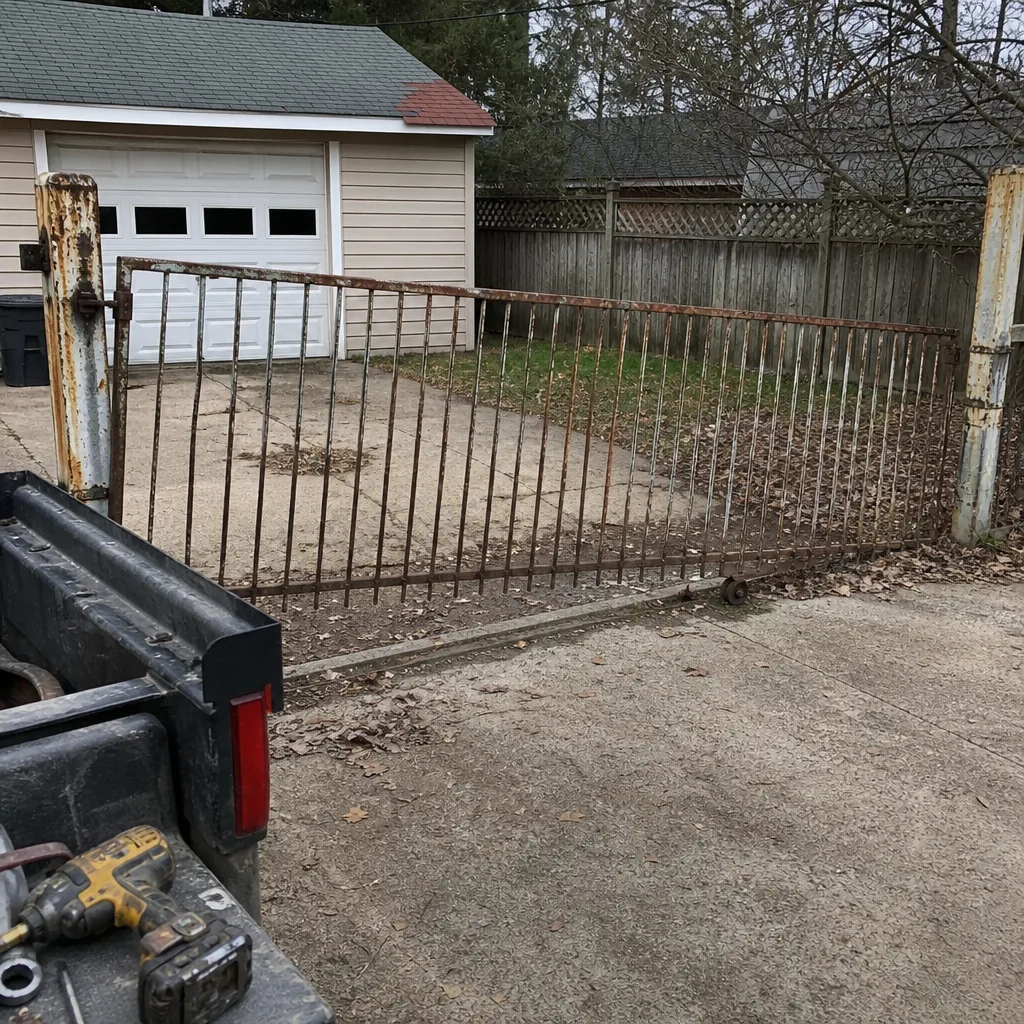
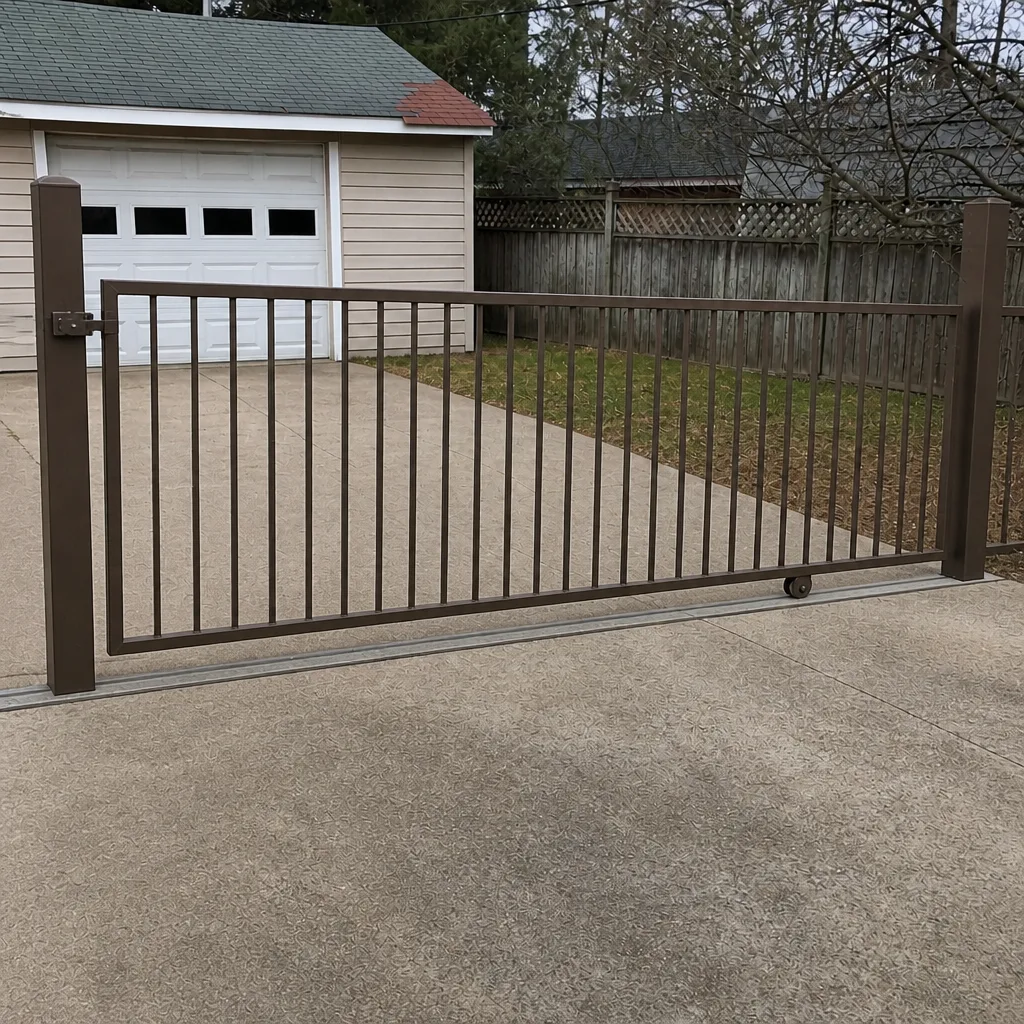
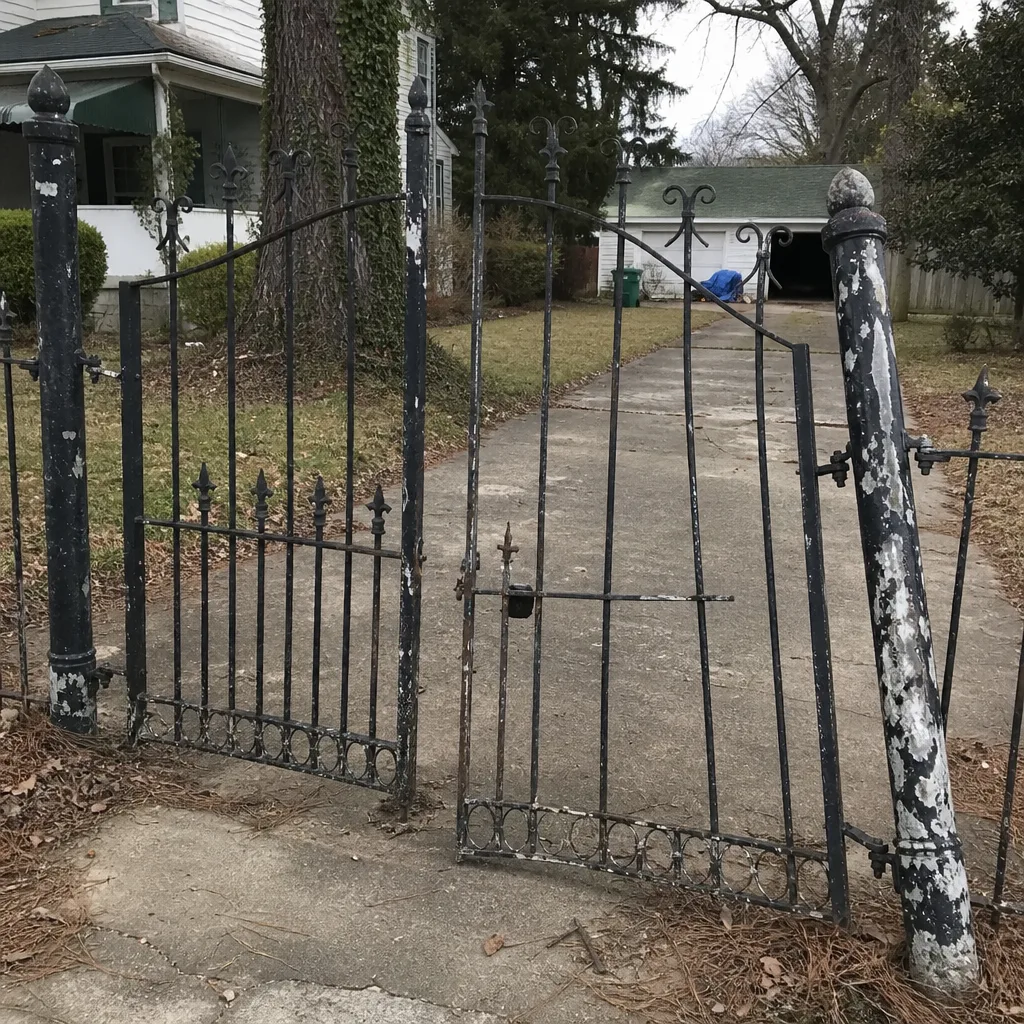
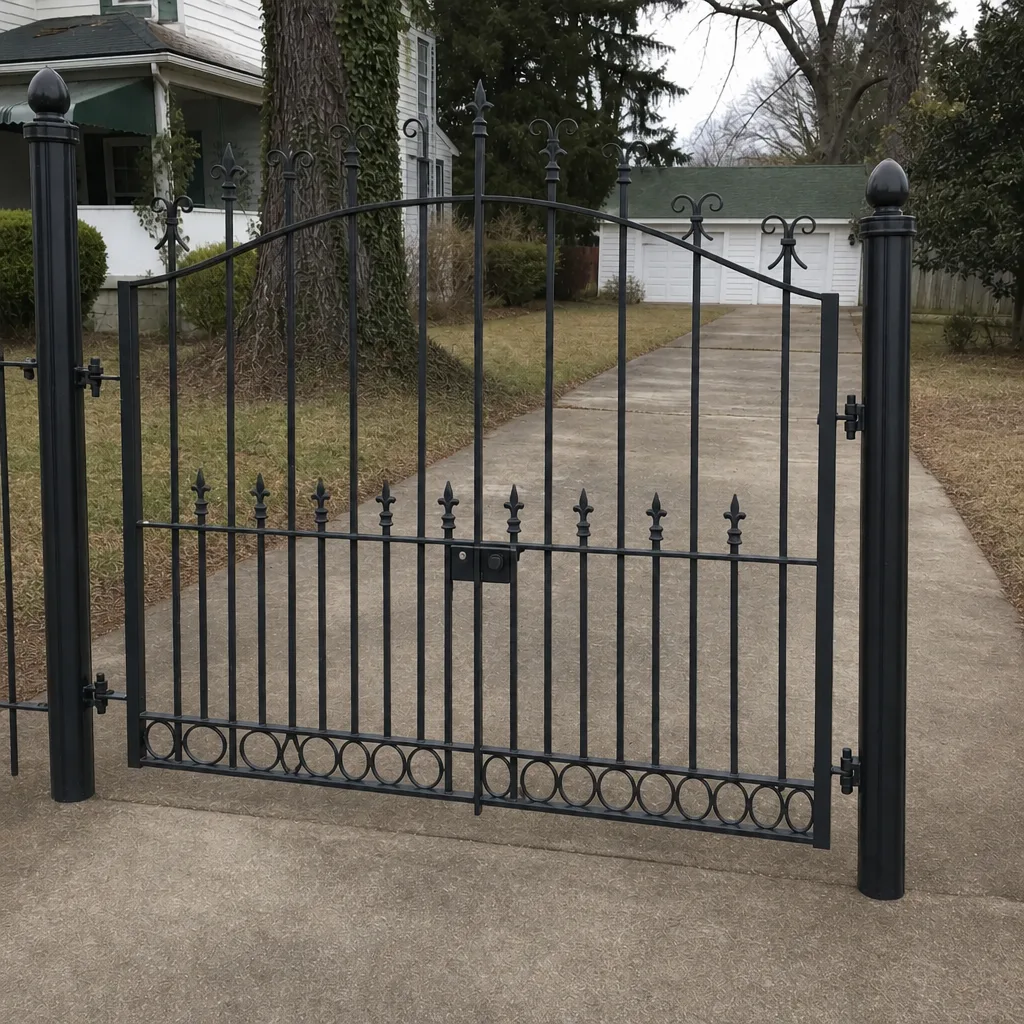
See the difference
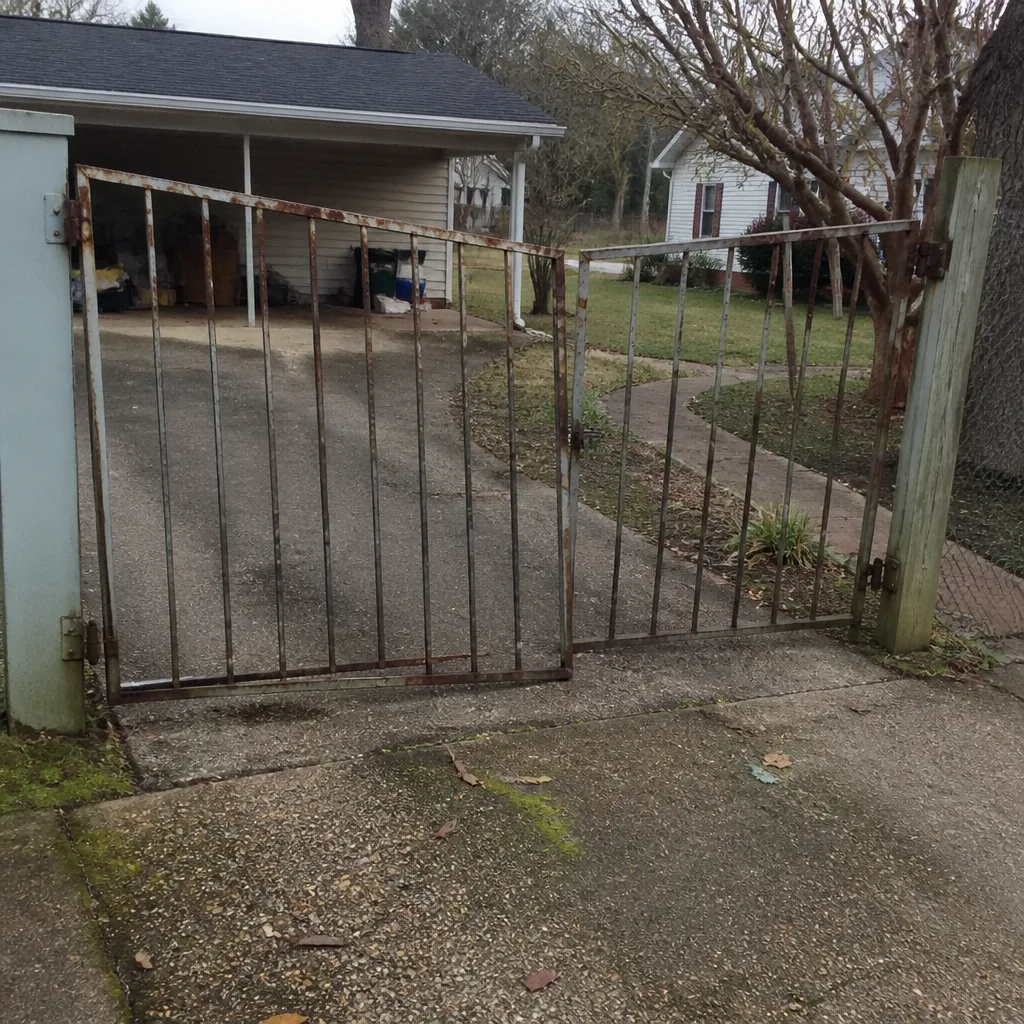 Before
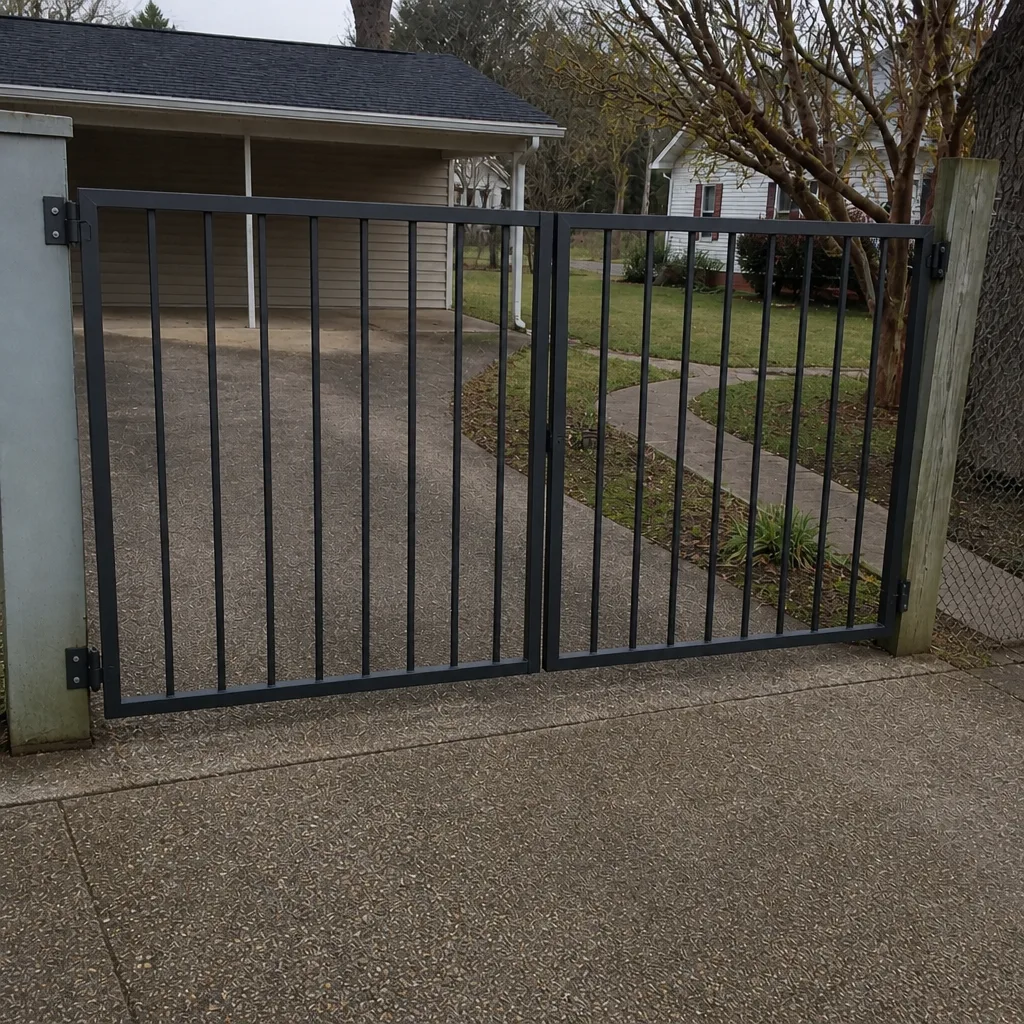 After
 Before
 After
 Before
 After
When to Call a Professional
Call a professional gate technician when the gate is off-track, the operator housing has taken on water, the gate cycles on its own, the safety sensors are failing consistently, or the manual release cannot be disengaged. Call us when a vehicle is trapped or an entry is unusable and the failure is not a simple manual release. Call us when a commercial operator, keypad, or access control system is involved. Call us when a storm has produced visible damage and you don’t know what’s structural versus cosmetic. Our technicians have up to 13 years of experience, and we’re licensed, insured, and equipped for motor, control board, keypad, and sensor work on the brands you already own. Gate Repair Chesapeake offers free estimates in Chesapeake. Call (833) 323-1302 and we’ll route the right technician to your gate.
Frequently Asked Questions
Use the operator’s manual release. Cut power to the operator at the breaker, find the keyed handle or release lever on the operator housing or arm, disengage the gear train, and push the gate by hand. Test this release twice a year so you know exactly where it is when you need it. If the release won’t disengage, don’t force it. Call (833) 323-1302 for exact help; estimates are free.
Same-day service is often possible when your call comes in during dispatch hours. Dispatch runs fast from 7am to 7pm, Sunday through Friday, and we answer the phone 24/7. A call outside dispatch hours is booked into the next opening. Call (833) 323-1302 with your operator brand and symptoms ready for the fastest routing.
If the gate can be moved manually, close it by hand and drop a heavy chain and padlock through the frame to a fixed post. If it can’t be moved, barricade the opening with cones or temporary fencing and notify anyone with a gate code. Don’t force a damaged gate into a closed position. Call (833) 323-1302 for the repair; estimates are free.
Yes. We work on the brand you already have, spanning LiftMaster, FAAC, BFT, Linear, Viking, Ghost Controls, DoorKing, Elite, and Mighty Mule across residential and light-commercial systems. That means diagnosis comes from familiarity with your system, not guesswork. Call (833) 323-1302 for an exact quote on your brand; estimates are free.
Have the operator brand and model, the gate type (slide or swing), the failure pattern, whether anyone is blocked, and the access details to the operator. A photo of the control board sticker saves time. The faster we can identify the system, the faster we can route the right technician. Call (833) 323-1302 when it’s all in front of you.
Only if the gate is visibly intact and off-track damage isn’t present. Cut power first, check for a bent arm, a panel that’s hanging, or debris in the track, then attempt the manual release. If the gate is clearly damaged or the operator housing has water in it, leave it and call. Electrical work in a wet enclosure isn’t a homeowner job. Call (833) 323-1302 instead.
The Bottom Line
Emergency gate preparedness comes down to a short list. Know where your manual release lives and test it twice a year. Cut power before you touch anything. Barricade a gate that won’t close rather than forcing it. Have your operator brand, failure pattern, and access notes ready when you call. If water has gotten into the operator, stop and call a professional. The rest is a matter of scheduling. We work on the brands you already have, we repair electric and mechanical gates the same way, and we’ll tell you plainly whether repair or replacement makes sense. Call (833) 323-1302. We answer 24/7. Fast dispatch from 7am to 7pm, Sunday through Friday. Free estimates in Chesapeake, and the price is set by the written estimate before any work starts.
Written by the team at Gate Repair Chesapeake.