
Last updated November 15, 2026
 Wrought iron
 Wood & steel frame
 Farm & ranch
 Sliding driveway gates
 LiftMaster operators
Free on-site gate assessment - hinges, posts, and your LiftMaster or Nice gate operator checked before anything is quoted
The assessment is free and the quote is the invoice.
Get your free estimateGate Repair Maintenance Schedule: What to Do and When
Most gate owners treat maintenance as a single spring task: walk out, look at the gate, spray something on the hinges, call it done. That approach fails because a gate is a machine with parts that wear on different clocks, and in Chesapeake those clocks run on humidity, summer heat, winter freeze-thaw, and the sheer number of cycles your opener logs in a week. The parts that fail first are rarely the ones you looked at. Our experience points to a better frame: think of maintenance as a calendar tied to your gate’s type and to the seasons here in Chesapeake, not a vague “check it once a year” habit. In this guide we’ll lay out a month-by-month schedule, explain why swing gates, slide gates, and barrier arms need different intervals, and show you exactly what to document so a technician can catch a failing part before it strands your gate open.
Quick Answer
A workable gate maintenance schedule runs monthly visual checks, quarterly electrical and battery tests, and seasonal deep-inspections that match Chesapeake’s weather: a pre-summer check before heat and storm season, a post-winter alignment check after freeze-thaw cycles, and component replacement timed to expected wear rather than breakdown. Swing gates, slide gates, and barrier arms each need their own interval because their moving parts wear differently. The trick is documenting what you find at each visit so patterns become visible.
Styles & brands we work with
- Wrought iron
- Wood & steel frame
- Farm & ranch
- Sliding driveway gates
- LiftMaster operators
Table of Contents
- Why a Generic Maintenance Schedule Fails in Chesapeake
- The 12-Month Gate Maintenance Calendar for Chesapeake
- How Maintenance Intervals Differ by Gate Type
- Battery Backup Testing: Why Quarterly Beats Annual
- Component Lifespan Benchmarks: When to Inspect vs. Replace
- What to Document After Every Maintenance Session
- What You Can Check Yourself vs. What Needs a Technician
- Common Mistakes to Avoid
Why a Generic Maintenance Schedule Fails in Chesapeake
A maintenance schedule copied from a manufacturer’s manual assumes ideal conditions. Chesapeake is not ideal conditions. Summer humidity sits high for months, winter brings freeze-thaw cycles that work fasteners loose and shift posts, and spring storms arrive with wind loads that stress gate frames and operators. If your maintenance plan was built for a dry, mild climate, it will miss the failures that actually happen here.
The second problem is gate-type blindness. A schedule written for a residential swing gate with a Mighty Mule opener does not translate to a commercial slide gate running a DoorKing operator through hundreds of cycles a day. The parts are different, the duty cycle is different, and the failure modes are different. Treating them the same is how property managers end up with a slide gate that seizes in July because nobody greased the track and a swing gate whose hinges are over-serviced while the control board quietly corrodes.
What we’ve seen across Chesapeake is that the gates that last are the ones serviced on a schedule matched to their type and their environment. That means adjusting for our humidity, our storm season, and the number of times your gate actually cycles in a day. From there, the calendar almost writes itself.
A third issue is that most owners don’t know what “normal” looks like for their gate. Without a baseline, a slightly slower swing or a louder slide reads as fine until it isn’t. A schedule that includes documentation solves that.
The 12-Month Gate Maintenance Calendar for Chesapeake
Here’s the calendar we recommend for most residential and light-commercial gates in the Chesapeake area. Adjust the deep-inspection months if your gate sees heavy daily traffic, but keep the shape of the schedule.
- January – Post-winter alignment check. Freeze-thaw cycles in Chesapeake can shift posts and loosen hardware. Walk the full travel of the gate, check that it latches cleanly, and look for gaps at the hinges or track. Note any new noises.
- February – Fastener and hardware audit. Tighten bolts on hinges, brackets, and operator mounts. Check for rust bloom on exposed steel. This is the month to catch loose hardware before spring winds find it.
- March – Battery and backup power test. Test the battery backup system under load, not just at the terminals. Spring storm outages are common in Chesapeake, and a gate that fails to open when the power is out is a real problem.
- April – Pre-summer mechanical deep-clean and lubrication. Clean the track or hinge points, clear debris from the gate’s travel path, and apply the correct lubricant for your system. Grease the operator’s drive components per the manufacturer’s guidance.
- May – Pre-hurricane-season safety system check. Test photo eyes, safety edges, and any reversing features. Verify the manual release works so you can open the gate by hand during a power outage. This is the single most important month in Chesapeake.
- June – Control board and wiring inspection. Look for corrosion at terminals, insect nests in the control box, and any signs of moisture ingress. Tighten terminal screws and confirm keypad and remote function.
- July – Mid-summer performance review. Heat stresses motors and control boards. Compare cycle speed, listen for new sounds, and check that the operator isn’t running hot. Log anything that’s changed.
- August – Pre-storm hardware and structural check. Peak hurricane season approaches. Recheck posts, brackets, and gate frame for movement or fatigue. Confirm the gate latches and holds in wind.
- September – Post-storm inspection. After any significant weather, inspect hinges, rollers, track, and operator alignment. Look for debris in the track and obstructions in the gate’s path.
- October – Fall lubrication and track clean. Cooler weather is the ideal time for a full lubrication pass and a track clean-out before leaves and debris accumulate.
- November – Battery and backup power test. Second quarterly battery check. Cold weather reduces battery capacity, so this test is not optional.
- December – Year-end review and trend analysis. Pull your documentation from the year, look for recurring issues (same hinge loosening, same fault code), and decide what to replace proactively versus what to watch.
That calendar runs on a quarterly battery cycle, monthly visual checks in between, and a heavy seasonal focus on Chesapeake’s storm window. It also gives you a natural point each December to look back and plan.
How Maintenance Intervals Differ by Gate Type
The calendar above is a backbone. The intervals you actually apply depend on what kind of gate you own. Three categories matter most.
Swing Gates
Swing gates hinge at the post, so the wear points are hinges, the operator arm, and the physical alignment of the gate leaf. Hinges and operator arms want lubrication every three to four months. Post alignment should be checked at least twice a year, and more often after freeze-thaw or heavy storm activity. Residential swing gates with light daily use (a dozen cycles a day) handle the standard calendar well. A residential swing gate running a Ghost Controls or Mighty Mule operator through heavy daily traffic should be inspected monthly for hinge play and arm wear.
Slide Gates
Slide gates travel on a track or on rollers, and that track is where most failures start. Debris in the track is the number one cause of slide gate problems in Chesapeake, especially after storms. Clean the track monthly. Check rollers for flat spots quarterly. Grease the drive rack and pinion per the manufacturer’s guidance, but don’t over-grease – excess grease collects grit and accelerates wear. Heavy slide gates on a commercial system, like those running a FAAC or BFT operator, should be inspected monthly because a slide gate that leaves its track is a serious safety hazard.
Barrier Arms
Barrier arms on parking lot entries and exits cycle far more often than residential gates – hundreds of times a day in a commercial setting. They need monthly inspection of the arm mount, the counterweight, the loop detectors, and the operator. Barrier arm springs and breakaway brackets wear faster than the rest of the system, so plan on inspecting those every month and replacing them on a shorter cycle than you would a swing gate hinge.
If you’re not sure which category your gate falls into, or you’ve inherited an unfamiliar system, the technicians at gate repair can identify the type and set the right interval for you. We work on the brand you already have, from Mighty Mule to FAAC, and we’ll tell you what schedule makes sense for the system and the traffic it sees.
Battery Backup Testing: Why Quarterly Beats Annual
Battery backup is the easiest part of a gate system to neglect and the most damaging one to lose. When the power goes out – and in Chesapeake it will during summer storm season – a gate with a dead backup battery is a gate that won’t open, won’t close, and leaves you with a driveway you can’t use or a perimeter you can’t secure. Annual testing is not enough because batteries degrade quietly and failures tend to surface under exactly the conditions you can’t predict.
Quarterly is the right interval for two reasons. First, battery capacity drops in cold weather, so the November and March tests catch the transitions into and out of the cold season. Second, the summer storm season is when the backup battery actually gets used, and testing it in May and August means you know it’s ready before the storm arrives and still healthy after the first outages.
How to test properly:
- Kill power to the operator at the breaker and confirm the gate opens and closes at least three full cycles on battery.
- Watch for slow travel or intermittent stopping. Both signal a battery that’s on its way out.
- Check the battery terminals for corrosion. Clean and protect them if needed, and record the voltage.
- Note the battery’s age. Most gate backup batteries are good for three to five years, so if yours is approaching that mark, plan the replacement rather than waiting for failure.
- Reconnect power and confirm the operator resumes normal function.
If your gate has a LiftMaster or Elite operator with a manufacturer battery, keep the original test instructions on hand. If you don’t have them, electric gate repair can test the system for you and tell you whether the battery needs replacing.
Brand-agnostic repair shops are set up for this kind of work because they see how different batteries and operators perform over time. If a battery replacement is needed, they can source the right one for your unit.
Component Lifespan Benchmarks: When to Inspect vs. Replace
Knowing how long parts typically last is how you move from reactive repair to proactive replacement. These benchmarks assume regular maintenance; neglected systems wear faster. Use them as a guide, not a hard rule – your gate’s duty cycle and environment will shift them.
- Hinges: eight to twelve years on a well-lubricated residential swing gate. Replace at the first sign of wobble or post rotation, not after they fail.
- Rollers and track components (slide gates): five to eight years. Inspect quarterly and plan replacement when flat spots or pitting appear.
- Photo eyes and safety sensors: five to seven years. Replace when the alignment drifts repeatedly or the sensor stops detecting consistently.
- Control boards: ten to fifteen years on a protected board. Corrosion or insect intrusion can halve that, which is why a control box seal check matters.
- Operator motors: ten to fifteen years on a residential operator, five to ten on a heavily cycled commercial unit.
- Backup batteries: three to five years. Replace proactively at year four if you don’t want to gamble on a storm outage.
- Barrier arm springs and breakaway brackets: three to five years on a commercial barrier arm, shorter on high-cycle installations.
The practical rule: inspect any component at the halfway point of its estimated life, and replace it at two-thirds of expected lifespan if you depend on the gate daily. That’s how you avoid the emergency call. If you’re not sure whether a part has reached that point, a trained eye can tell you.
What to Document After Every Maintenance Session
Documentation is what turns a maintenance schedule into a maintenance strategy. If you log what you find, you start to see which parts are trending toward failure before they fail. That’s the difference between a scheduled replacement at 10am on a Tuesday and an emergency repair at an inconvenient hour. What to record after each session:
- Date and conditions. Note the weather (recent storm, heat wave, freeze) so you can correlate later issues with what you were doing.
- Gate and operator details. Brand, model, and cycle count if you have it. This makes future service faster.
- What you inspected and found. Be specific. “Right hinge has 2mm of play” is useful; “hinges okay” is not.
- Lubrication and cleaning performed. What you greased, what you cleaned, what product you used.
- Electrical and battery checks. Battery voltage readings, terminal condition, and whether manual release worked.
- Fault codes or error messages. Write them down exactly, even if they cleared. Fault codes tell technicians what to look for.
- Any anomaly. A new noise, slower swing, one-time failed open – log it. Patterns become obvious in hindsight and you want them visible in advance.
- Follow-up items. What you intend to check or replace next time, and why.
If you keep a simple log, or have a technician fill one in at each visit, you can hand that log to a specialist and they’ll know more in five minutes than they could in an hour of guessing. It’s one of the most useful things a Chesapeake gate owner can do.
One call covers the whole job – diagnosis, documentation, and any needed repair or proactive replacement. The log just makes every visit more efficient.
What You Can Check Yourself vs. What Needs a Technician
Some of this schedule is safe for any careful owner to handle. Some of it involves dangerous electrical components, heavy gates, and motors that can cause serious injury. The line matters.
Safe to do yourself:
- Visual inspection of the track, hinges, and gate travel.
- Clearing debris from the gate’s path and the slide gate track.
- Testing the manual release (with the operator powered off, per the manufacturer).
- Recording fault codes and noting changes in sound or speed.
- Lubricating hinges and mechanical pivot points with the manufacturer’s recommended product.
- Keeping the documentation log.
Needs a trained technician:
- Any work inside the control box, including the control board, wiring terminals, and safety sensor wiring.
- Motor testing and replacement.
- Battery replacement on systems where the battery is inside the operator housing.
- Diagnosis of intermittent faults, especially those tied to safety systems.
- Adjustment of gate travel, force settings, or reversing sensitivity.
Gate operators carry line voltage and stored energy. Moving gates can crush. If you’re not certain what you’re doing, the safety call is straightforward: don’t. A trained technician can check and adjust those parts safely.
Common Mistakes to Avoid
- Treating every gate the same. A maintenance schedule built for a residential swing gate applied to a commercial slide gate will miss the track and duty-cycle issues that cause slide gate failures in Chesapeake.
- Testing the backup battery at the terminals only. A battery can read full voltage and still fail under load. Test with the operator actually drawing power.
- Skipping the post-storm inspection. After a storm in Chesapeake, small misalignments and track debris become structural problems if left alone until the next scheduled visit.
- Over-greasing. Too much grease collects grit, holds moisture, and accelerates wear on slide gate tracks. Follow the manufacturer’s guidance and clean before you reapply.
- Ignoring small noises and slower travel. Those are the signals that a part is trending toward failure. Log them and let a technician look at them before they become a repair.
- No documentation. Without a log, every visit starts from scratch and patterns are invisible until a part fails.
- Treating a photo eye misalignment as a nuisance. A safety sensor that’s failing is a safety hazard, not an annoyance. Have it checked and replaced if needed.
See the difference
 Before
 After
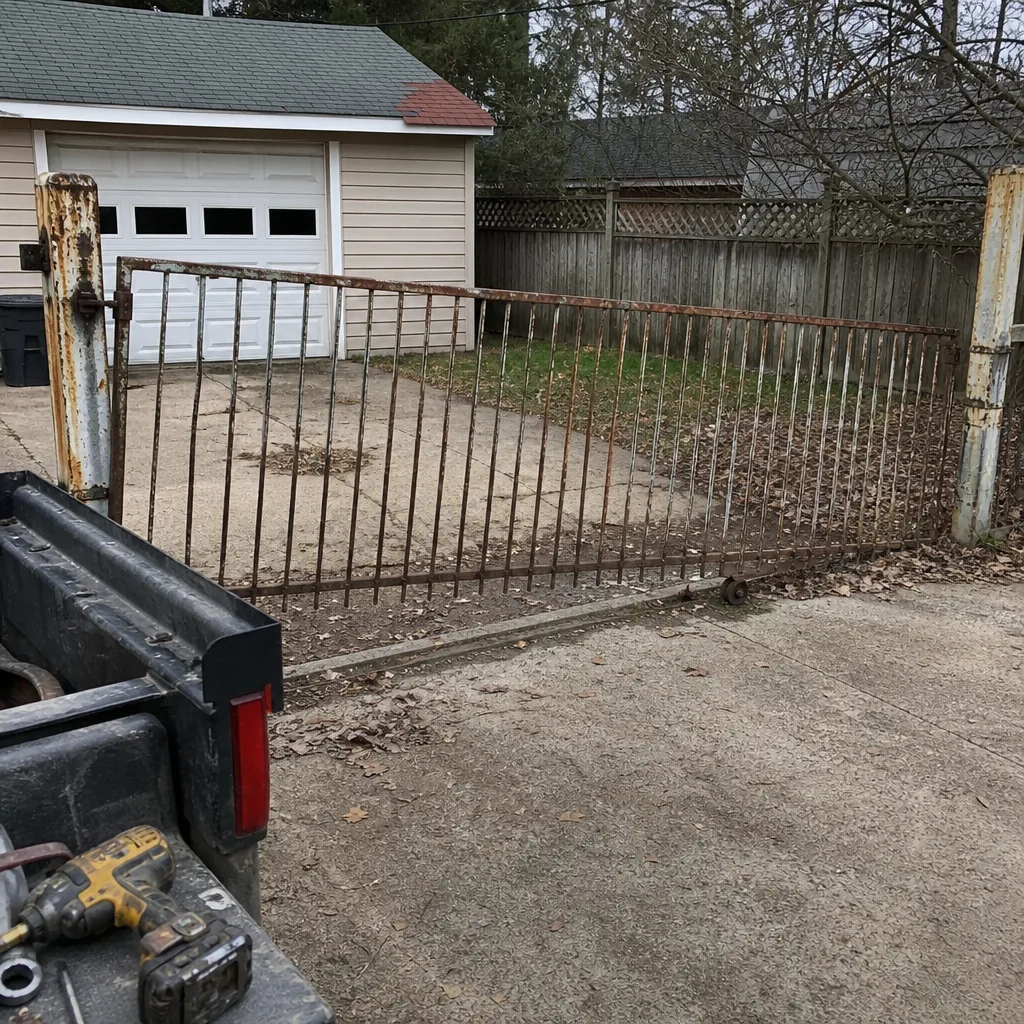 Before
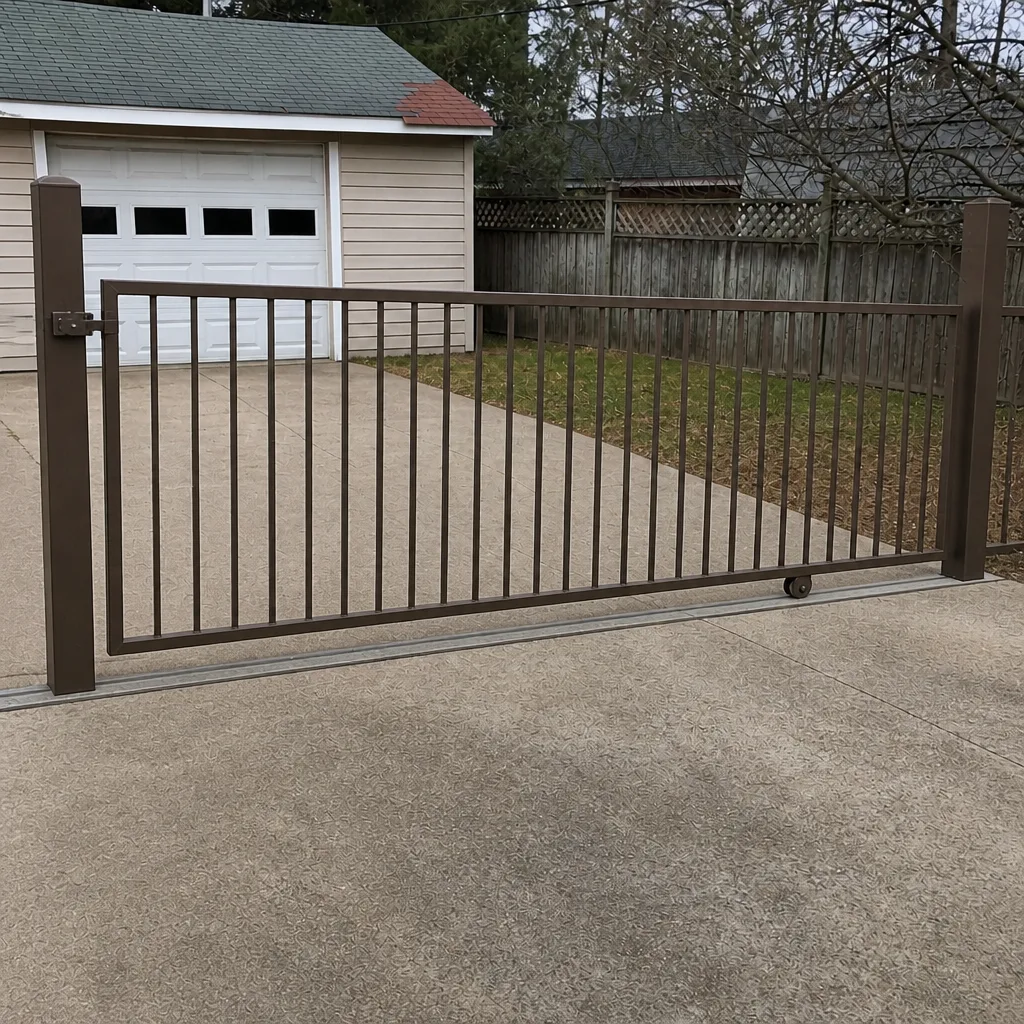 After
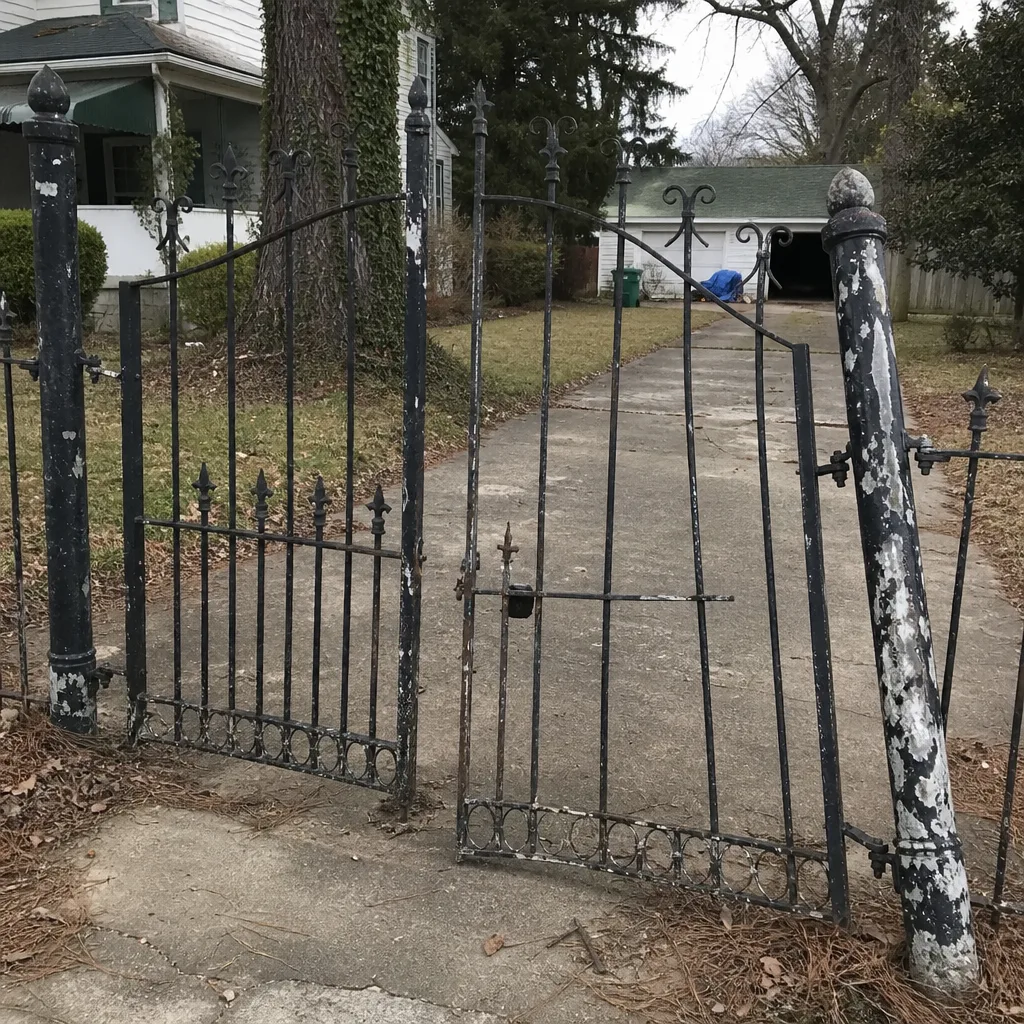 Before
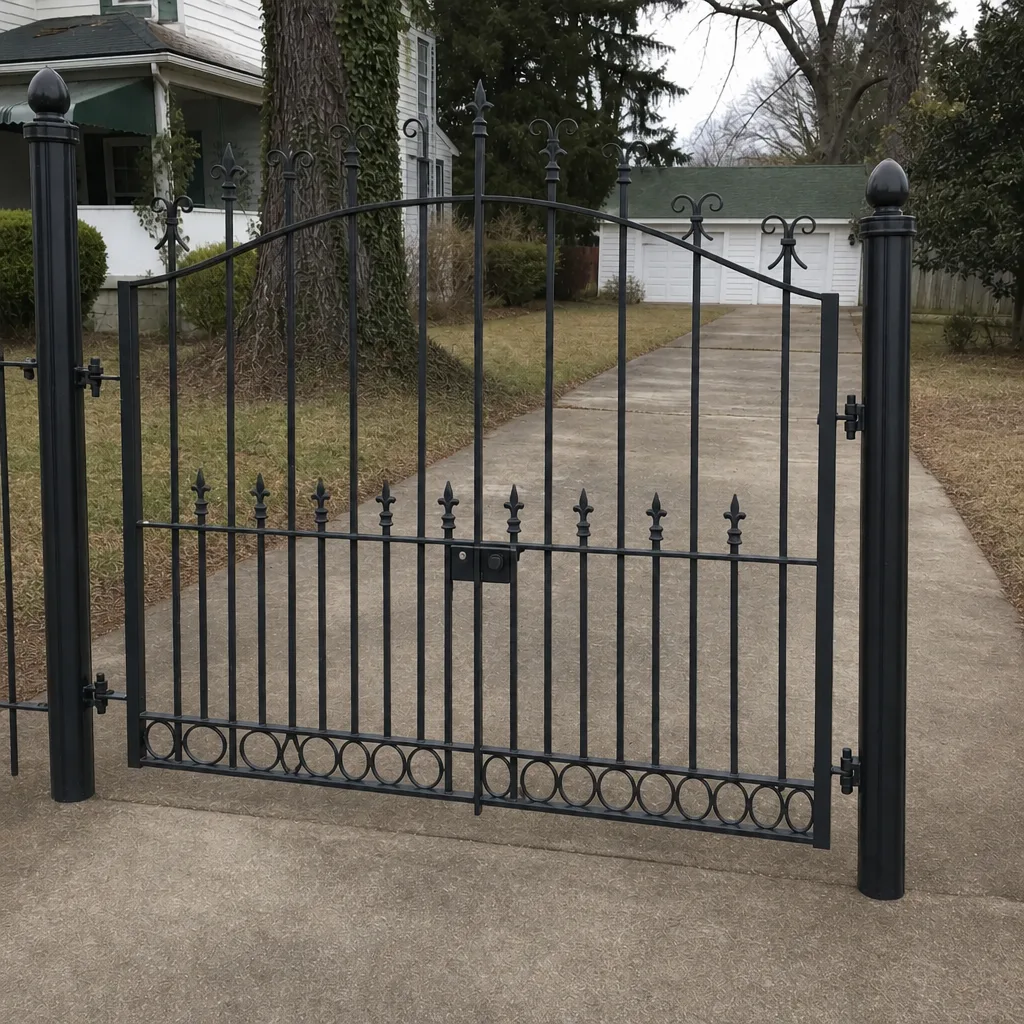 After
When to Call a Professional
Some failures are unambiguous. If the operator won’t respond, the control board shows fault codes you don’t recognize, the gate reverses unexpectedly, a photo eye triggers the gate to stop mid-cycle, or the manual release won’t work, you need a technician rather than a checklist. Same for anything that involves opening the control box, adjusting safety features, or replacing motors and batteries. If a storm has moved your gate from its alignment, or you’ve noticed the same part loosening or wearing more than once, that’s a trend that a technician should diagnose rather than patch. Gate Repair Chesapeake offers free estimates in Chesapeake – call (833) 323-1302. We work with the brand you already have – LiftMaster, FAAC, BFT, Linear, Viking, Ghost Controls, DoorKing, Elite, Mighty Mule – so there’s no need to switch systems to get service.
Frequently Asked Questions
Most residential gates should get a thorough once-a-year deep service plus monthly visual checks and quarterly battery tests, with inspections adjusted for Chesapeake’s storm and freeze-thaw season. Heavily used commercial gates need monthly inspection.
No. Swing gates focus on hinges and operator arms, slide gates focus on the track and rollers, and barrier arms need more frequent inspection because they cycle hundreds of times per day.
Quarterly testing catches battery degradation before a storm outage, and seasonal tests catch the drop in battery capacity that comes with cold weather. Annual testing misses both.
Slower travel, new noises, or repeated fault codes are the earliest signs. Those are exactly the signals your documentation log is there to catch.
You can check the track, clear debris, test the manual release, and record fault codes safely. Anything inside the control box, motor testing, and safety adjustments need a trained technician because of the danger.
Yes. A trained technician can identify your gate type, set the right interval for your duty cycle, and document findings in a way that supports trend-based diagnosis. Call (833) 323-1302 for a free estimate. We answer 24/7.
The Bottom Line
A gate maintenance schedule is only useful if it’s built for your gate type and your local conditions. In Chesapeake that means a calendar weighted toward the storm and freeze-thaw seasons, quarterly battery tests, and a documented log that lets you see failures coming. Swing gates, slide gates, and barrier arms each have their own intervals, and component lifespan benchmarks tell you when to inspect versus when to replace. If you’d rather have a technician set the schedule, do the safety-critical work, and document it all, call (833) 323-1302 for a free estimate. Fast dispatch, 7am-7pm, Sunday through Friday.
Written by the team at Gate Repair Chesapeake.