
Last updated November 15, 2026
 Wrought iron
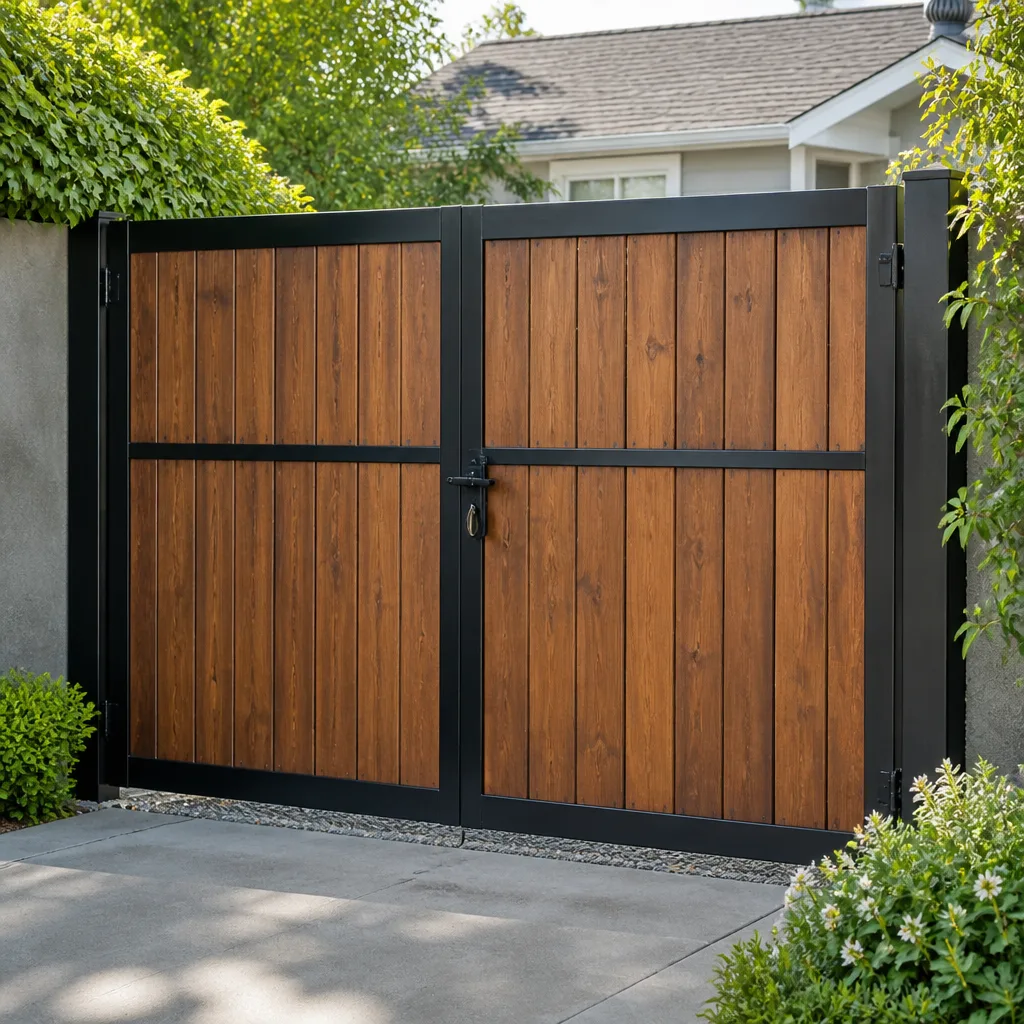 Wood & steel frame
 Farm & ranch
 Sliding driveway gates
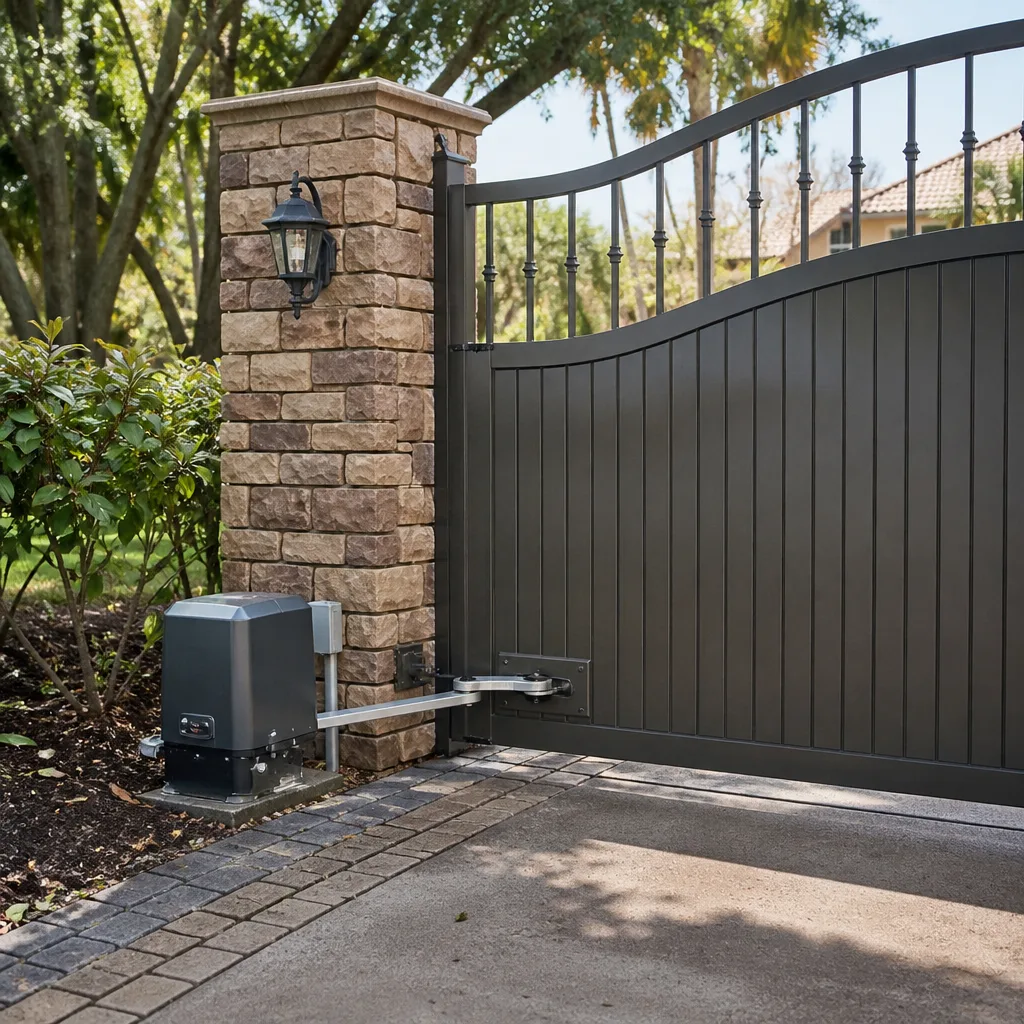 LiftMaster operators
Free on-site gate assessment - hinges, posts, and your LiftMaster or Nice gate operator checked before anything is quoted
The assessment is free and the quote is the invoice.
Get your free estimateGate Repair Maintenance Checklist for Chesapeake Homeowners
The most common maintenance mistake Chesapeake gate owners make isn’t skipping lubrication. It’s using the wrong lubricant. Petroleum-based greases trap grit and moisture against the very components they’re meant to protect, and in a region with high summer humidity and frequent storm systems, that trapped moisture turns into corrosion faster than most people expect. The second mistake is timing: checklists copied from dry-climate guides miss the checks that matter most here. This guide walks through a maintenance checklist built for Chesapeake properties specifically. You’ll learn monthly, quarterly and annual tasks, which lubricants protect hardware and which ones quietly ruin it, how to check batteries and surge protection around storm season, and how to spot early corrosion on welds and post bases before a repair turns structural.
Quick Answer
A solid gate maintenance checklist for Chesapeake homeowners covers three rhythms: monthly visual and safety checks, quarterly lubrication and hardware tightening, and annual operator, battery and structural inspections. The most important local adjustment is lubrication choice. Use a dry film or silicone-based lubricant on hinges, rollers and tracks rather than heavy petroleum grease, because grease holds grit and moisture that accelerate corrosion on gate hardware in humid conditions. Pair that with a battery and surge-protection check before storm season, and you’ll catch most failures before they leave you locked out or with a gate stuck open.
Styles & brands we work with
- Wrought iron
- Wood & steel frame
- Farm & ranch
- Sliding driveway gates
- LiftMaster operators
Table of Contents
- Monthly Checks Every Chesapeake Gate Owner Should Do
- Which Lubricants Protect Gate Hardware and Which Accelerate Corrosion
- Quarterly Tasks: Hardware, Tracks and Hinges
- Battery Backup and Surge Protection for Storm Season
- Inspecting Weld Seams and Post Bases for Early Corrosion
- Operator-Specific Maintenance Intervals by Brand
- The Annual Inspection: What It Should Cover
- Common Mistakes to Avoid
Monthly Checks Every Chesapeake Gate Owner Should Do
Spend ten minutes a month on your gate and you’ll catch most small problems while they’re still small. Start with a walk-around while the gate is closed. Look at the hardware you can see, listen for new noises when the gate moves, and confirm nothing has shifted or loosened. In humid stretches, moisture collects in crevices and on unpainted metal, so visual inspection is your first line of defense.
Here’s a simple monthly routine:
- Walk the full travel path. Open and close the gate and watch the whole motion. A gate that hesitates, jerks or drags is telling you something.
- Look at hinges, rollers and tracks. Check for rust blooms, loose bolts and grit buildup. Wipe away debris.
- Test the safety devices. If your gate has safety sensors or photo eyes, pass an object through the beam while the gate is moving and confirm the gate reverses or stops. Do this with the gate unlatched and clear of people and vehicles.
- Check the keypad or remote. Confirm your entry method works reliably. A remote that needs multiple presses is often a battery issue.
- Look at the posts and footing. Any new lean, crack or gap where the post meets the ground deserves attention.
Write down anything that changed. Small observations over a few months tell a clearer story than a single inspection, and it’s easier to describe the problem when you call for help. In a Chesapeake yard, gate hardware deals with heat, humidity and seasonal storm runoff, so small changes are normal. Sudden changes are not.
Which Lubricants Protect Gate Hardware and Which Accelerate Corrosion
This is the section that matters most, and it’s the one most checklists get wrong. The lubricant you reach for decides whether your hinges and rollers stay smooth or become rust traps. Heavy petroleum grease and engine-type oils feel protective, but they stay tacky. Tacky surfaces catch dust, grit and moisture, and in a humid climate that mixture works its way into the gaps around pins and bearings. Once it’s in, it holds moisture against bare metal.
Use this as a guide:
- Good choices: dry film lubricants, silicone-based sprays, and dedicated gate hardware lubricants designed to dry without a sticky residue. White lithium grease works for a few protected contact points but should be applied thinly.
- Poor choices: heavy chassis grease, engine oil and anything labeled “chain and cable” that leaves a wet film where it will collect grit.
- On rollers and tracks: a light silicone spray is usually plenty. Wipe off excess. You want a thin film, not a coating.
- On hinges and pivot pins: apply a small amount, work the gate back and forth a few times, then wipe away what squeezes out.
- On outdoor padlocks and latches: a dry lubricant graphited product works better in humid weather than oil, which can gum up over time.
If your gate has an operator, never lubricate the operator’s internal components, and never spray lubricant onto the control board or sensor lenses. Keep lubricants away from the operator housing entirely. The gate hardware is where lubrication belongs. If your gate hardware is already corroded to the point that hinges bind, that’s a job for a technician, and it may be the first sign that a gate repair is needed rather than more lubrication.
Quarterly Tasks: Hardware, Tracks and Hinges
Every three months, give the gate a fuller going-over. This is where you catch the wear that monthly checks only hint at. The goal is to verify that the gate still moves freely, that all fasteners hold, and that no component has worked loose.
- Manually test the gate with the operator disengaged. Follow the operator manufacturer’s instructions for manual release, then push the gate through its full travel by hand. It should move smoothly with modest effort. A gate that’s hard to push by hand is a gate your motor is fighting.
- Tighten and check all fasteners. Hinges, brackets, post bolts and operator mounts. Don’t overtighten; check torque by feel and stop if a bolt spins or strips.
- Clean the track or guide path. For slide gates, sweep the track clean of grit and leaves. A clean track prevents roller wear and reduces strain on the operator.
- Inspect the chain if your operator uses one. Check for slack, wear and rust. Re-lubricate lightly with the correct product.
- Check the gate’s level and swing. A gate that’s dropped or leaning suggests a hinge or post issue that will get worse.
If the gate won’t move freely by hand, stop and don’t keep cycling it. Forcing a binding gate strains the motor and can cause further damage. A technician can diagnose whether it’s hardware, alignment or an operator problem. Quarterly checks are also a good time to record the brand and model of your operator. Knowing you have a LiftMaster, FAAC, BFT or Mighty Mule system makes any future service call faster and more accurate. Our technicians have up to 13 years of experience across those and other brands.
Battery Backup and Surge Protection for Storm Season
Storm season is when automated gates fail most often in Chesapeake. Power interruptions, voltage spikes and long outages drain backup batteries and can damage control boards. The right time to check these is before storm season, not after the first outage.
Here’s what to check:
- Test the backup battery under load. Many operators have a battery backup or a fail-safe release. Simulate a power loss and see whether the gate still operates or releases correctly.
- Check the battery age and condition. Most gate operator batteries have a service life of a few years. If yours is older or shows swelling, corrosion at the terminals or a weak charge, replace it before it fails during an outage.
- Look at surge protection on the power feed. A surge protector at the operator’s power supply helps protect the control board. If there isn’t one, ask about having one installed.
- Confirm the solar panel if applicable. Solar-powered operators need clean panels and sound connections. Check for shading and debris.
- Inspect wiring for weather damage. Look for cracked conduit, exposed conductors or loose connections. Never touch wiring directly; if it looks damaged, call a technician.
Electric gates carry mains voltage, and the operator’s wiring and power are the genuinely dangerous parts of the system. Don’t open the control box yourself. If you find a battery issue or suspect a surge has damaged the board, that’s electric gate repair territory and calls for a trained professional. Addressing the battery and surge protection now means the gate still works when a storm rolls through and the power goes out.
Inspecting Weld Seams and Post Bases for Early Corrosion
Structural failures rarely happen without warning. Corrosion starts in the places moisture sits: weld seams, post bases, and anywhere water collects and doesn’t drain. Inspecting these spots carefully is how you catch problems before a gate leans, binds or fails.
Walk the gate and look at:
- Weld seams. Look for rust streaks, bubbling paint or white powder at joints. Rust at a weld means moisture has gotten into the seam.
- Post bases where they meet the ground. This is often the first place corrosion shows, because the base collects water and dirt. Check for bubbling paint, flaking metal and rust around the footing.
- Hinge and bracket attachment points. Check whether bolts are rusted or the metal around them has thinned.
- Low points and corners. Anywhere a horizontal bar collects water or debris.
If you find rust, don’t just paint over it. Surface rust can be cleaned and treated, but rust at a weld or in a structural post usually means the metal has lost section. Painting over it hides the problem while it grows. Any crack in a weld, or a post base that’s lifting or soft around the footing, should be evaluated by a technician before the gate is cycled again. A technician can tell you whether it’s cosmetic, treatable, or a repair that should be scheduled before something worse happens. If your gate is leaning or the gate has dropped, that’s a query worth a service visit rather than a checklist box.
Operator-Specific Maintenance Intervals by Brand
Every operator brand has its own maintenance needs, and setting intervals by brand keeps you from over-maintaining one system while under-maintaining another. Here’s how the most common brands we work on tend to differ. The fundamentals are the same, but each brand has quirks worth knowing.
- Mighty Mule. Residential-grade and common on Chesapeake residential driveways. Check batteries and solar connections frequently, and keep the control board dry. These operators are sensitive to weak batteries, so a monthly run through the opener cycle is worthwhile.
- LiftMaster. Wide range of residential and light-commercial systems. Focus on safety sensor alignment and battery backup condition, and check the manual release for smooth operation quarterly.
- FAAC. Common on heavier swing and slide gates. Check hydraulic and mechanical components for wear, and inspect for moisture ingress around the housing. Quarterly manual-release testing is a good habit.
- BFT. Often used on commercial and heavier residential systems. Check limit switches and the mechanical stops, and inspect the housing for water intrusion after storms.
For any brand, lubricate the gate hardware quarterly, but check the operator’s own recommendations before touching anything inside the housing. When an operator starts misbehaving, brand knowledge makes the diagnosis faster. We’ve worked with LiftMaster, FAAC, BFT, Linear, Viking, Ghost Controls, DoorKing, Elite and Mighty Mule systems, so we know the failure patterns each one tends to have. If you’re unsure what you have, a technician can identify the system and set a maintenance rhythm that fits it.
The Annual Inspection: What It Should Cover
Once a year, do a full inspection that goes beyond the monthly and quarterly routines. If you’re not comfortable with the mechanical and electrical parts, have a technician do it. A proper annual inspection should be thorough and part-specific.
- Full manual operation test. With the operator disengaged, push the gate through its complete range and note any binding, noise or settling.
- Operator diagnosis. Test the reversal and safety features, check the limit settings and confirm the operator cycles smoothly.
- Battery and surge protection. Test the backup battery under load and confirm the power feed protection is sound.
- Structural check. Inspect welds, post bases and hinge points for rust or movement. Look at the posts for lean or cracks in the footing.
- Safety device test. Confirm photo eyes, safety edges and stop circuits all work. This is a safety critical check.
- Hardware assessment. Lubricate hinges and rollers, check fasteners and look for wear on hinges, rollers and chains.
An annual inspection shouldn’t require a maintenance contract. Here, maintenance is a one-time visit priced per job after we look at the gate. If the inspection turns up a worn part or a repair, we quote it and agree the price before any work starts. The goal is a gate that works reliably for the year ahead, not a subscription.
Common Mistakes to Avoid
- Using heavy grease on hinges and rollers. It traps grit and moisture, and it works against you in humid weather. Stick with dry film or silicone-based lubricants.
- Ignoring small rust spots until they’re structural. Rust at a weld or a post base grows quietly. Catch it early and treat it, or the repair turns into a bigger job.
- Skipping safety device tests. Photo eyes and safety edges fail in ways you won’t notice until the gate closes on something. Test them monthly.
- Never checking the backup battery. A dead backup battery leaves you locked out during a storm outage. Test it before storm season, not after.
- Over-maintaining the operator while ignoring the gate. A perfectly tuned motor still struggles if the hinges are binding or the posts have shifted.
- Opening the control box or touching wiring. The operator’s power and wiring are dangerous. If something looks wrong, call a technician.
- Assuming every gate needs the same checklist. A manual residential gate, a solar-powered Mighty Mule system and a commercial DoorKing slide gate need different intervals and checks.
See the difference
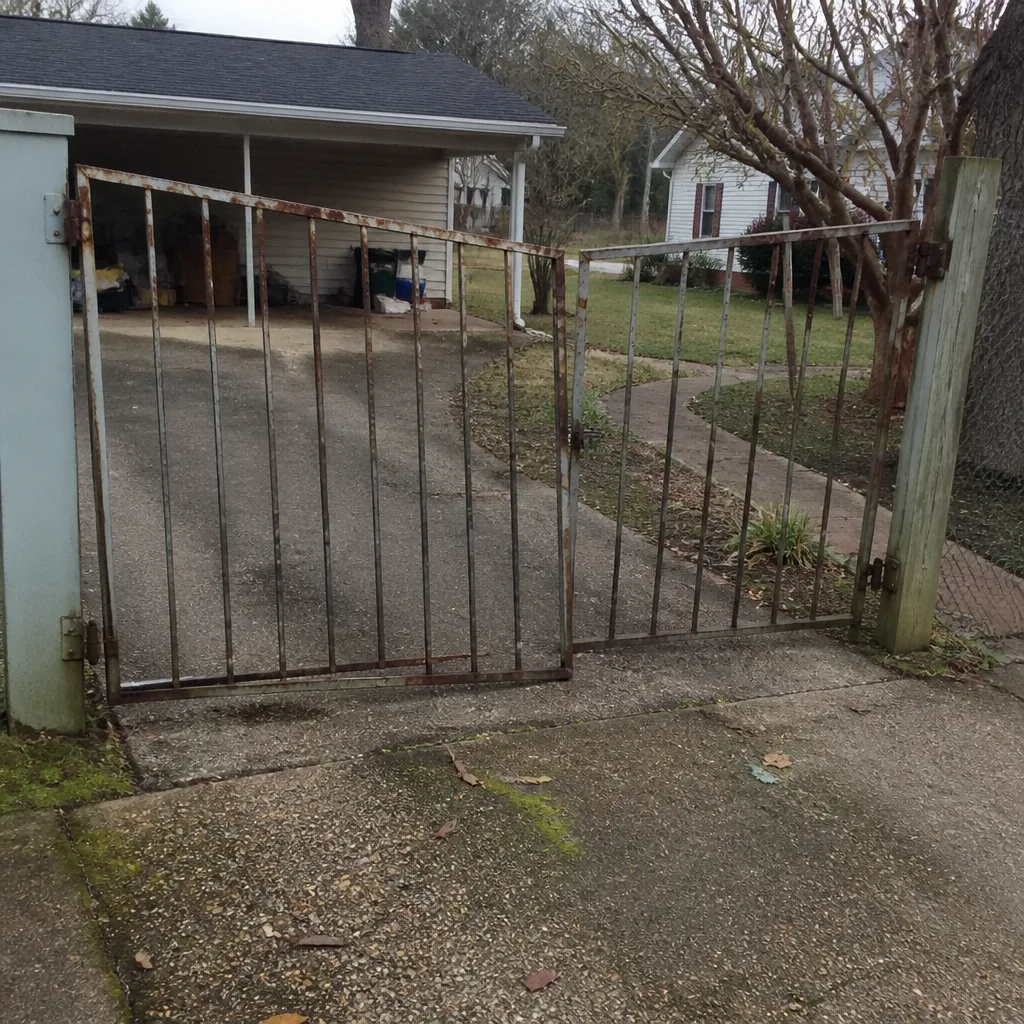 Before
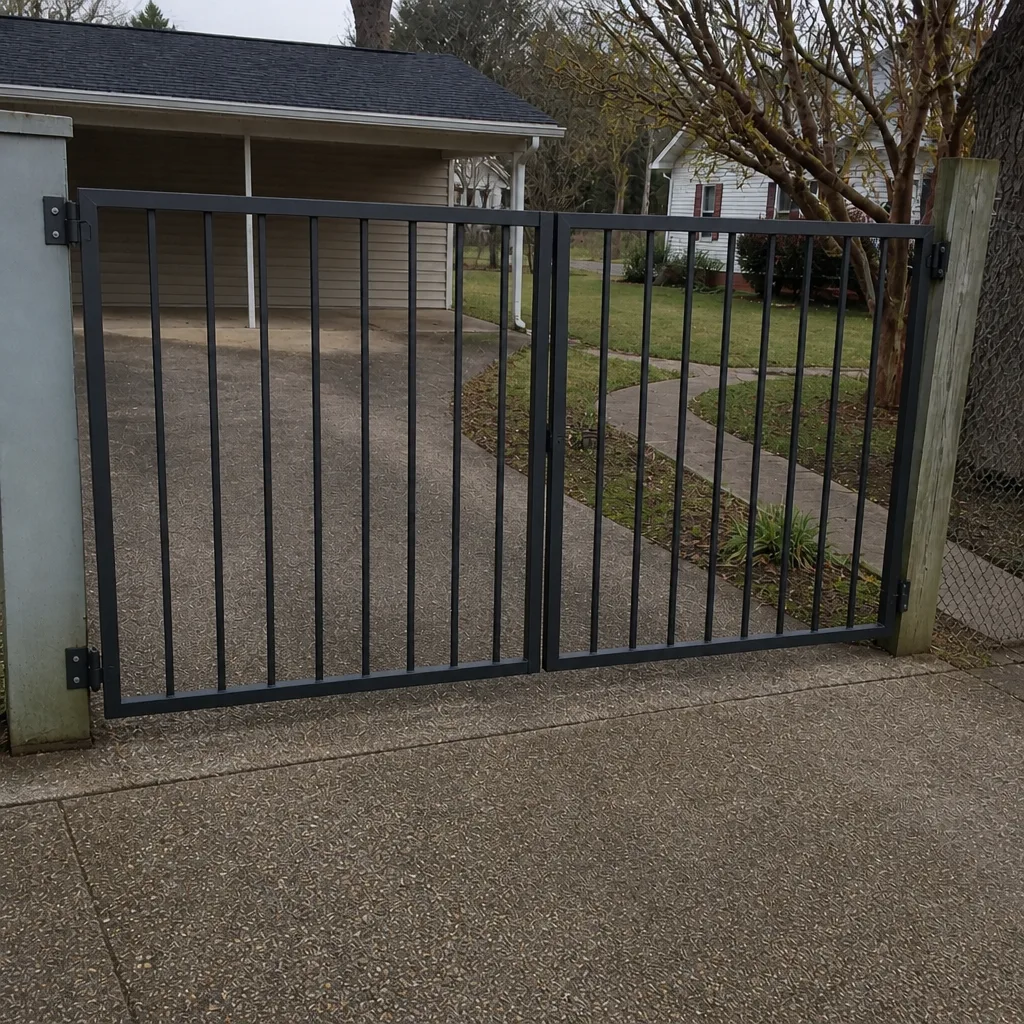 After
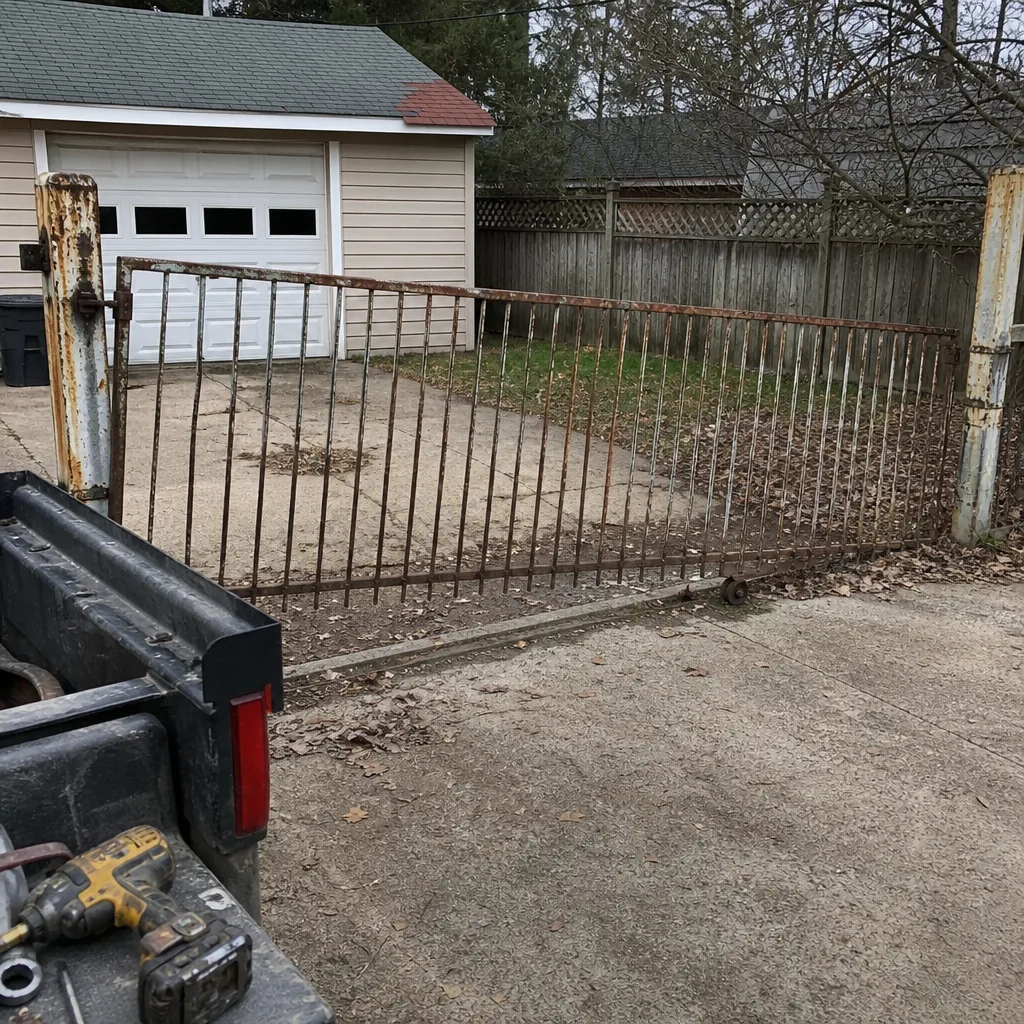 Before
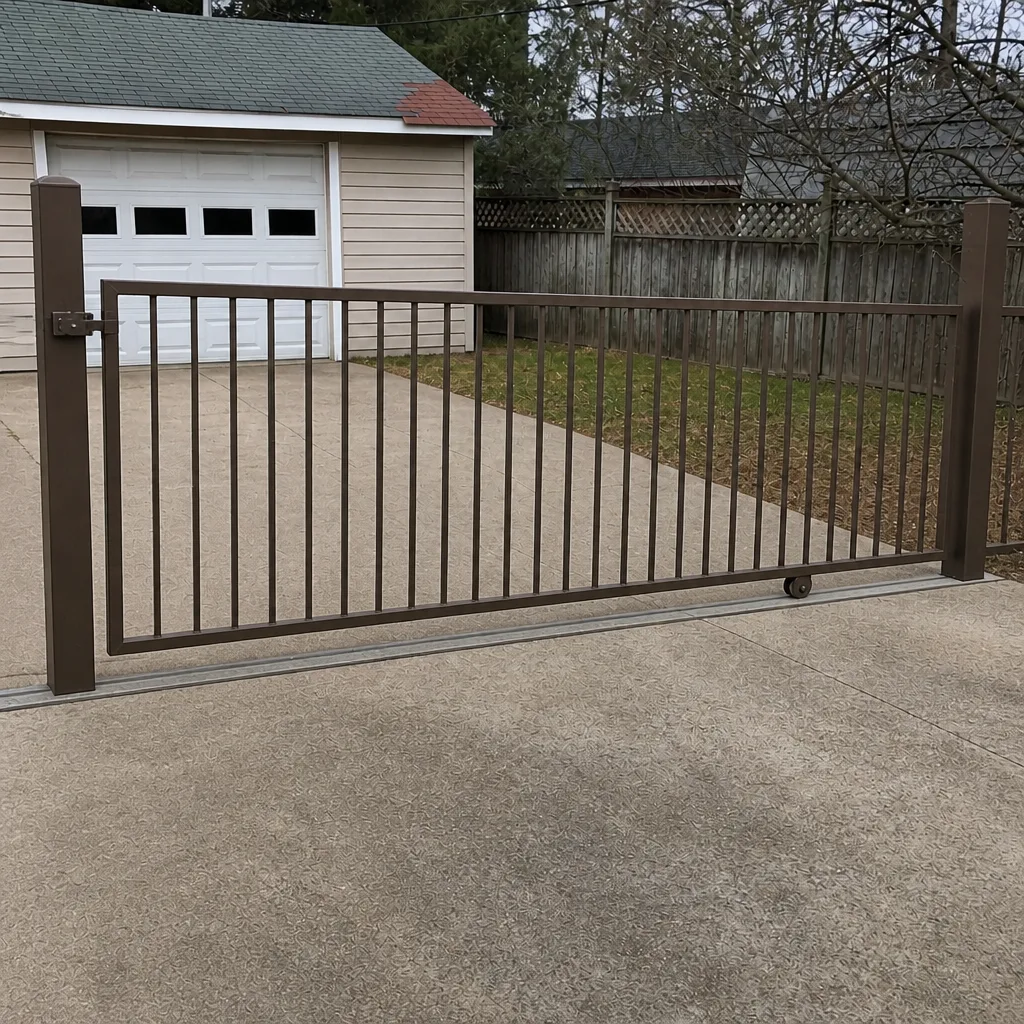 After
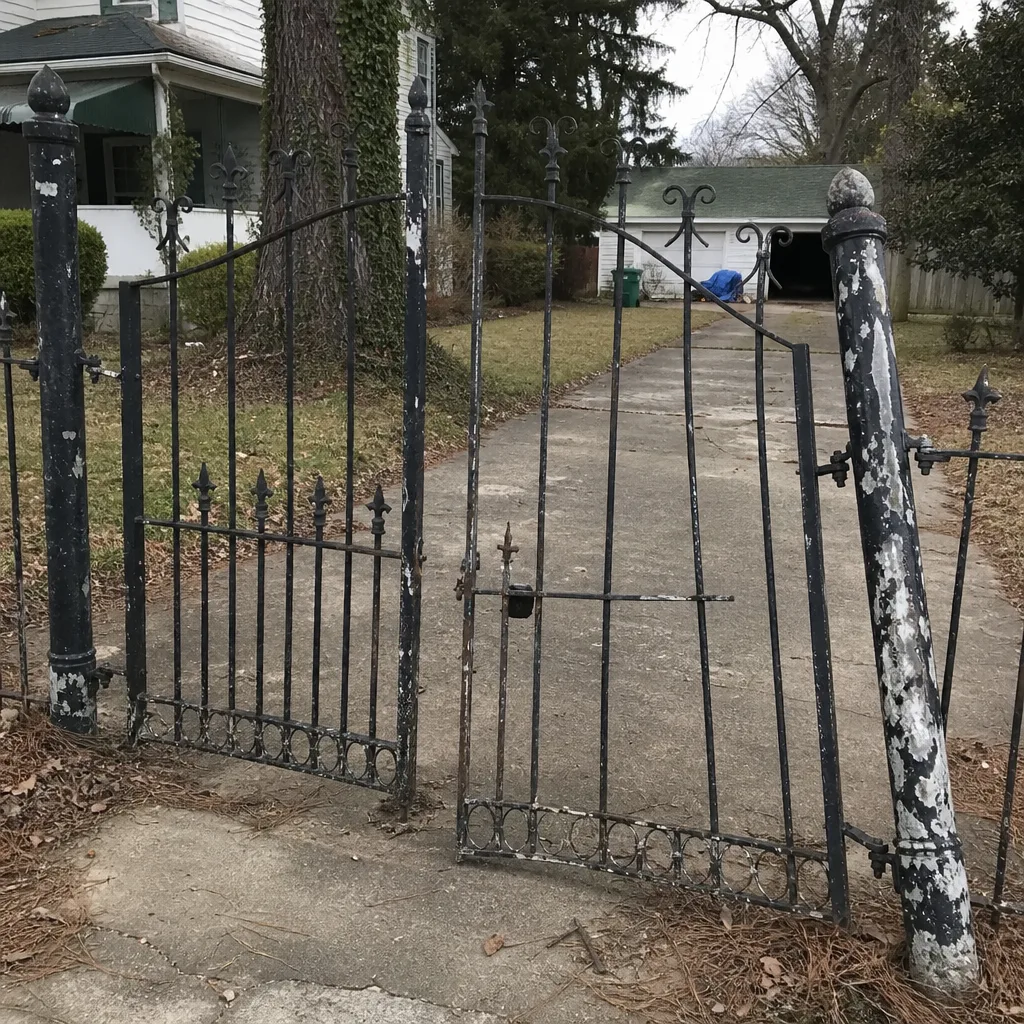 Before
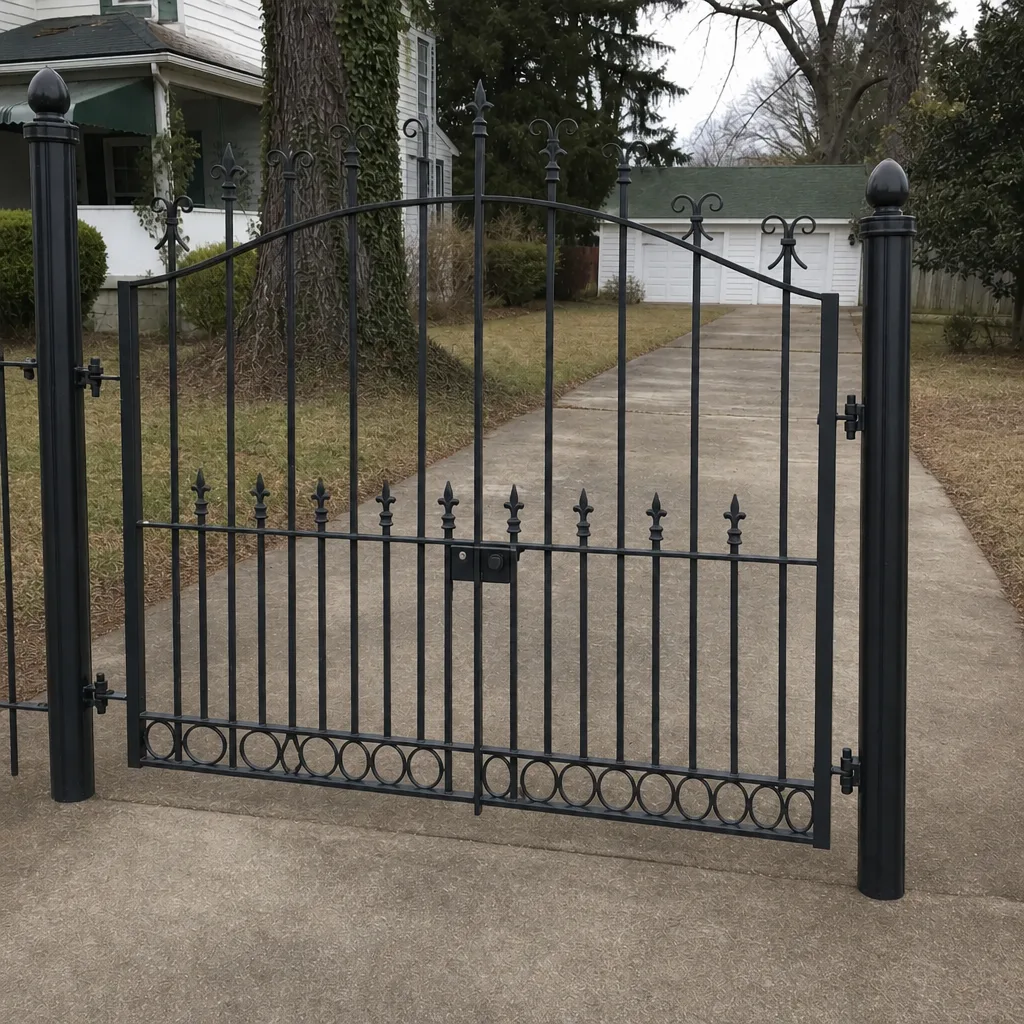 After
When to Call a Professional
Some jobs are monthly checklist items. Some aren’t. Call a technician if your gate won’t move freely by hand, if the operator cycles but the gate doesn’t, or if the gate reverses unpredictably or fails its safety test. Call if a post is leaning, a weld has cracked, or a post base is soft or lifting. Call if the control box hums, trips a breaker, refuses to power up, or if your battery system keeps dying despite fresh batteries. These are situations where guessing can make the problem worse or create a safety risk. We handle both manual and motorized systems and can tell you whether a repair or a replacement makes more sense. Gate Repair Chesapeake offers free estimates in Chesapeake. Call (833) 323-1302. We answer 24/7. Fast dispatch from 7am to 7pm, Sunday through Friday.
Frequently Asked Questions
Monthly for visual checks and safety device tests, quarterly for lubrication and hardware tightening, and annually for a full operator and structural inspection. In Chesapeake’s humid climate, the quarterly lubrication and the storm-season battery checks matter more than in drier regions. Call (833) 323-1302 for a free estimate if you’d rather have someone handle the annual inspection.
Use a dry film or silicone-based lubricant, applied thinly and wiped of excess. Heavy petroleum grease collects grit and moisture, and that mixture accelerates corrosion on hinges and rollers. Keep all lubricants away from the operator’s internal parts and its control board. If your hardware is already binding or badly rusted, call (833) 323-1302 for an on-site assessment.
Yes. Test your backup battery under load, confirm there’s surge protection on the operator’s power feed, check the solar panel if your gate uses one, and inspect wiring for weather damage. A battery that’s weak in calm weather will fail during an outage. Call (833) 323-1302 if you’d like a technician to check the system before the season starts.
You can test the safety devices and check the battery, but leave the control board, wiring and internal operator parts to a trained technician. Electric gates carry mains voltage, and the operator’s power and wiring are the parts that can hurt you. If you suspect a control board or motor failure, call (833) 323-1302 for a diagnosis.
We work on LiftMaster, FAAC, BFT, Linear, Viking, Ghost Controls, DoorKing, Elite and Mighty Mule systems. Knowing the brand shortens diagnosis and helps set realistic maintenance intervals. Call (833) 323-1302 and tell us what you have; if you don’t know, we can identify it.
No, we’re closed Saturday. We’re open Sunday through Friday, 7am to 7pm. We answer 24/7, and a call outside dispatch hours is booked into the next opening, Sunday through Friday, 7am to 7pm. Call (833) 323-1302 for a free estimate.
Maintenance is priced per job after we look at the gate. The estimate is free and the written estimate sets the price. We don’t sell maintenance plans or contracts. Call (833) 323-1302 to book a visit and get a quote.
The Bottom Line
Maintenance for a Chesapeake gate isn’t complicated, but it has to match the local conditions. The biggest shift from a generic checklist is lubricant choice: dry film and silicone sprays, not heavy grease. After that, the rhythm is simple. Monthly visual and safety checks, quarterly hardware and lubrication work, storm-season battery and surge checks, and an annual inspection that covers the operator, the structure and the safety devices. Handle the safe checks yourself, and call a professional for anything electrical, structural or safety related. Done consistently, these checks keep a gate working through humid summers and storm season alike. If you need a repair or an installation, we can handle the whole job, and you can review the service areas around Chesapeake. You can also start at Gate Repair Chesapeake.
Call (833) 323-1302 for a free estimate. We answer 24/7. Fast dispatch from 7am to 7pm, Sunday through Friday.
Written by the team at Gate Repair Chesapeake.