
Last updated November 15, 2026
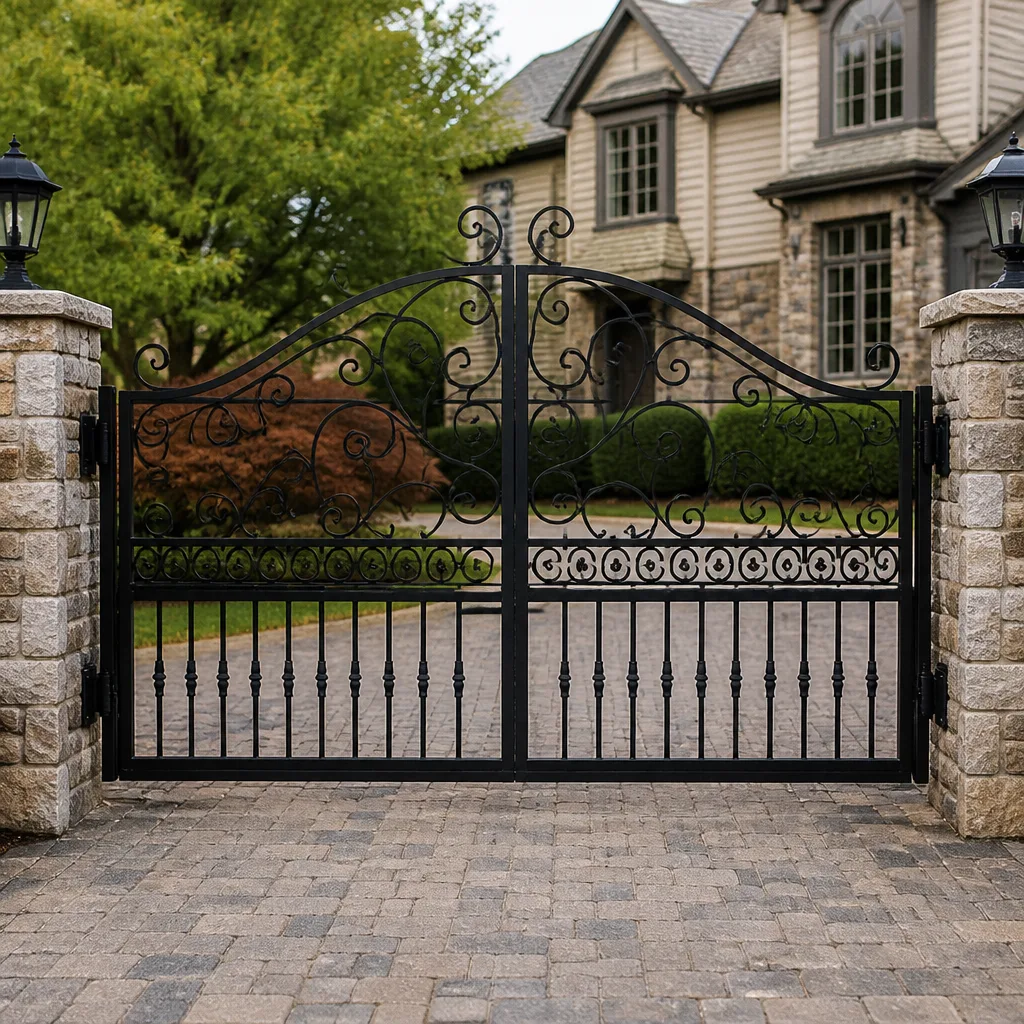 Wrought iron
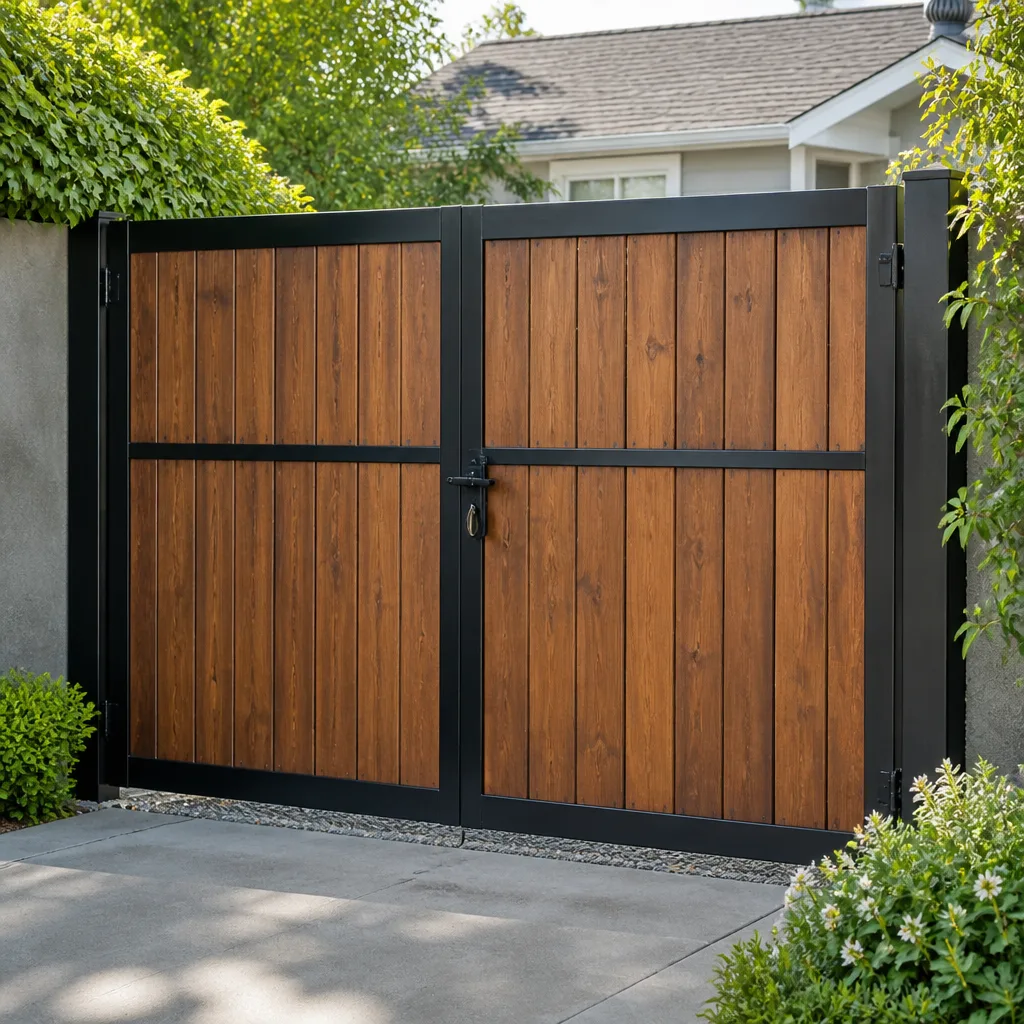 Wood & steel frame
 Farm & ranch
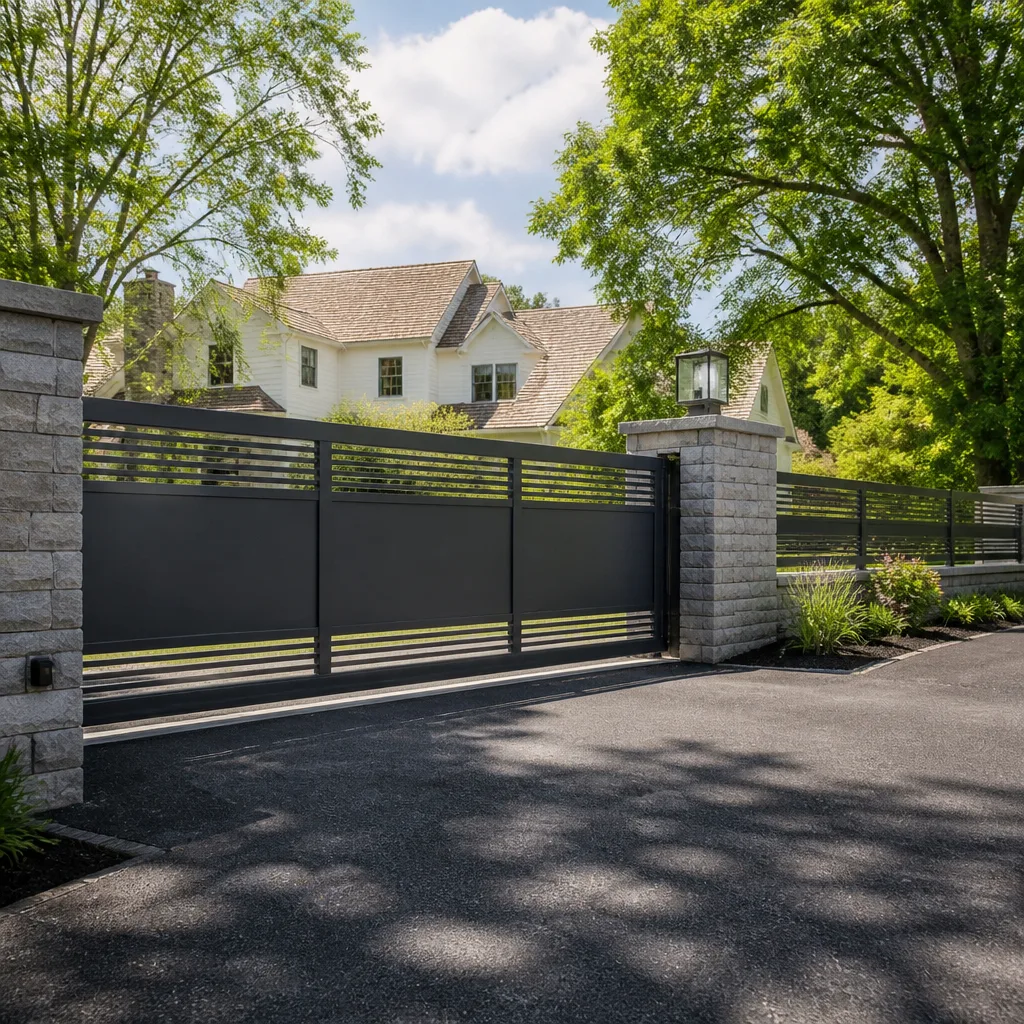 Sliding driveway gates
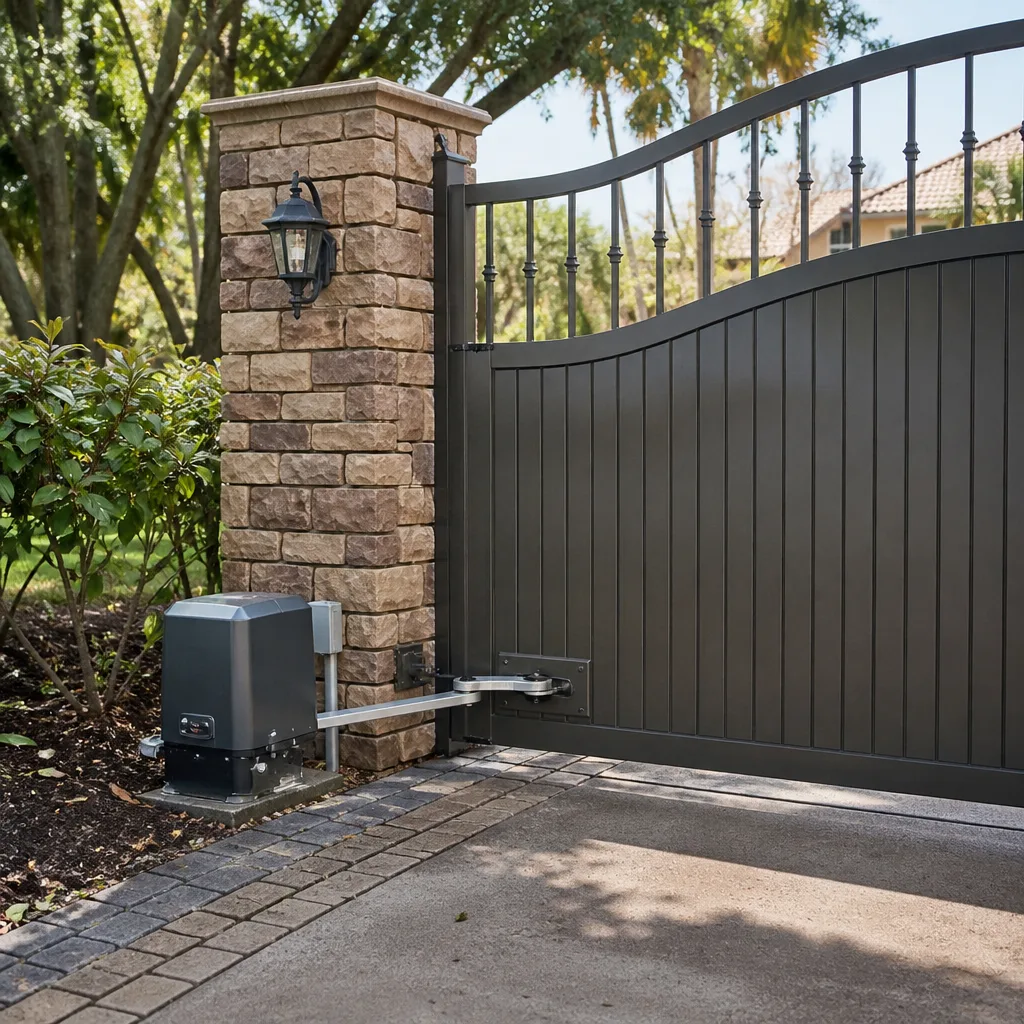 LiftMaster operators
Free on-site gate assessment - hinges, posts, and your LiftMaster or Nice gate operator checked before anything is quoted
The assessment is free and the quote is the invoice.
Get your free estimateHow to Hire a Gate Repair Contractor in Chesapeake: A Step-by-Step Guide
Ask a gate contractor how many different operator brands they’ve worked on in the last 12 months. If the answer is one or two, you’re likely talking to a dealer rep who does repairs on the side, not a multi-system specialist. The gate market in Chesapeake rewards that distinction. A typical driveway gate here runs on an automated operator with a control board, safety sensors and often a vehicle loop, and a contractor who only knows one brand will guess at the rest. This guide gives you the exact questions and vetting steps to tell a real gate specialist from a fence contractor who occasionally touches hinges.
Quick Answer
To hire a gate repair contractor in Chesapeake, first confirm the contractor handles both the mechanical side of a gate and the electrical side (motor, control board, keypad, sensors). Second, ask which operator brands they’ve serviced and whether your brand is among them. Third, get a written scope of work that itemizes the fault, the parts, the labor and the warranty, and refuse any quote that doesn’t. A true specialist will answer brand questions without hesitation and will tell you whether a repair or a replacement actually makes sense.
Styles & brands we work with
- Wrought iron
- Wood & steel frame
- Farm & ranch
- Sliding driveway gates
- LiftMaster operators
Table of Contents
- Why Most Gate Contractors in Chesapeake Aren’t Gate Specialists
- The Split That Matters: Electric Gate Repair vs. Manual Gate Work
- How to Check Real Experience With Your Specific Gate Brand
- Five Diagnostic Questions to Ask Before You Hire
- What a Proper Written Scope of Work Must Include
- Licensing, Insurance and Electrical Work: What to Verify in Virginia
- Red Flags Unique to the Gate Repair Market
- Repair or Replace: How to Get an Honest Answer
Why Most Gate Contractors in Chesapeake Aren’t Gate Specialists
The gate repair market in Chesapeake splits into three groups, and only one of them is built for diagnostic work. The first group is fence contractors. They’re excellent at posts, rails, panels and weld work, but most of them don’t carry the test equipment or the control-board knowledge for a modern automated operator. The second group is single-brand dealers. Their techs know one ecosystem deeply and everything else not at all, and their repair recommendation tends to drift toward “replace it with our line.” The third group is the multi-brand gate specialist, an outfit that repairs what’s already on your property regardless of who made it.
That difference shows up fastest in how a contractor reacts when you describe your system. A generalist hears “the gate opens partway and reverses” and thinks about obstruction at the track. A specialist hears the same symptom and starts working through the safety sensor alignment, the limit switches, the current-sensing sensitivity setting, and the control board’s fault log. One of those approaches often costs you a service visit and a mystery; the other usually pinpoints the fault on the first trip.
We’ve built our service around that third group. Our technicians have up to 13 years of experience and work across nine brands, from LiftMaster and Linear to DoorKing and FAAC, so the diagnosis starts with how the system is designed to behave rather than with a guess. If you want a repair handled by people who see automated gates as their main work, our gate repair team is set up for exactly that. For manual gates with a sagging hinge, a bent frame or a dragging latch, a good fence contractor can be a fine choice. The mistake is hiring one for an operator fault.
The Split That Matters: Electric Gate Repair vs. Manual Gate Work
An automated gate carries three systems that can fail independently: the mechanical gate itself, the operator (motor and gearbox), and the controls (control board, keypad, sensors and loops). A manual gate has only the first. That’s why a quote for “gate repair” tells you almost nothing until you know which of the three systems the contractor actually works on.
- Mechanical: hinges, rollers, tracks, posts, frames, latches, welds and alignment. Fence contractors often handle this well.
- Operator: the motor, gearbox and drive mechanism. Replacement parts interchange poorly across brands, so brand familiarity matters more than general mechanical skill.
- Controls: control boards, keypads, remote receivers, safety sensors, vehicle loops and photo eyes. This is where most modern gate faults actually live, and where generalists most often stall.
Before you hire, ask the contractor to describe the last automated system they diagnosed and what the actual fault was. A specialist will talk about a control board, a failed sensor or a misaligned limit. A generalist will talk about a hinge, a wheel or a “bad motor,” the usual stand-in for a fault they couldn’t isolate. If the fault lives in the controls, the contractor needs to be equipped for it, not leaning on a subcontractor.
Our electric gate repair work covers motors, control boards, keypads and safety sensors as a dedicated service. It’s not an add-on to a fence crew’s schedule; it’s the reason the equipment is on the call. If your gate is automated and the fault is intermittent, controls should be the first suspect and the first thing the contractor verifies.
How to Check Real Experience With Your Specific Gate Brand
Brand experience is the easiest claim to test and the hardest to fake. Gate operators don’t share a common diagnostic interface. A technician used to Ghost Controls residential openers will approach your system differently than one who lives in DoorKing commercial controllers, and both will approach a Linear system differently again. So the question isn’t whether the contractor has heard of your brand. It’s whether they’ve actually serviced it and know how it’s put together.
Here’s a quick way to find out. Ask which brands the contractor works on regularly, then ask one follow-up about yours: where the manual release is, what the control board looks like, or how the safety sensors are wired. A technician who has been inside that system will answer without pausing. One who hasn’t will go quiet or start describing something generic.
We’re familiar with nine brands across the residential and commercial range: LiftMaster, FAAC, BFT, Linear, Viking, Ghost Controls, DoorKing, Elite and Mighty Mule. That spread is what lets us diagnose by system knowledge rather than by trial and error. If your gate is a Mighty Mule on a residential driveway or a DoorKing controller on a commercial entry, the diagnostic path is different but the approach is the same: read the system, find the fault, fix that.
One caution about dealer-affiliated technicians. A contractor who only sells one line is often very good at that line, but their repair recommendation will tend to bend toward a new installation of the brand they represent. Brand-agnostic service means repairs are recommended on merit, and only when they actually make sense.
Five Diagnostic Questions to Ask Before You Hire
These five questions do more to separate the specialists from the generalists than any review page will. Ask them on the phone before you agree to anything. The answers tell you how a contractor thinks, not just what they claim.
- “Which operator brands have you serviced in the last year, and which one is on my gate?” The list should be several brands deep, and yours should be a name they recognize.
- “Do you handle the control board and safety sensors, or only the mechanical side?” A fence contractor will hand this off or steer around it. A gate specialist will say yes without qualification.
- “How do you diagnose an intermittent failure?” Good answers mention the fault log, the sensor alignment, the limit settings and the current-sensing sensitivity. Guesses are not answers.
- “Will the written quote itemize the fault, the parts and the labor?” Yes is the only acceptable response. A lump sum for a diagnostic job is a blank check.
- “What’s your warranty on labor and on parts?” A repair without a labor warranty is a guess the customer pays for twice.
The pattern in those answers matters more than any single one. A specialist will talk about a specific system, a specific fault and a specific fix. A generalist will talk in broad strokes about diagnostics. If you can’t get a straight answer about the control board, you’ve found your answer about the contractor.
What a Proper Written Scope of Work Must Include
A written scope of work is the contract. If it lists fault types instead of the fault, or parts without part numbers, the contractor has left room to deliver something less than what you pictured. Compare the quote you receive against this checklist before you sign or pay anything.
- The reported fault, in the contractor’s words. “Gate reverses mid-travel” is specific. “Gate issue” is not.
- The diagnostic findings. What the technician actually found, including which component failed and why.
- Parts, by name and number. Motor model, control board, sensor type, keypad model. Generic “operator parts” is a red flag.
- The labor broken out from the parts. A lump sum hides where the money went and makes change orders hard to dispute.
- Warranty on labor and on parts, separately. The two are often different durations and one is sometimes missing entirely.
- What the price covers and what it doesn’t. A quote that doesn’t say is a quote that doesn’t cover it.
- The written price, agreed before any work starts. This is the line that stops the invoice from growing after the fact.
The missing line items are the tell. If the scope of work says “repair gate” and gives a number, you have no warranty, no parts specification and no agreed fault. If it itemizes everything above, you have a document you can hold a contractor to. That’s what you’re buying with a written estimate, and it costs nothing to ask for.
Licensing, Insurance and Electrical Work: What to Verify in Virginia
Virginia regulates contractors through the Department of Professional and Occupational Regulation, and gate work with an electrical component is not something a handyman should be doing under the general handyman exemption. The exact license class that applies to your job depends on the job’s scope and value, and Virginia has more than one class. The honest answer is to check the contractor’s license class against the scope of your project with the state board, and to ask the contractor directly which class they hold and whether it covers electrical work.
Two things to verify regardless of class:
- A current state contractor license. Ask for the license number and look it up on the DPOR site yourself instead of taking a business card’s word for it.
- General liability insurance and workers’ compensation coverage. Ask for a certificate of insurance made out to you, not a photocopy from a drawer. If the contractor can’t produce one for your job, that’s a reason to keep looking.
When the work touches the operator’s power feed, the wiring at the control panel or the safety sensors, ask a direct question: who does the electrical portion, and under what license? A contractor who does that work needs to be properly licensed for it, or needs to bring in someone who is. Be cautious of a general handyman whose license doesn’t cover electrical work but who offers to “handle the wiring anyway.”
Permits are a separate question from licensing, and the requirement varies by job. Most cities and counties require a permit for a new gate installation or a new electrical circuit to an operator, but not every repair triggers one. Check with the City of Chesapeake’s permit office directly if you’re unsure, and expect a specialist to tell you the same thing.
Red Flags Unique to the Gate Repair Market
Gate repair has its own warning signs, and they’re different from the general contractor red flags you already know. These are the ones we see most often when a customer calls us after a bad first attempt.
- Vague quotes for a diagnostic job. A lump sum for a fault nobody has described is a placeholder. The quote should read the fault, the parts and the labor separately.
- Single-brand bias. If the only repair ever recommended is “replace it with our brand,” you’re talking to a sales channel, not a repair tech. Repairs should be recommended on merit.
- No warranty on labor. Parts warranties are common because manufacturers offer them. Labor warranties are the contractor’s own statement, and the absence of one tells you a lot.
- “You need a new operator” without a diagnostic. Operators fail less often than control boards and sensors do. A recommendation to replace the whole head before the controls have been tested is a shortcut.
- Reluctance to be specific about the fault. A technician who has actually found the problem can describe it. One who hasn’t will keep the description general.
- Pressure to start before the written quote. The price should be agreed and in writing before any work starts. A contractor who wants to start now and price later is asking you to trust an invoice you haven’t seen.
- No interest in your brand. If a contractor can’t tell you anything about Ghost Controls, FAAC or Linear before they arrive, don’t expect them to diagnose anything built on those platforms once they do.
Repair or Replace: How to Get an Honest Answer
The most consequential decision in gate service is whether to repair the system you have or replace it. Motor replacement is expensive and sometimes genuinely necessary, but it’s the most commonly overstated recommendation in the trade. An honest contractor tests the cheap, likely suspects first: the sensors, the keypad, the control board and the limit settings. If the fault is in the controls, a new operator won’t fix it, and you’ve spent the money twice.
Here’s the sequence a proper diagnosis follows.
- Check the power and the controls. Sensors, keypad, receiver and control board are the highest-frequency failure points on an automated system.
- Check the operator’s mechanical side. Motor, gearbox and drive mechanism are the next suspects, and they should be tested, not assumed.
- Check the gate itself. Hinge sag, track misalignment and post movement change the load on the operator and can mimic a motor fault.
- Recommend the repair that matches the finding. If the motor genuinely failed, say so. If the board did, replace the board.
If your gate is fully automated and you want to know whether it’s repairable before you commit to a replacement, take a look at how we handle Chesapeake gate systems. The same team that repairs your existing gate also designs and installs new ones, which means the recommendation isn’t tied to one outcome. Repair or replace, we’ll tell you which one actually makes sense, and the reason will be in the written quote.
Common Mistakes to Avoid
- Hiring a fence contractor for an automated fault. Fence crews are often very good at fences, and post, rail and weld work is real craft. But a control board or safety sensor isn’t fence work, and the fix tends to be a guess when it’s approached that way.
- Accepting a verbal diagnosis with no written quote. “It’s probably the motor, about a few hundred” is not a quote. Get the fault, the parts and the labor in writing, and confirm the price before any work starts.
- Skipping the DPOR check. A business card and a wrapped truck don’t prove a license class or an insurance certificate. Look the license up yourself and ask for a certificate of insurance for your specific job.
- Replacing the whole operator before the controls are tested. Sensors, keypads and boards fail more often than motors do. A contractor who recommends a full replacement before the controls are checked is replacing a system rather than diagnosing one.
- Assuming a dealer will recommend a competitor’s product. If the contractor only sells one line, their repair recommendation is filtered through that product. Ask directly whether the recommendation changes if you don’t buy their brand.
- Not asking about labor warranty. Parts have manufacturer warranties. Labor is the contractor’s own promise. Get it in writing on the quote, in a number of months, not “we stand behind our work.”
- Letting a Chesapeake contractor start without a written scope. The invoice is not where you want to learn what the fault actually was. Get the scope in writing first, then let the work begin.
See the difference
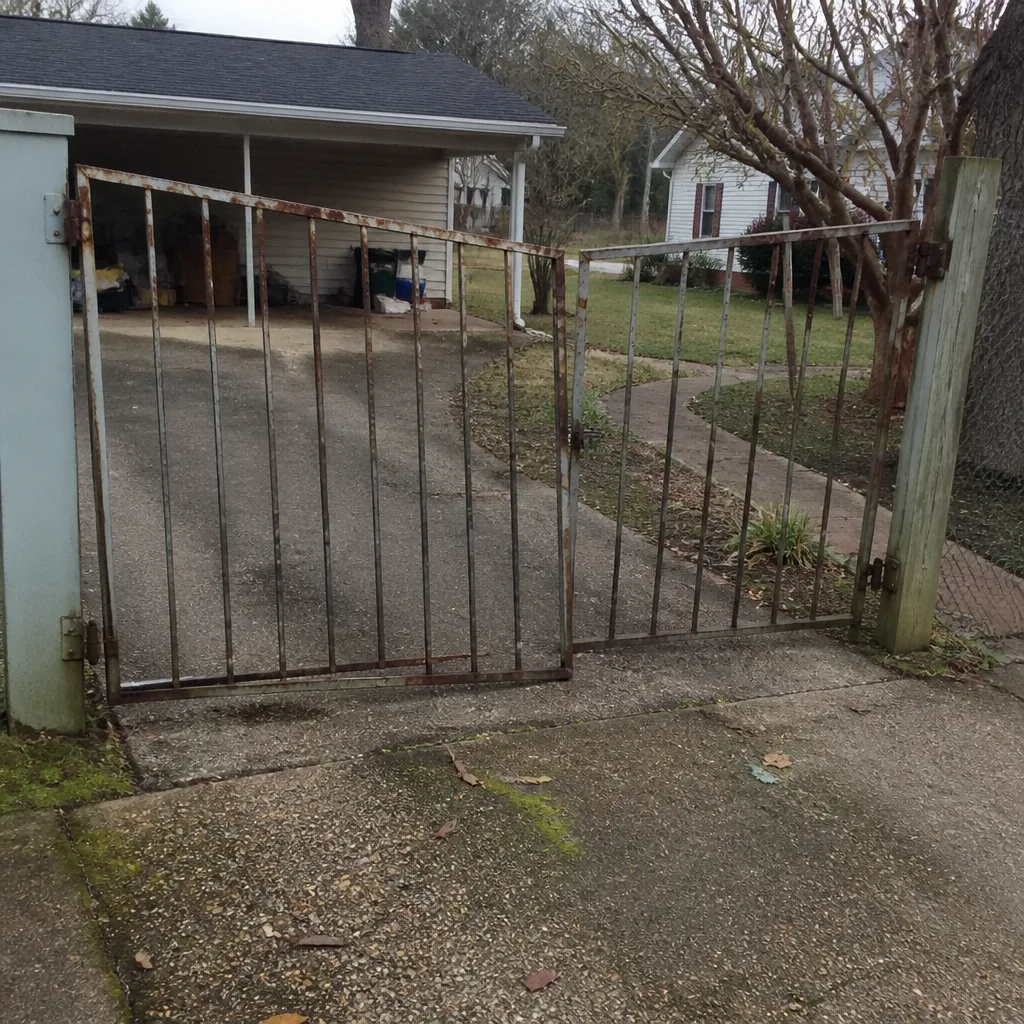 Before
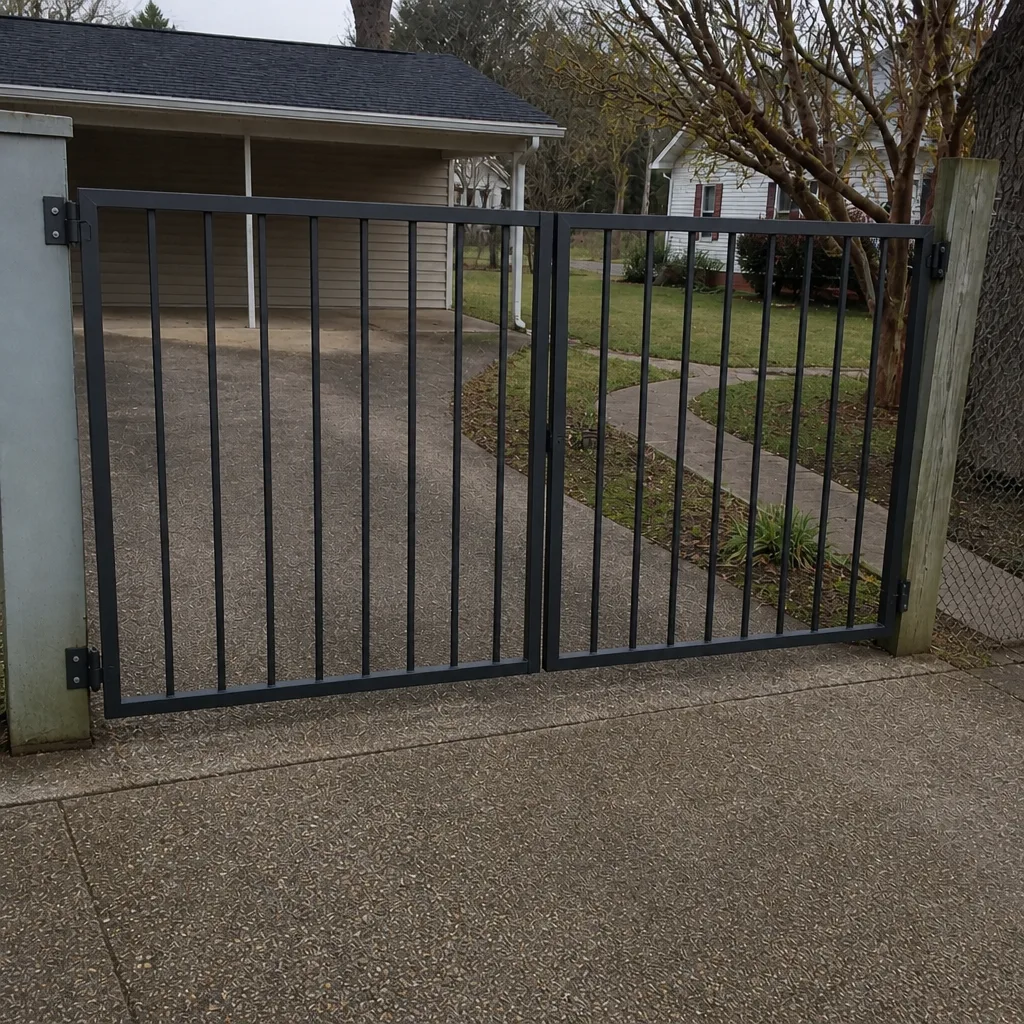 After
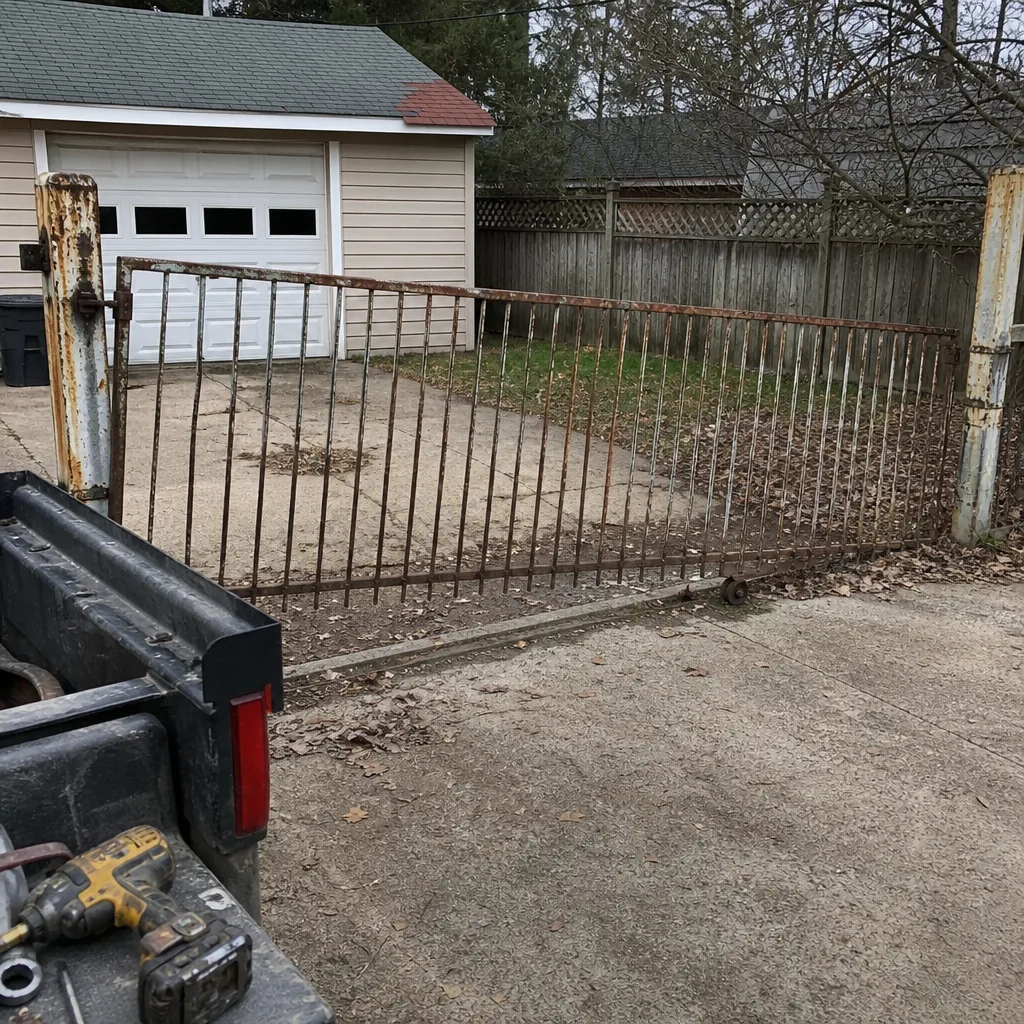 Before
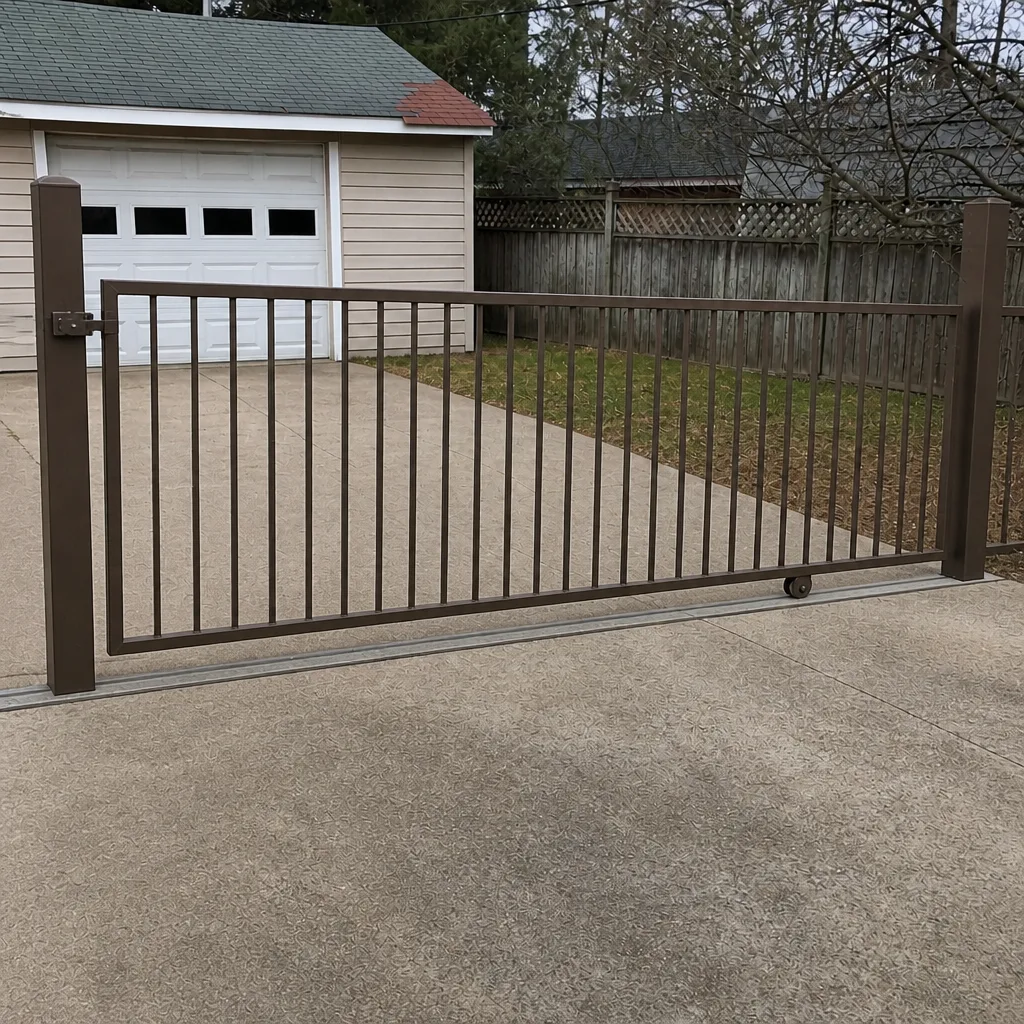 After
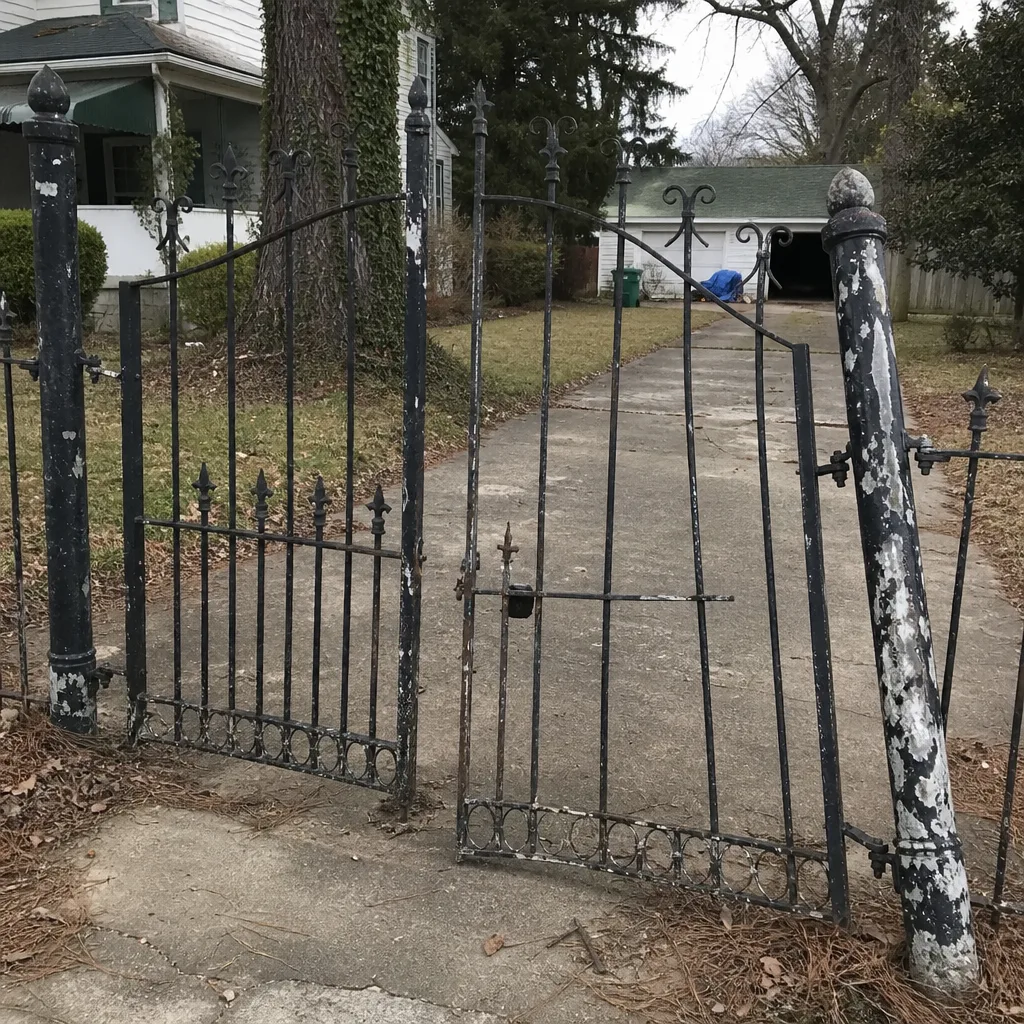 Before
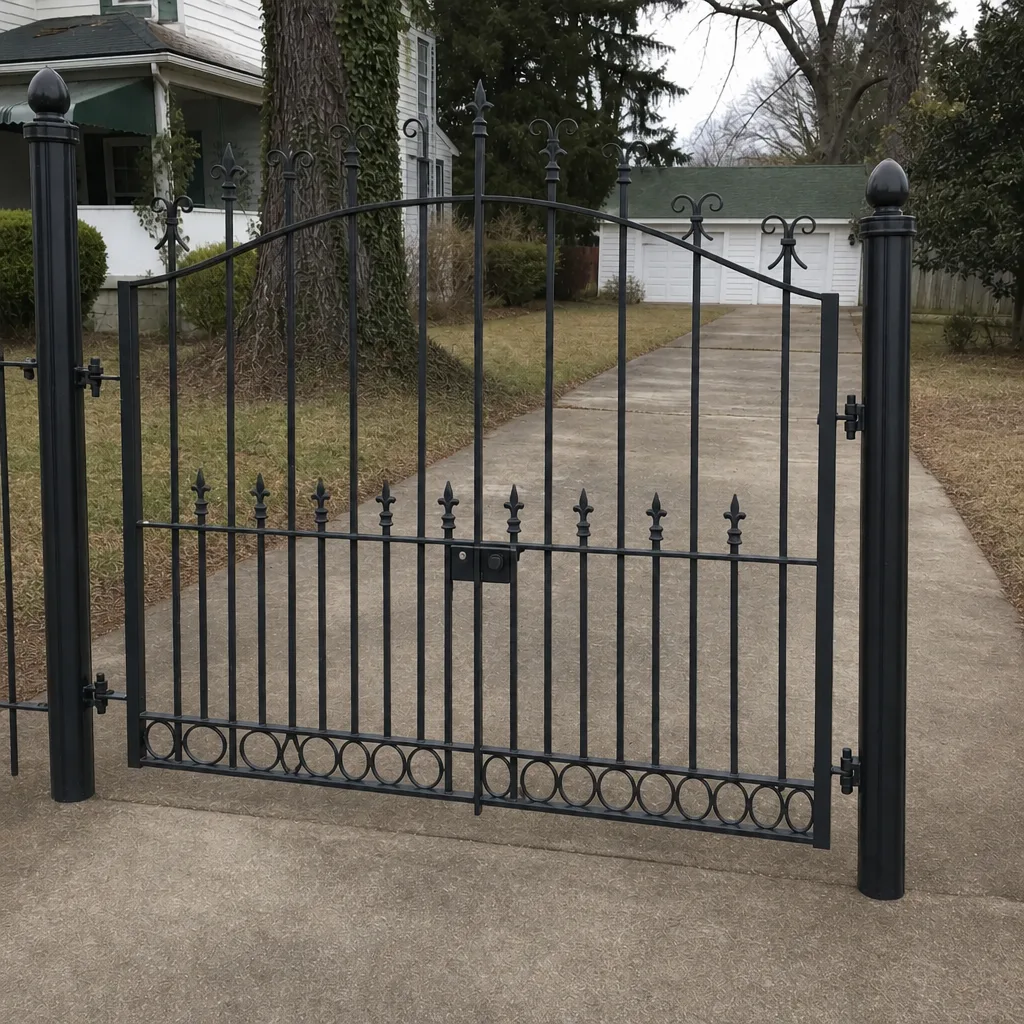 After
When to Call a Professional
Some gate faults are safe to watch and some aren’t. Call a professional if the gate moves on its own, reverses mid-travel, closes on an obstruction, strikes the ground or a vehicle, or if any safety sensor is bypassed or visibly damaged. Call if the operator has stopped responding to the keypad, if the control board shows an unfamiliar fault code, or if the power feed to the operator looks suspect. Heavy panels and automated operators carry real crushing and electrical hazard, so this isn’t a job for a patient DIY approach. Gate Repair Chesapeake offers free estimates in Chesapeake. Call (833) 323-1302. We answer 24/7, and fast dispatch from 7am to 7pm, Sunday through Friday.
Frequently Asked Questions
Gate repair in Chesapeake is priced per job by a written estimate, and the total depends on the fault, the parts and the brand. Controls faults like a sensor or a keypad typically come in lower than operator faults like a motor or a gearbox. The written quote sets the final price, and it’s agreed with you before any work starts. Call (833) 323-1302 for a free estimate and we’ll tell you what the fault likely involves before we arrive.
Many gate faults can be repaired same day, especially when the problem is in the controls, and we offer fast dispatch from 7am to 7pm, Sunday through Friday. If the fault needs a part your brand doesn’t stock locally, we’ll tell you the timeline before we commit. We answer 24/7, so call (833) 323-1302 and we’ll book the next available visit. A call outside dispatch hours is booked into the next opening, Sunday through Friday, 7am to 7pm.
Yes. We work on nine brands across residential and commercial categories: LiftMaster, FAAC, BFT, Linear, Viking, Ghost Controls, DoorKing, Elite and Mighty Mule. Brand-agnostic service means the repair is recommended on merit rather than toward one product line, and if your brand is on that list, the technician arriving knows the system. If it isn’t, call us anyway and we’ll tell you straight whether we can handle it. Call (833) 323-1302 for an exact quote – estimates are free.
Yes. Our electric gate repair service covers motors, control boards, keypads and safety sensors, which is where a large share of automated gate faults originate. If the power feed to the operator needs work, we’ll tell you up front what’s involved and who does it. This is scheduled work, not same-day, so the visit is measured and priced in writing before anything is ordered. Call (833) 323-1302 and we’ll walk through the scope.
A written scope of work should itemize the reported fault, the diagnostic findings, the parts by name and number, the labor separate from the parts, and the warranty on each. It should also say what the price covers and confirm the price is agreed before any work starts. If a quote says “repair gate” and gives a lump sum, ask for it in writing with those line items. Call (833) 323-1302 – estimates are free.
Repair is the right answer more often than replacement is. Sensors, keypads and control boards fail more often than motors, and a full replacement doesn’t fix a fault in the controls. The honest sequence is to test the controls first, then the operator, then the gate itself, and recommend the repair that matches the finding. We’ll tell you which one makes sense for your system. Call (833) 323-1302 and we’ll diagnose it in writing.
The Bottom Line
Most gate repair problems in Chesapeake get expensive because the wrong contractor was hired for the wrong fault. The vetting comes down to four things: confirm the contractor handles controls, not just mechanics; ask which operator brands they’ve actually serviced; get a written scope of work that itemizes the fault, the parts, the labor and the warranty; and check the state license class and insurance coverage before anything starts. Do those four and the repair stays a repair. If you want the diagnosis handled by technicians who work the brands on your property rather than the one they sell, Gate Repair Chesapeake is ready.
Call (833) 323-1302 for a free estimate. We answer 24/7. Fast dispatch from 7am to 7pm, Sunday through Friday.
Written by the team at Gate Repair Chesapeake.