
Last updated November 15, 2026
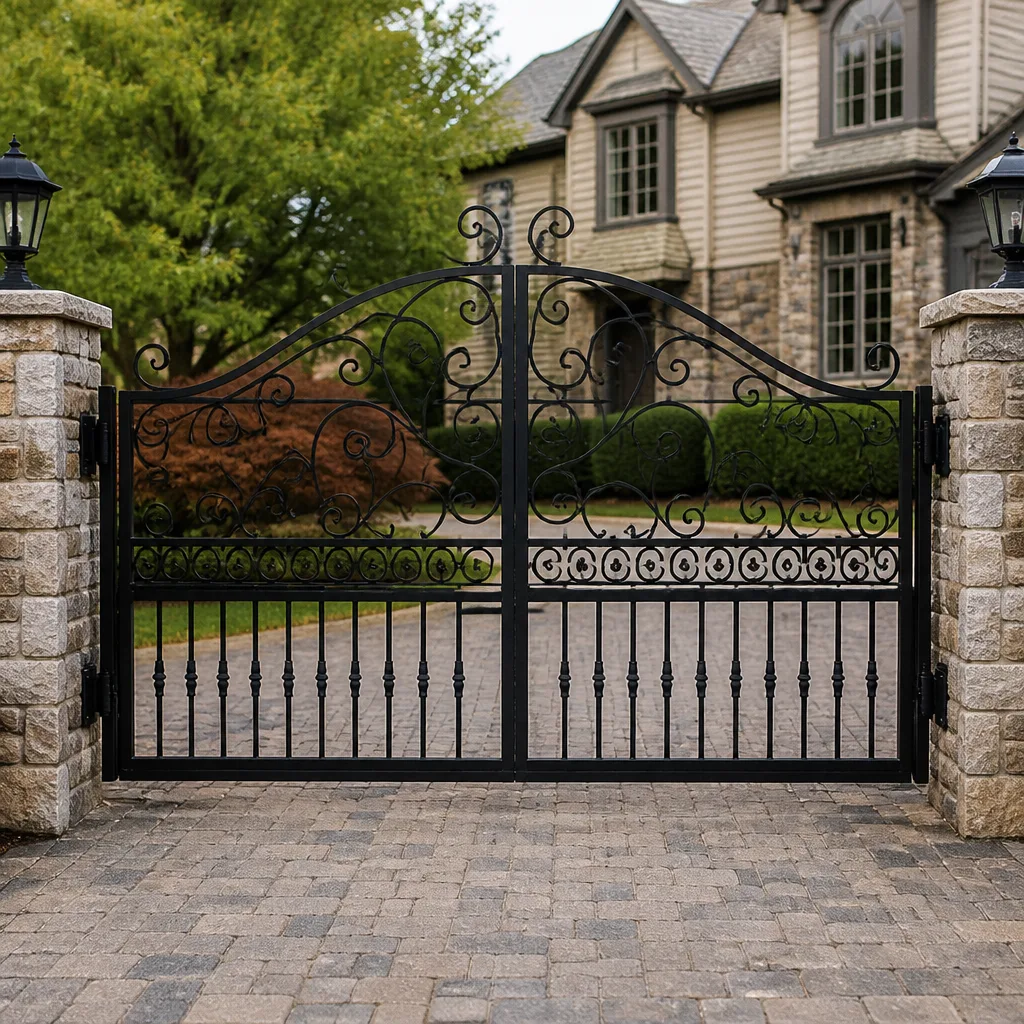 Wrought iron
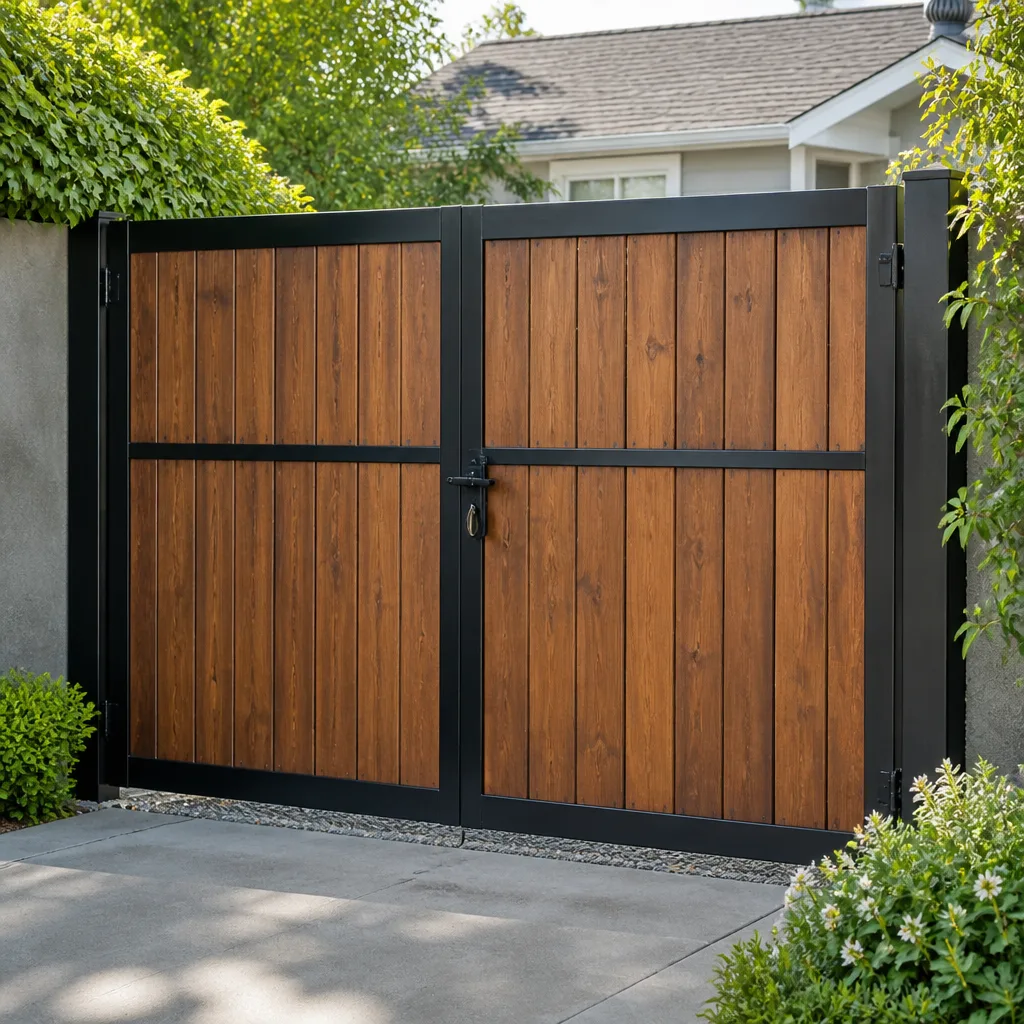 Wood & steel frame
 Farm & ranch
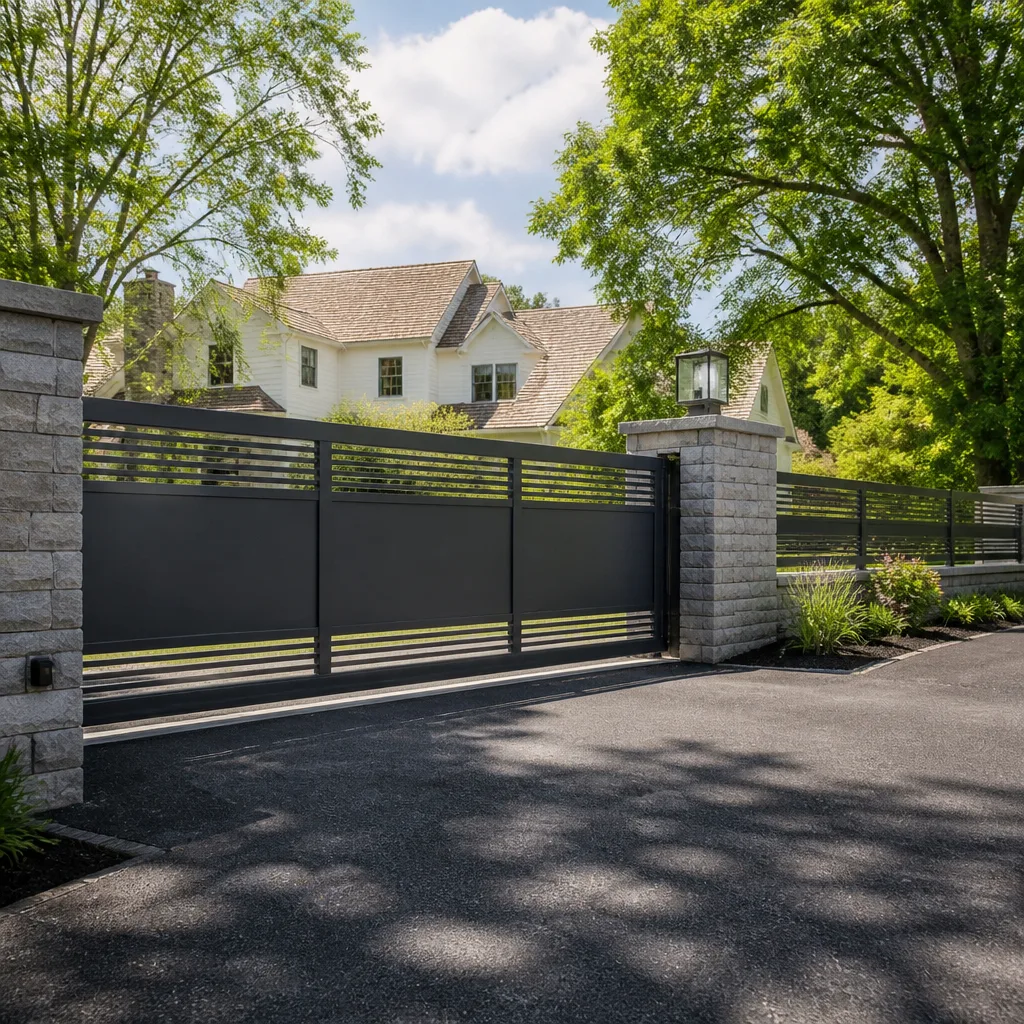 Sliding driveway gates
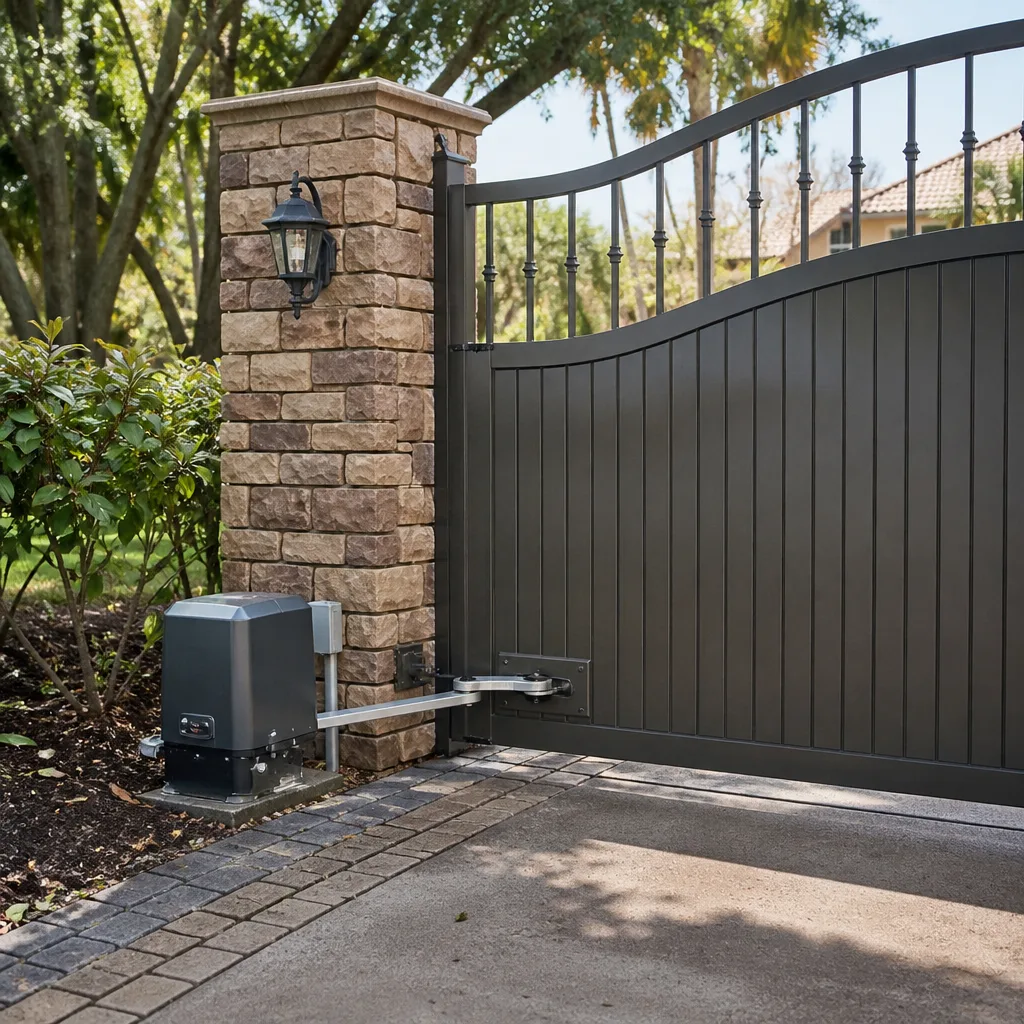 LiftMaster operators
Free on-site gate assessment - hinges, posts, and your LiftMaster or Nice gate operator checked before anything is quoted
The assessment is free and the quote is the invoice.
Get your free estimateThe Complete Guide to Gate Repair in Chesapeake
Most people assume a gate that stops working needs a new motor. In our experience across Chesapeake, the motor is often the last thing to fail. The real culprits are the ground the posts sit in, the air the metal breathes, and the load the operator was never sized for. Chesapeake’s tidal humidity and Hampton Roads clay quietly wear down gate systems in ways a generic repair guide won’t tell you about, and a fix that works in a dry inland climate can fail here within months. This guide maps every major gate type to its most common failure in Chesapeake, so you can tell a true repair from a temporary patch.
Quick Answer
Gate repair in Chesapeake means diagnosing three root causes before touching the hardware: humidity-driven corrosion, clay soil movement that shifts posts and knocks operators out of alignment, and operators that were mismatched to the gate’s weight and travel from the start. The right repair depends on which of those is actually failing. A proper diagnosis from a technician familiar with your brand is what separates a fix that holds from a patch that buys you 90 days.
Styles & brands we work with
- Wrought iron
- Wood & steel frame
- Farm & ranch
- Sliding driveway gates
- LiftMaster operators
Table of Contents
- Why Gate Systems Fail Differently in Chesapeake
- Repair Needs and Lifespan by Gate Material
- Swing, Slide, and Barrier Arm: What Fails First
- How Clay Soil Shifts Posts and Misaligns Operators
- Electric Gate Repair: Motors, Boards, Keypads, and Sensors
- Repair or Replace: How to Tell Which Makes Sense
- True Fix vs. Temporary Patch
- What New Gate Installation Involves
Why Gate Systems Fail Differently in Chesapeake
Chesapeake sits within five miles of tidal water on three sides. That means the air here carries more moisture and more airborne salts than an inland Virginia town at the same latitude. Most gate failure guides never mention this because they’re written for a national audience. It matters here. Humidity doesn’t just rust hinges; it degrades control boards, creeps into sealed motor housings, corrodes weld seams, and accelerates wear on the rubber seals that keep water out of the operator’s electronics in the first place.
The practical result is that metal components age faster than their rated lifespan suggests, and electronic components fail in ways that look random until you understand the environment. A control board that would last a decade in a dry climate can develop trace corrosion here well before that. Rubber weather seals stiffen and crack, letting moisture reach the parts they were meant to protect.
What this means for repair:
- Hardware should be corrosion-rated for a humid, near-tidal environment, not standard galvanized or untreated steel.
- Control enclosures, keypads, and sensor housings deserve a closer look than the mechanical gate itself, because that’s where moisture does its quietest damage.
- A repair that ignores the environment will fail again on the same schedule as the original.
We’ve seen this pattern across every corner of Chesapeake, from Great Bridge to Deep Creek, and it’s the first thing we factor into a diagnosis. If you want to understand how we approach the wider range of systems in the area, more detail lives on our Gate Repair Chesapeake page.
Repair Needs and Lifespan by Gate Material
Different gate materials fail on completely different timelines in Chesapeake’s climate. Knowing your material tells you what to watch and roughly how long to expect the gate to last before a major repair.
Steel Gates
Steel is strong and common, but it’s the most vulnerable to humidity. Untreated or poorly coated steel rusts at weld seams first, then at hinges and the box section near the ground. Typical lifespan in this climate with good coating and regular attention runs shorter than in dry regions, and the failure points cluster around seams and moving joints. When a steel gate rusts through near a hinge, that’s a structural repair, not a touch-up.
Aluminum Gates
Aluminum resists rust far better, but it isn’t immune. It corrodes differently, forming a white oxidation that pits the surface and can loosen fasteners over time. Aluminum is lighter, which is easier on the operator, but lighter also means it can catch wind and stress hinges in a way heavier gates don’t. Lifespan is generally longer than steel, with repairs tending toward hinge wear, fastener failure, and weld fatigue rather than rust-through.
Vinyl Gates
Vinyl doesn’t corrode at all, so the metal problem is off the table. Its weak points are UV degradation, which makes the material brittle over time, and the internal metal frame or reinforcement, which can rust unseen. Vinyl also expands and contracts with temperature swings, loosening hardware and stressing the frame. Repairs here are more about sagging, hinge pull-out, and frame integrity than surface corrosion.
Wood Gates
Wood swells, warps, and rots in humid air. It’s the most maintenance-heavy material in Chesapeake, and moisture is relentless against it. Repairs focus on rot at the ground line, sagging hinges, and hardware pulling loose as the wood moves. Operators on wood gates need to be sized to accommodate the extra weight of a waterlogged gate.
Swing, Slide, and Barrier Arm: What Fails First
Gate system type dictates which repair you’re most likely to need. Here’s how the three main categories tend to fail, based on what we see on-site.
Swing Gates
Swing gates are the most common residential type. Their failure points run to hinge wear, post shift, and operator arm alignment. When a swing gate jams or opens unevenly, the cause is usually a post that has moved or an arm that’s out of adjustment, not a dead motor. Most repair calls here start with alignment and end with a motor only if the operator itself has failed.
Slide Gates
Slide gates run on a track and rollers, which makes track wear, roller failure, and debris the leading repair needs. In a wet environment, the track collects grit and the rollers can seize. A slide gate that grinds, sticks, or travels off its track is a mechanical problem first. These are common on longer driveways and commercial entrances, and the track-and-roller system is where the money usually goes.
Barrier Arm Gates
Barrier arm gates (the parking-lot and access-control type) are mostly commercial. Their failure modes center on the arm mechanism, the drive gear, and the electronics that trigger them. A barrier arm that won’t raise, raises partway, or cycles erratically is usually a control or sensor issue. Brands like DoorKing dominate this category, and there’s specialist repair knowledge in getting those systems back online without swapping out parts that are still good.
How Clay Soil Shifts Posts and Misaligns Operators
Hampton Roads clay is a big deal for gate repair in Chesapeake, and most guides skip it. This soil expands when wet and contracts when dry, and it moves more than sandy or loamy ground. A gate post is only as stable as the ground around it. When clay swells and shrinks, posts shift, tilt, and rotate. For a swing gate, a post shift throws the gate out of line with the operator arm. For a slide gate, the foundation moving can throw the track out of level.
The giveaway is a pattern, not a single symptom:
- A gate that used to close smoothly now catches at one end.
- The operator strains or reverses partway through travel.
- Gaps open up between the gate and the post.
- A gate that drags or scrapes the ground after heavy rain, then clears when it dries out.
These clues point to ground movement rather than a bad motor. The repair has to address the post or foundation, not just reset the operator arm, or the misalignment returns. Posts need to go to proper footing depth for this soil, and a repair that resets the arm without checking the footing is a bet against the ground. When a gate operates on a schedule in Chesapeake, the footing is a big part of whether that schedule holds.
If your area has been hit with heavy rain or a long dry stretch and the gate starts acting up, that’s a classic clay-soil signature. We cover how we handle this class of problem on our Chesapeake page.
Electric Gate Repair: Motors, Boards, Keypads, and Sensors
Electric gate repair is its own discipline, separate from mechanical gate repair, and it’s where a lot of gates actually fail. A motor that won’t run, a gate that runs the wrong way, a keypad that stopped accepting codes, or safety sensors that keep reversing the gate are all electronics problems. They need a technician equipped for motors, control boards, keypads, and safety sensors, not a general handyman who only knows hinges and welds.
Here’s how a proper electric gate diagnosis runs, step by step:
- Confirm power and control. We check the supply and control board for the fault, since a dead board or a tripped safety is far more common than a dead motor.
- Test the safety devices. Photo-eyes, safety edges, and loop detectors all sit in the safety chain. If one of them faults, the gate refuses to close, which is a safety feature working as designed.
- Inspect the motor and drive. Once controls and safety are cleared, we test the motor and its drive mechanism under load to see if it’s the operator or the mechanical gate causing the strain.
- Check the environment. In Chesapeake, a control board or keypad showing moisture damage or trace corrosion tells us the fix needs corrosion-rated protection, or the same failure returns.
Electric gate repair is a dedicated service we’re equipped for, not an upsell. Because we work on the brand you already have, diagnosis runs on system knowledge rather than guesswork. We’re familiar with the major residential and commercial lines, including Elite and Viking, along with Mighty Mule, Ghost Controls, DoorKing, and more. When a gate stops mid-cycle, the difference between an educated diagnosis and a parts-swap gamble is real money. More on this service lives on our electric gate repair page.
Repair or Replace: How to Tell Which Makes Sense
The honest answer is that most gate problems are repairable, and the operator or gate that seems dead often isn’t. But there’s a line where replacement is the right call. We’ll tell you which one actually makes sense, and it comes down to a few questions.
When repair is the right call
- The gate structure is sound; the failure is in the operator, controls, hinges, or alignment.
- Parts are available for your brand and model.
- The gate material has life left (aluminum or vinyl in good shape, steel without deep rust-through).
- The failure is environmental, like a corrosion or footing issue that can be corrected.
When replacement makes more sense
- The gate frame is structurally compromised, e.g. steel rusted through at load-bearing points.
- The operator is obsolete and parts are no longer made for it.
- The gate and operator were both mismatched to the job from the start and never worked well.
- Repair costs are approaching replacement costs, and the repaired unit would still be at the end of its life.
We don’t push toward a replacement because it’s a bigger ticket. We recommend based on merit, not on what’s easiest to sell. A repair that fixes the actual failure is always our first choice. Call (833) 323-1302 to walk through your situation.
True Fix vs. Temporary Patch
Not every repair is a true fix. In this environment, the difference is stark: a correction that ignores Chesapeake’s humidity and clay soil can fail again on a schedule you’ll notice. Here’s how to tell which one you’re getting.
A true fix addresses the root cause:
- Corrosion-rated hardware where the environment demands it.
- Footings that are correct for the soil, so posts stop moving.
- An operator sized and adjusted for the actual gate weight and travel.
- Protection for control enclosures and keypads against moisture.
A temporary patch treats the symptom:
- Resetting an operator arm without checking the post or footing, so misalignment returns.
- Replacing a cheap hinge with the same cheap hinge, so rust returns.
- Resetting a control board without protecting it from moisture, so the fault recurs.
- Cleaning a track without addressing why grit collects or the foundation moves.
A patch can work for a while, but in Chesapeake’s climate it tends to come back within months. That’s why the initial diagnosis matters so much. We’d rather fix it once.
What New Gate Installation Involves
Sometimes the right move is a new gate, and the same specialist who repairs your existing one can handle the design and install. That matters because sourcing a separate installer for the gate and a separate technician for the operator creates finger-pointing when something goes wrong later. One call covers the whole job.
A proper installation runs through clear stages:
- On-site measure and assessment. We look at the opening, the ground, the slope, and how the gate will be used and accessed.
- System selection. Gate type, material, and operator are chosen to match the job, and the operator load is matched to the gate’s actual weight and travel so it isn’t strained from day one.
- Footing and posts. Posts are set at proper footing depth for the soil, so the gate stays put as the ground moves.
- Power and safety. We handle the power run and the safety edges and sensors, and we make sure the install meets local requirements. Ask the city about permits for the job, and check the installer’s license before work starts.
- Commissioning. The gate and operator are tested through full cycles and adjusted for smooth, reliable travel.
Installation is a scheduled job, so it’s measured, ordered, and booked rather than rushed. You’ll get a free measure and a written price before anything begins. For a brand-agnostic installation that isn’t tied to a single dealer’s product line, that’s the way to go.
Common Mistakes to Avoid
- Assuming a dead gate needs a new motor. The motor is often fine; the real fault is a control board, safety sensor, or alignment issue. Testing controls first saves money.
- Resetting the operator without checking the footing. In Chesapeake’s clay, if the post moved, the arm will drift out of line again. Fix the ground, not just the arm.
- Using standard hardware in a humid, near-tidal environment. Non-corrosion-rated hinges and fasteners rust out fast here, and repeat the job.
- Ignoring safety sensors and safety edges. A gate that won’t close is often obeying a tripped safety device. Disabling those devices is dangerous, not a fix.
- Skipping the licensing and permit check on new work. Confirm the installer’s license and ask the city about permits before any new installation.
- Choosing a contractor locked to a single brand. A dealer tied to one product line may steer you toward what they sell. Independent, brand-agnostic service means repair on merit.
- Treating an electric gate as a mechanical gate. Motor, board, keypad, and sensor work is its own discipline. Hiring a generalist for electronics leads to guesswork.
A lot of this comes down to who you call first. If you’re deciding where to start, learning what gate repair actually involves keeps the diagnosis honest.
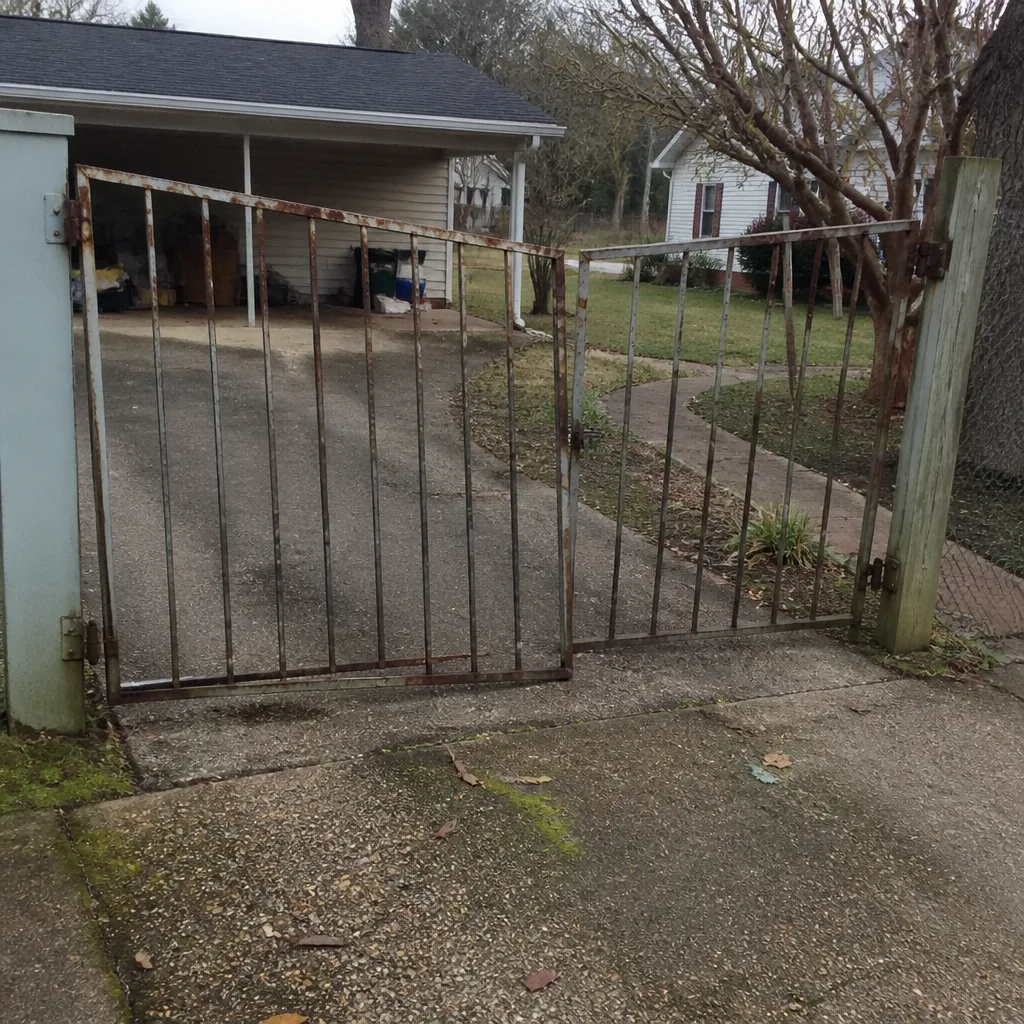
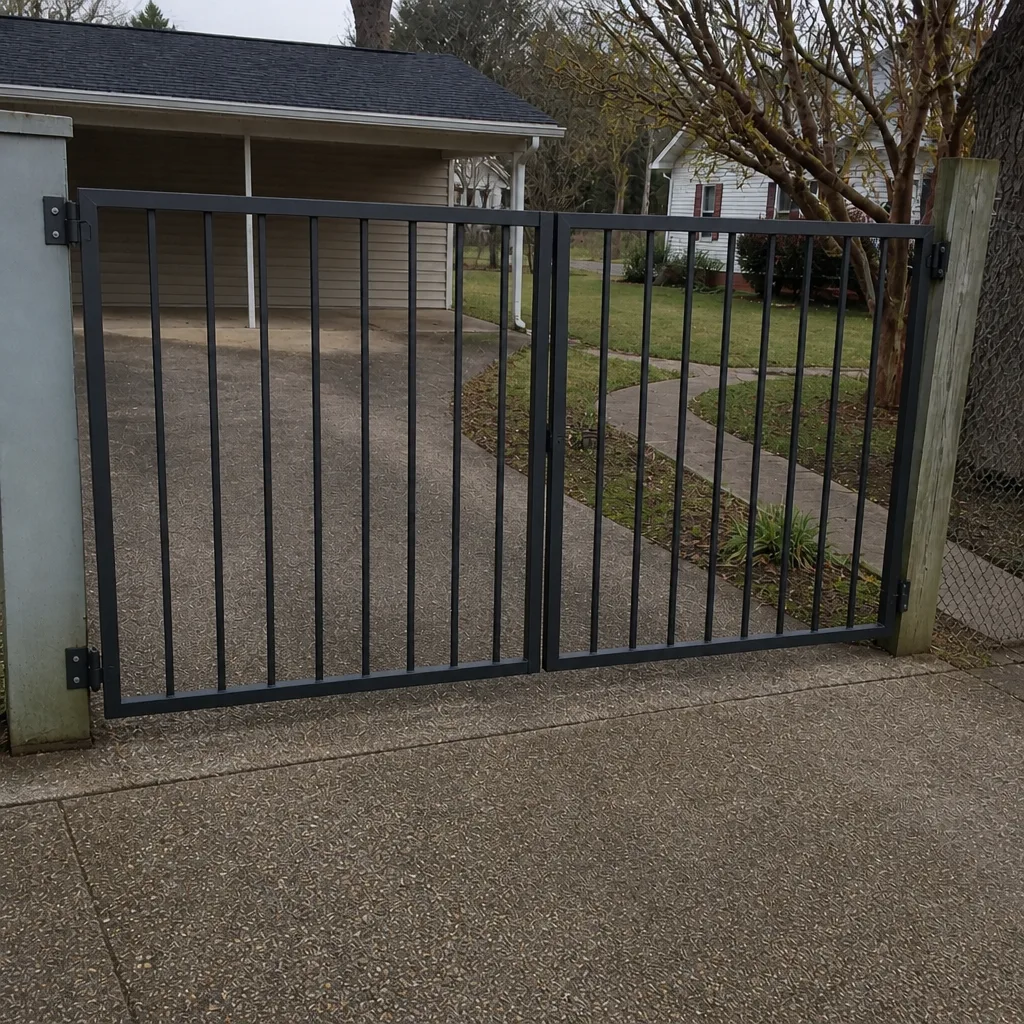
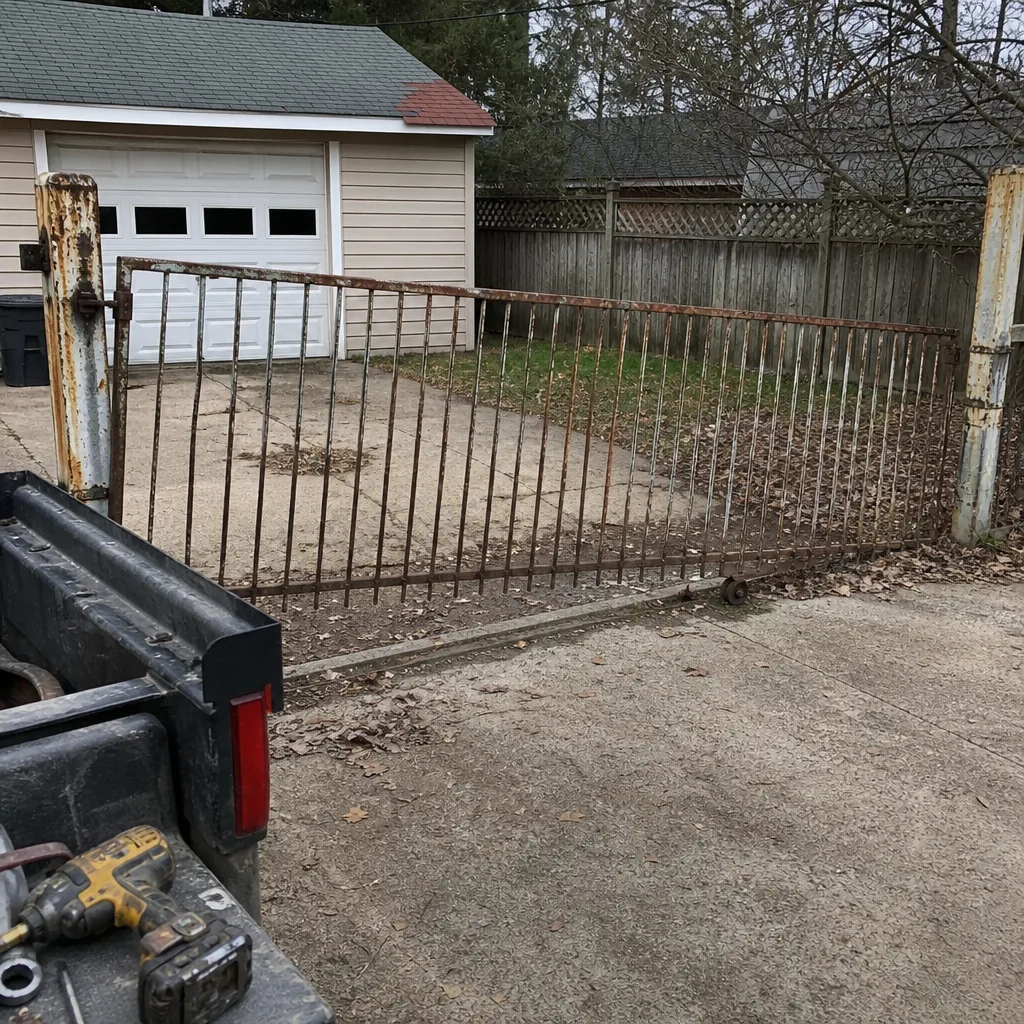
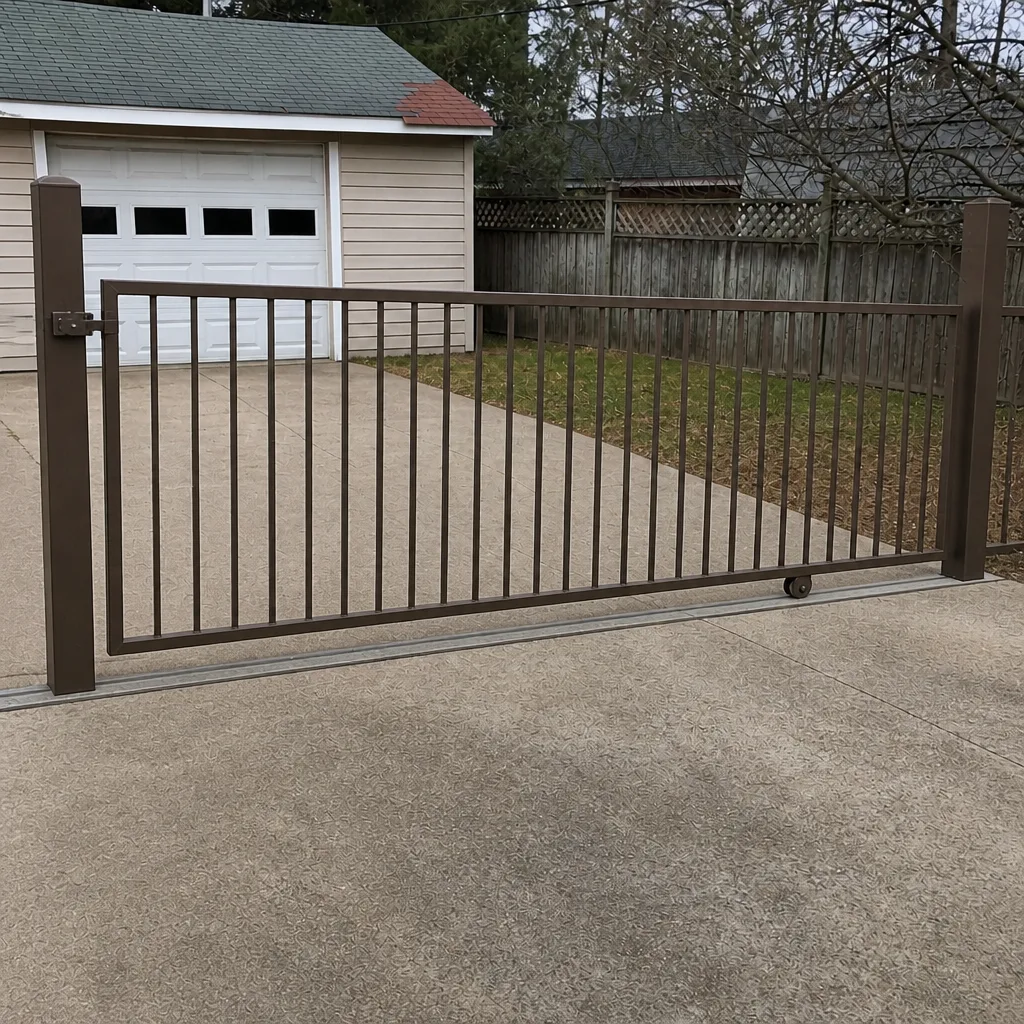
See the difference
 Before
 After
 Before
 After
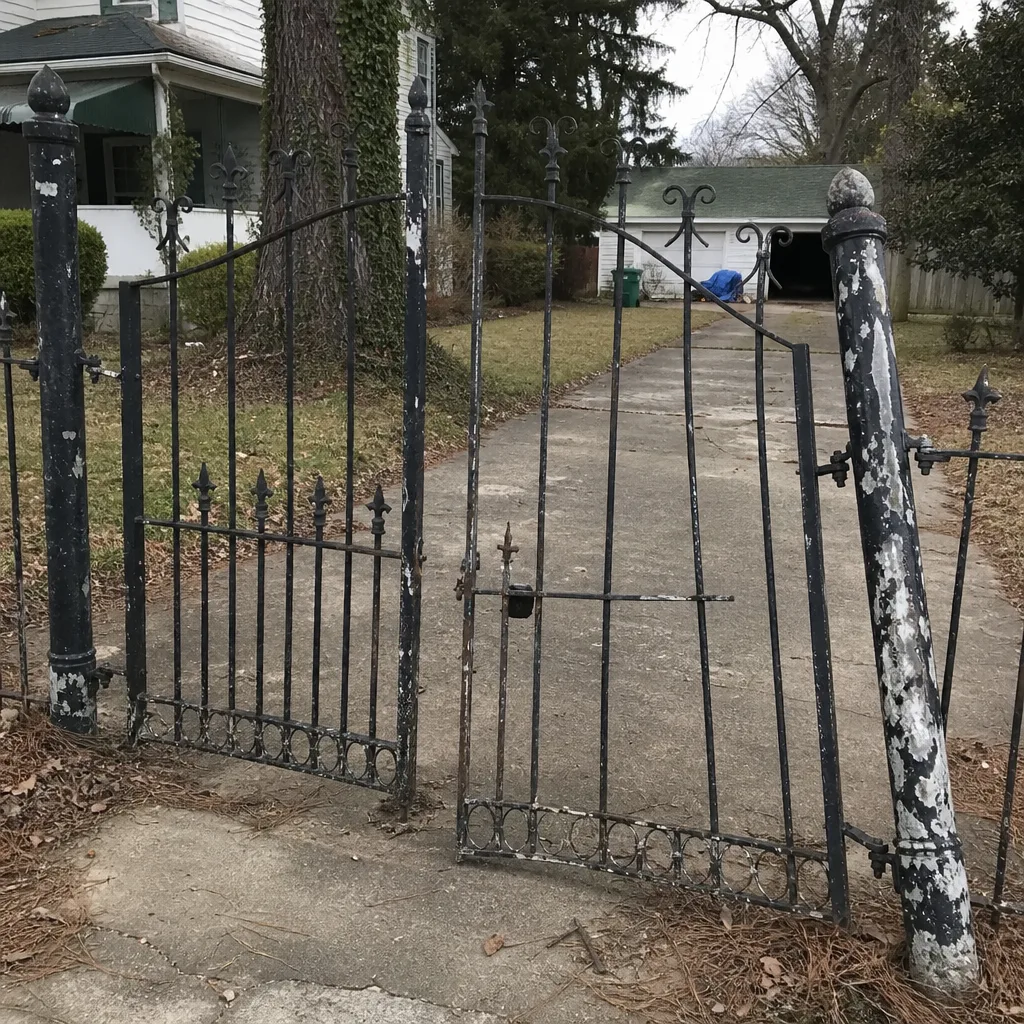 Before
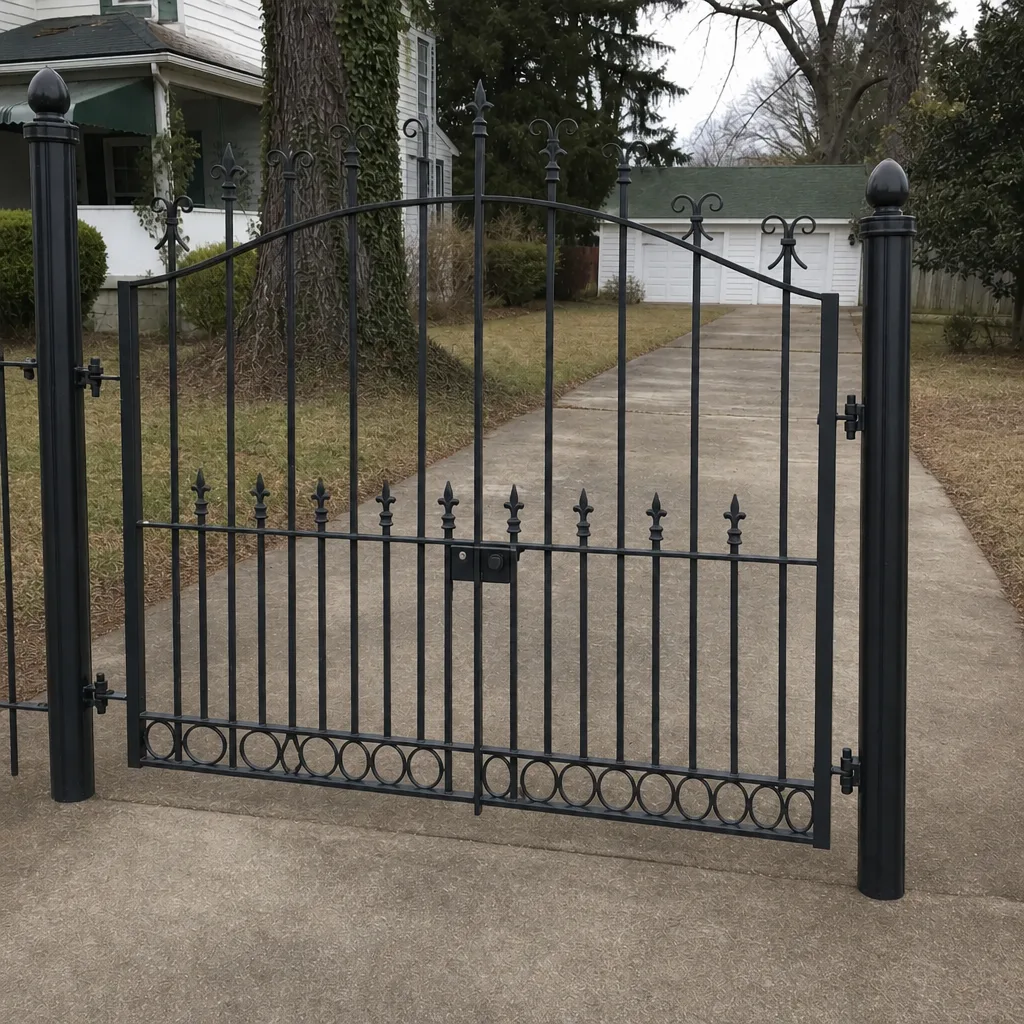 After
When to Call a Professional
Some gate problems are genuinely dangerous to touch. An electric gate’s operator wiring carries live power, heavy gate panels can crush if they fall or swing unexpectedly, and a slide gate that has come off its track can move in ways that trap or injure. Any repair involving the power run, the control board wiring, or a gate that’s unstable under load is a job for a trained technician. Don’t put your hands in a motor housing or a control panel to chase a fault.
Call a professional when the gate won’t cycle correctly, the operator strains or reverses, the gate grinds or drags after rain, or a keypad or safety sensor has stopped working. If the gate has shifted visibly relative to its posts, that’s also a call. Gate Repair Chesapeake offers free estimates in Chesapeake. Call (833) 323-1302. We answer 24/7. Fast dispatch from 7am to 7pm, Sunday through Friday.
Frequently Asked Questions
It usually means the repair treated a symptom instead of the cause. In Chesapeake’s humid, near-tidal air, repeat failures typically trace back to moisture-damaged controls, hardware that wasn’t corrosion-rated, or a post footing that’s shifting in Hampton Roads clay. A true fix addresses the environment, not just the part that failed.
In most cases, yes. We’re familiar with the major residential and commercial lines, including Mighty Mule, Ghost Controls, Elite, Viking, and others spanning entry-level to commercial-grade systems. Because we’re brand-agnostic, we recommend the fix that fits your system and budget rather than steering you toward one product line.
It depends on the scope of the work. Most jurisdictions require a permit for structural installation, so ask your city’s building department before work starts, and confirm your installer is properly licensed. We can walk you through what to check on the project.
Gate repair covers mechanical work: hinges, posts, welds, alignment, and tracks. Electric gate repair covers the motor, control board, keypad, and safety sensors. Many failures are electric, so it pays to have both under one roof rather than calling two different trades.
Repair usually wins when the gate structure is sound and parts are available for your brand. Replacement makes more sense when the frame is structurally compromised or the operator is obsolete and parts are gone. We’ll tell you which one actually makes sense for your gate, then put the choice in writing.
We’re closed on Saturdays. We answer 24/7 and dispatch Sunday through Friday, 7am to 7pm. If your gate fails on a Saturday, call and we’ll book you into the next opening, Sunday through Friday.
The Bottom Line
Gate failures in Chesapeake rarely come down to one part. Humidity, clay soil, and mismatched operator loads are the three root causes behind most repairs, and knowing which one you’re facing is the whole game. Check the environment, check the footing, check the load, then look at the part that failed. A true fix accounts for all three; a patch handles one and comes back within months. Our technicians have up to 13 years of experience across a full range of brands and both residential and commercial systems. Call (833) 323-1302 for a free estimate and one call that covers the whole job.
Written by the team at Gate Repair Chesapeake.